The year 2026 has just begun, but scientists and researchers have already discovered numerous new species of plants, animals and fungi, hidden within India’s forests, wetlands, mountains and seas. This showcases just how much of India’s biodiversity remains undocumented, further highlighting the need to protect and conserve fragile habitats.
Here are some of the most significant species in India that were identified in January.
Two New Hoverfly Species Found in Delhi and the Western Ghats
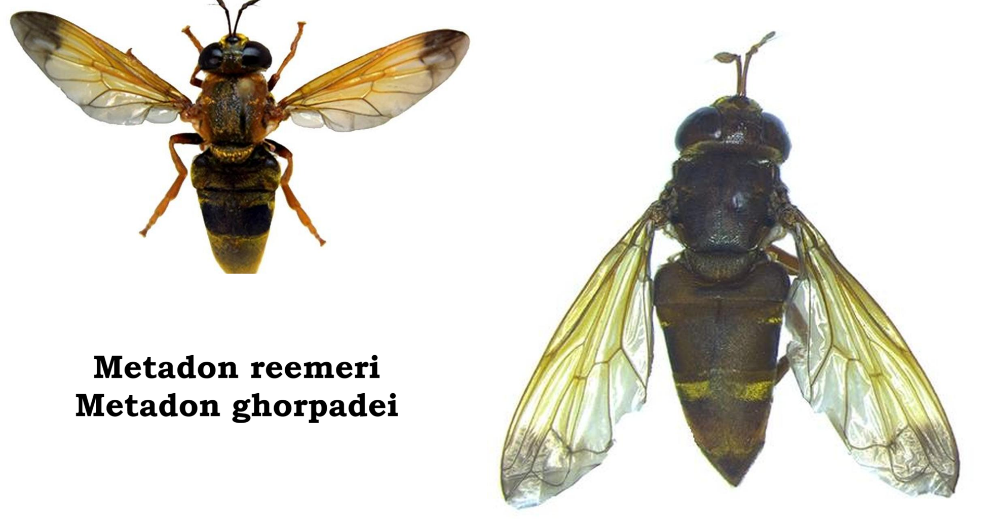
Researchers Hariharakrishnan Sankararaman (Amrita Vishwa Vidyapeetham) and Sainulabdeen Sulaikha Anooj (Kerala Agricultural University) recently discovered two rare ant-eating fly species in India belonging to the Microdontinae subfamily. Named Metadon ghorpadei and Metadon reemeri, the two species were found in the Delhi Ridge forest and the Siruvani hills of the Western Ghats in Tamil Nadu, respectively. They are notable for their mimicry of stinging wasps, and the slug-like larvae of both species infiltrate ant nests, where they feed on ant eggs and babies. Metadon ghorpadei possesses pale brown antennae, yellow legs and golden hair covering the body, whereas Metadon reemeri has blackish antennae as well as distinctively dark hind legs. The discovery of these species is of considerable significance because the Microdontinae subfamily is one that has barely been studied in India over the past century.[1]
Read More: Decoding the Lives of Mystery Insects
New Yellow Wildflowers Spotted in the Konkan Region
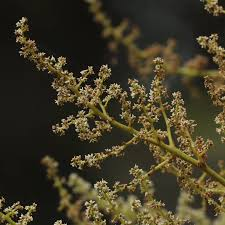
Botanists from Parulekar College of Arts, Commerce and Science, the National Institute of Agriculture Sciences, South Korea and certain local Maharashtra colleges have found a new wildflower plant in the rocky, iron-rich plateaus of Ratnagiri district in Maharashtra’s Konkan region. Called Lepidagathis konkanensis, the plant is distinguished by its bright yellow, two-lipped flowers, compact and dense flower heads of about two centimetres, smaller seeds and shorter styles compared to its relatives in the Lepidagathis genus, which usually possess pink flowers and long flowering spikes. Considering that L. konkanensis has only been found in a small area yet, scientists recommend classifying it as “Data Deficient” by the IUCN, requiring further study and conservation efforts.[15]
Three Long-Horned Grasshopper Species Discovered in Jammu & Kashmir
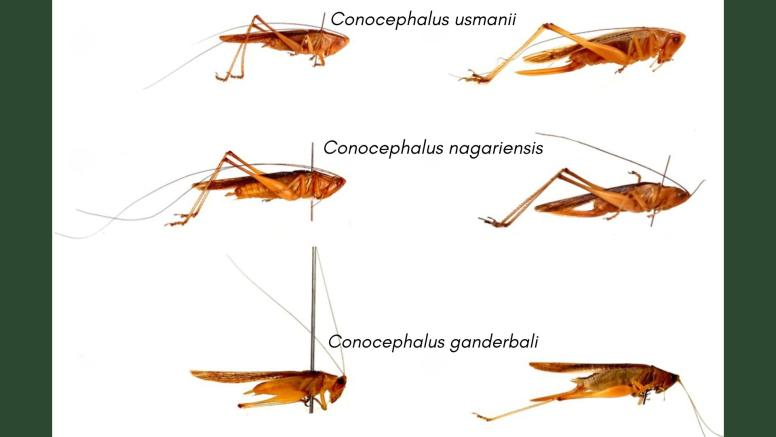
Entomologists Muzamil Syed Shah, Amir Majeed, Ishrat Bashir and Khalida Hassan of Aligarh Muslim University have identified three previously unknown long-horned grasshopper, or katydid, species in Jammu & Kashmir during extensive field surveys across the meadows, forests and grasslands of the region. Scanning Electron Microscopy (SEM) was utilised to count the number of teeth on the stridulatory files (rows of comb-like teeth on male katydid wings used to make chirping sounds), and this is how the species were confirmed to be new to science. The three species – Conocephalus usmanii, Conocephalus nagariensis and Conocephalus ganderbali – belong to the Conocephalus genus, commonly known as meadow katydids. They have distinct body features: Conocephalus usmanii has a flat, elongated plate on its abdomen and has 36 teeth in its stridulatory file, while Conocephalus nagariensis has spindle-shaped cerci (paired appendages at the posterior end of the abdomen) and 34 teeth. Conocephalus ganderbali is the smallest of the three species and has just 28 teeth in its stridulatory file, along with a V-shaped mark on its bottom.[2]
Brand New Genus and Species of Microscopic Crustaceans Discovered in Lakshadweep
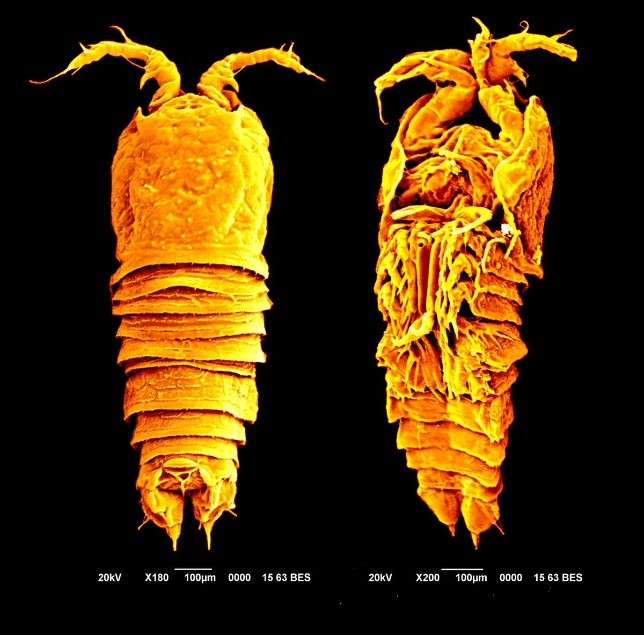
Researchers from Cochin University of Science and Technology (CUSAT) have uncovered an extraordinary new genus and species of microscopic marine crustacean in the Kavaratti Lagoon of Lakshadweep in the Indian Ocean. Belonging to an order of copepods called Harpacticoida, the species has been named Indiaphonte bijoyi as a tribute to senior professor Dr. S. Bijoy Nandan, Dean of the Faculty of Marine Sciences at CUSAT. It was scientifically identified by Neelima Vasu K., a researcher at CUSAT, with collaboration from copepod expert Dr. Samuel E. Gomez-Noguera of the National Autonomous University of Mexico. Indiaphonte bijoyi is distinguished by the unique morphology of its tentacles, segmentation of its swimming legs, and most importantly its lack of sexual dimorphism, with both males and females showcasing the same structure.[3]
Read More: Five New Insect Species Discovered in Western Ghats
Bright Orange Squat Lobster Species Identified In Lakshadweep
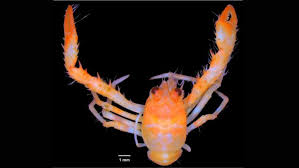
During a 2024 faunal expedition conducted by the Centre for Marine Living Resources and Ecology (CMLRE) in Kochi as part of the Deep Ocean Mission (Samudrayaan programme), researchers discovered a striking new squat lobster species off the coast of Minicoy in the Lakshadweep archipelago, living about 360 metres below the surface. Now known as Leiogalathea samudragiri, the vibrant orange-coloured crustacean with white patches on its legs stands out from its relatives due to the presence of smooth and uninterrupted ridges on its shell rather than broken ridges. Moreover, the species lacks a spine on its antennules that can be seen in other members of the Leiogalathea genus, hence confirming it as a distinct species.4]
New Caecilian Species Found in Maharashtra
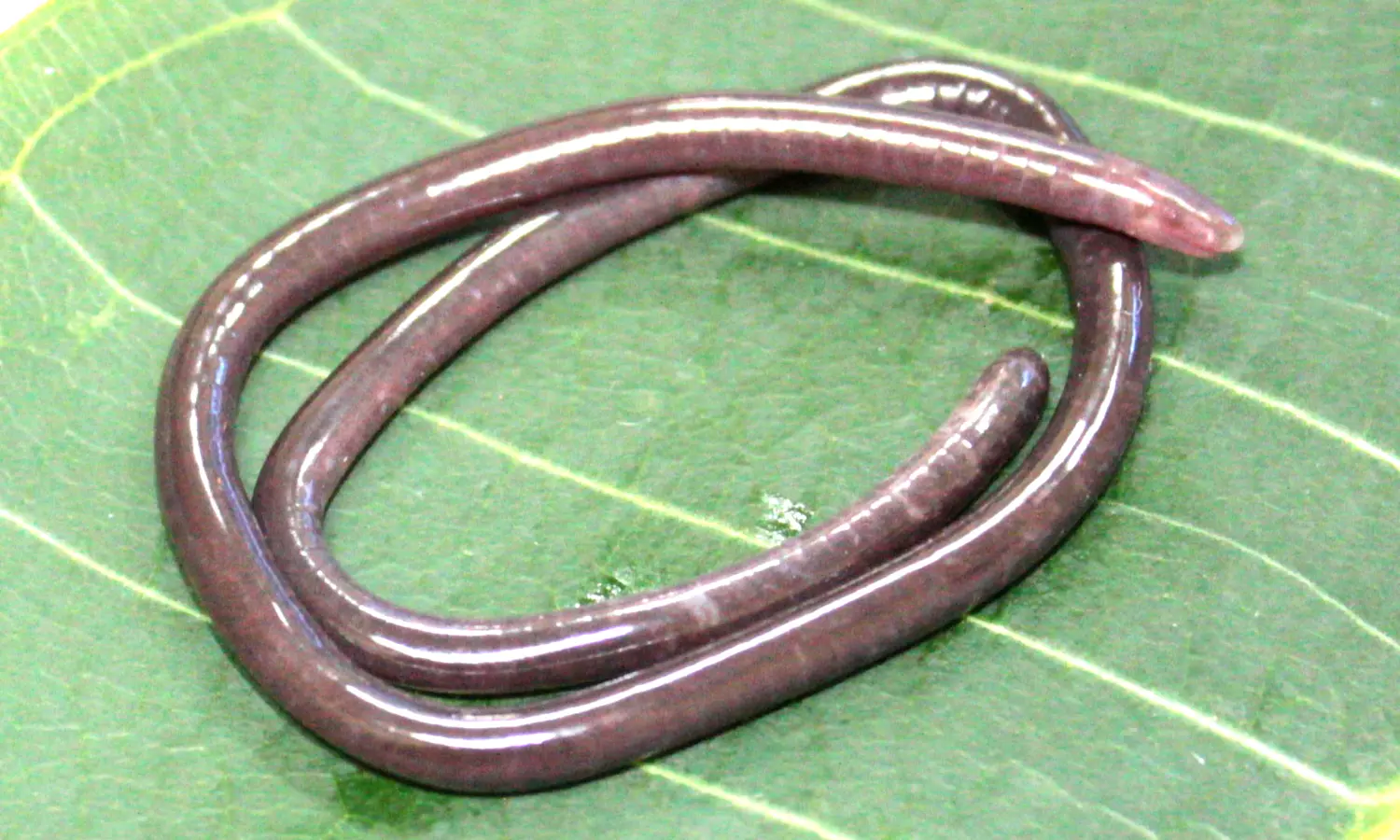
Scientists have discovered a new caecilian species, Gegeneophis valmiki, in the northern Western Ghats of Maharashtra. Named after the nearby Maharshi Valmiki Mandir, this becomes the eleventh species to have been discovered in the Western Ghats that belongs to the Gegeneophis group of caecilians – limbless, subterranean amphibians that are blind due to their eyes lying beneath their cranium. The first Gegeneophis valmiki specimen was actually first collected in 2017 in Satara district by K P Dinesh of the Zoological Survey of India (ZSI), but it wasn’t until recently that Dinesh and other ZSI researchers analysed the specimens and formally published the discovery. Caecilians like Gegeneophis valmiki have some superficial resemblance to earthworms and do not produce any vocal calls, unlike other amphibians, making them exceptionally elusive and thus explaining this delay in identification.[5]
Read More: The Purple Frog, Secret Life Underground
Two Slender-Armed Frog Species Discovered in Arunachal Pradesh
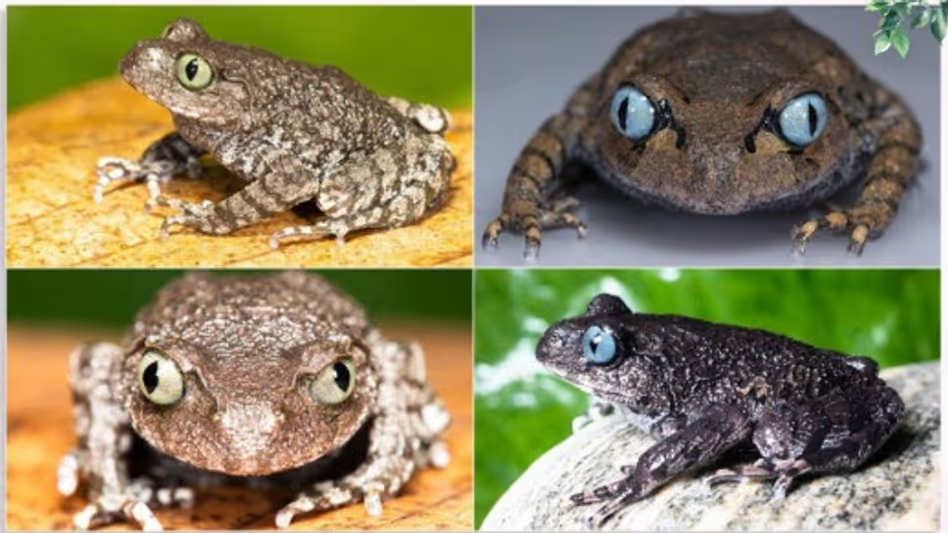
A team of researchers from the University of Delhi and Harvard University have uncovered two new frog species in the dense forests of Arunachal Pradesh. The species — Leptobrachium somani (Soman’s Slender Arm Frog) and Leptobrachium mechuka (Mechuka Slender Arm Frog) — belong to the Leptobrachium genus and were found during the surveying of forested areas of the Lower Dibang Valley and Shi Yomi districts, with the use of DNA analysis and physical traits to confirm the new species. Getting their name from their rather slim arms compared to their stout bodies, the frogs are brown in colour, offering natural camouflage against predators. L. somani has been named in honour of veteran journalist E. Somanath of Malayala Manorama, while L. mechuka has been named after Mechuka, the town near which the species was found.[6][7]
Read More:
Non-Venomous Reed Snake Species Found in Mizoram
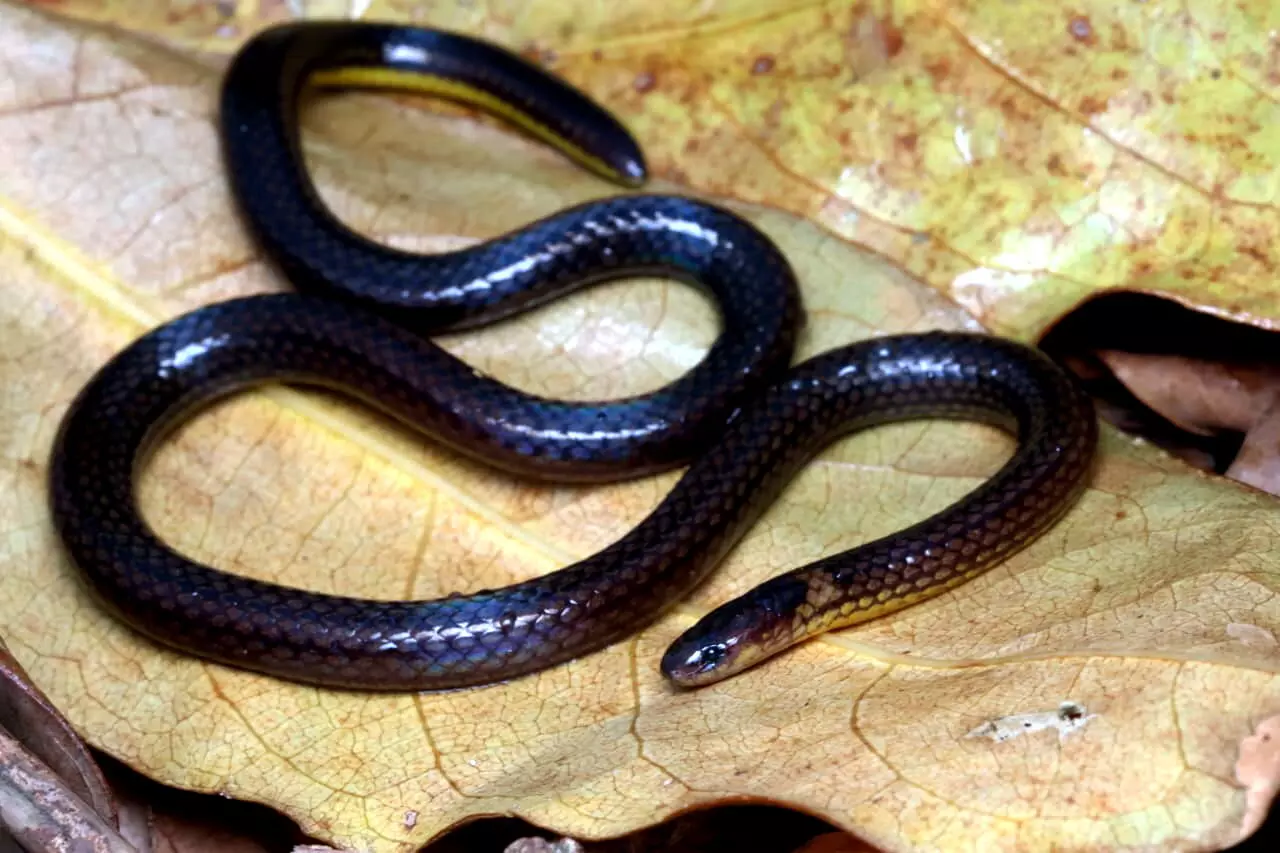
Scientists from Mizoram University, in collaboration with researchers from Germany, Russia and Vietnam, have described a new species of reed snake, Calamaria mizoramensis, residing in the hilly forests of Mizoram. The research was led by Professor H.T. Lalremsanga of Mizoram University, who stated that the first specimen of this species was actually collected back in 2008 but was mistaken for another widespread Southeast Asian species; detailed morphological and DNA analyses now prove that it is genetically different. Being small and non-venomous, C. mizoramensis poses no threat to humans, and it can be found in humid forests at elevations of 670–1,295 metres. It is either dark brown or black with faint stripes running across the body along with a yellow underside, and the species is nocturnal and semi-fossorial (living partly underground).[8][9]
New Hedgehog Species Identified in Jammu & Kashmir
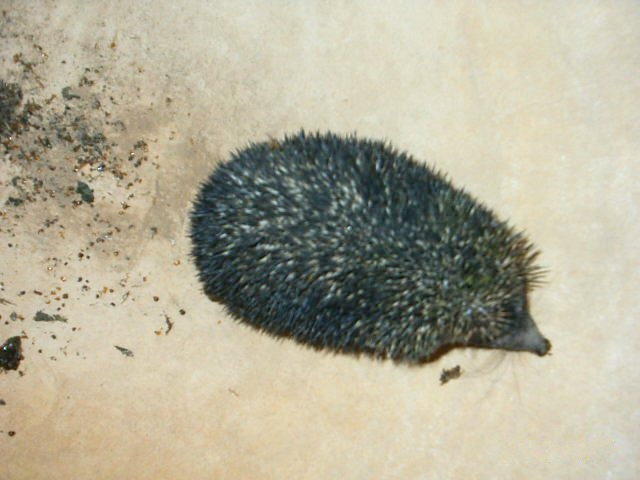
Initially spotted by the Jammu & Kashmir Wildlife Department during patrols in 2024 and thought to have been the long-eared Indian hedgehog, a hedgehog species has now been proven through DNA analysis to be Paraechinus hypomelas (Brandt’s hedgehog). This species is usually seen in parts of Central and West Asia, but this marks the first time it has been documented in India. The discovery was made in the Rajouri-Poonch area of Jammu & Kashmir and compiled by wildlife warden Amit Sharma alongside researchers Dr. Vinita Sharma, Professor C. Srinivasulu and Dr. Vipin, who suggest that the hedgehog’s range may stretch farther east than previously known. Brandt’s hedgehog has distinctively large ears, resulting in being mistaken for the long-eared hedgehog, and it is also a considerably faster runner due to having less needle protection on its body.[10]
Mushroom Species Discovered in Uttarakhand
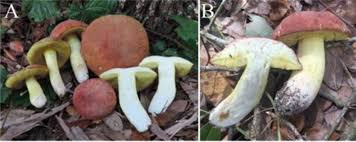
A team of researchers from the Botanical Survey of India, St. Xavier’s College in Jharkhand and the University of Torino have identified a previously unknown mushroom species, Hemileccinum indicum, in the temperate oak forests of Bageshwar district, Uttarakhand. The team collected specimens during field surveys in the monsoons of 2022 and 2023 at elevations of over 2,600 metres in the Dhakuri region of the state. Genetic sequencing and electron microscopy confirmed that, despite resembling related boletes (mushrooms possessing pores instead of gills under their caps) from North America and China, this mushroom has unique microscopic pits on its spores, unlike the others that have larger and smoother spores. H. indicum has a violet-brown cap and a pale yellow pore surface, and it is the first record of the genus Hemileccinum in India.[11]
Read More: Going Wild Over Mushrooms
Extremely Rare Flowering Plant Species in Arunachal Pradesh
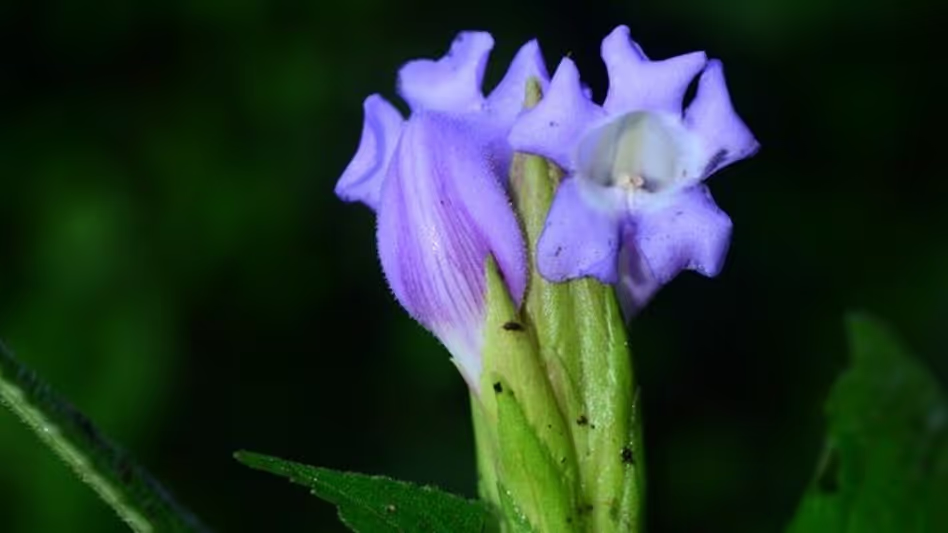
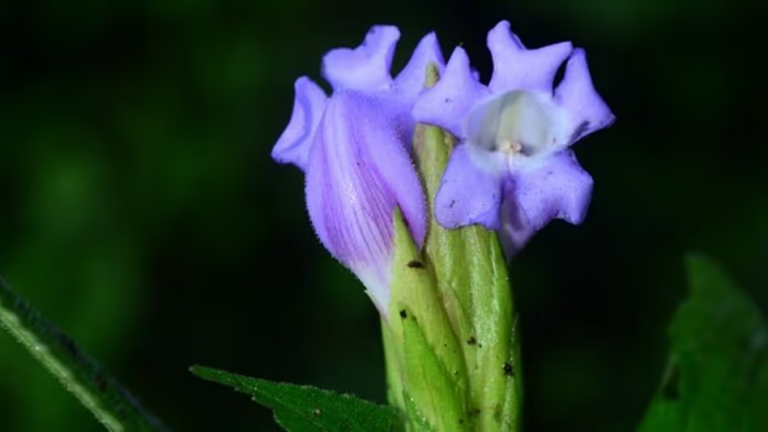
A research team led by Krishna Chowlu, Akshath Shenoy, Geetika Sukhramani, Ajit Ray and Althaf Ahamed Kabeer from the Botanical Survey of India and the Agharkar Research Institute have discovered a new flowering plant species, Strobilanthes riteshii, in the East Kameng district of Arunachal Pradesh. Found while conducting field surveys near Chayangtajo village at an elevation of about 1,600 metres, the plant has been named after Dr. Ritesh Kumar Choudhary, an eminent plant taxonomist from the Agharkar Research Institute. Only 25 mature individuals have been recorded thus far, growing along roadsides, forest streams and slopes. S. riteshii bears purple or violet bell-shaped flowers, and it differs from its relatives in the Strobilanthes genus, such as S. giganta, in terms of its leaf structure and floral traits.[16]
Rare White-Flowered Ginger Discovered in Arunachal Pradesh
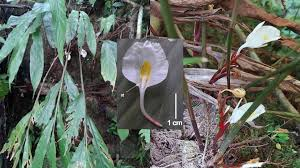
Although the first specimen of Parakaempferia alba was collected in 2015 by researcher Tatum Mibang, a recent follow-up expedition into the Siang Valley by a team from the CSIR-North East Institute of Science and Technology and a few local colleges is what led to the confirmation of the plant as an entirely new species. P. alba is now only the second known species belonging to the Parakaempferia genus after P. synantha. Unlike the latter, which comes in shades of red and purple, P. alba stands out with its snowy white flowers having a yellow band down the centre, along with papery thin leaves and numerous flower spikes. As the species has only been found in a very specific habitat so far, scientists caution that it could be vulnerable to environmental disturbances, possibly leading to extinction.[14]
New Plant Species with Star-Shaped Flowers Identified in Nagaland
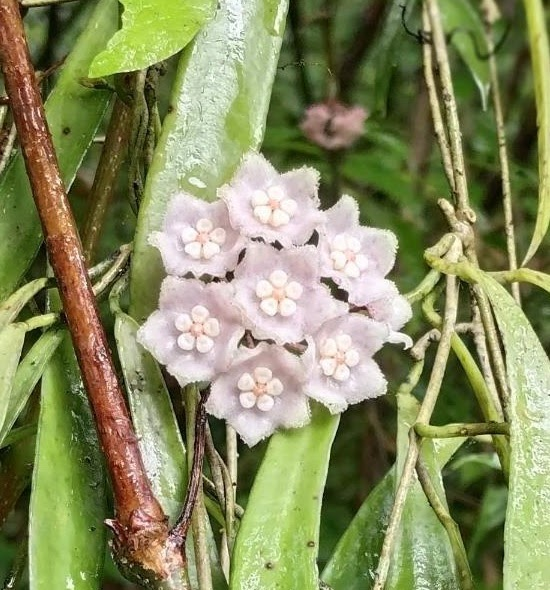
Dr. Gyati Yam, Vieneite-o Koza and Joynath Pegu from Nagaland University have discovered a new plant species in the Kavünhou Community Reserved Forest in Phek district, Nagaland. The species, named Hoya nagaensis, belongs to the Apocynaceae family and was identified during systematic botanical surveys conducted by the team between 2023 and 2025. The plant is a climber and is characterised by its narrow, fleshy leaves, while also bearing white flowers that are densely hairy, waxy and star-shaped. Such unique morphology differentiates H. nagaensis from other Hoya plants, and it has been provisionally assessed as Critically Endangered due to being found in just one location so far.[12][13]