In Brief
– A study published in PLOS Biology finds that bird communities with greater species diversity produce more warning calls and respond faster to predator threats.
– Birds don’t just listen to their own kind. They recognise and respond to alarm and mobbing calls made by other species, creating a wider network of communication.
– The findings suggest that biodiversity plays an important role in helping birds share information about predators, and that habitat loss and declining species diversity could weaken these natural warning networks.
More bird species living in a habitat could mean better warning signals against predators, finds a new study. The research was published in the open-access journal PLOS Biology on 24 November 2026.
Conservationists often talk about the benefits of biodiversity. From healthier predator-prey relationships to better pollination, pest control and improved chances of species survival, biodiversity is essential for thriving ecosystems. But this research looks at it from a different angle. Does the diversity of bird species in a habitat influence how they communicate the presence of a predator?
Read More: Tracking the Secret Life of Spoonies
How Do Birds Warn Each Other About Predators?
In nature, birds generally respond to the presence of predators in two ways.
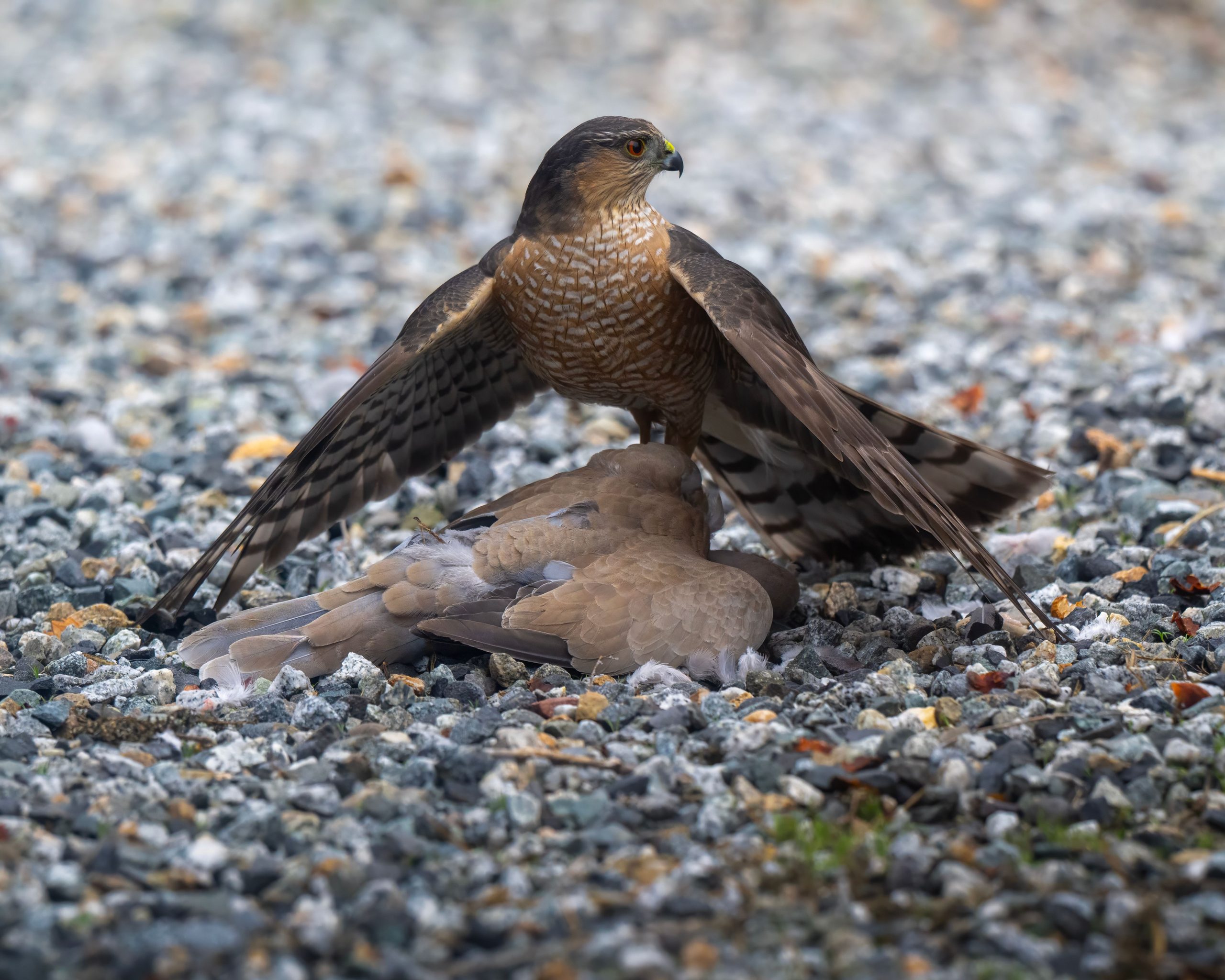
When, for example, a sparrow spots a hawk nearby, it may emit an alarm call. This immediately alerts other birds within hearing distance that a predator is around.
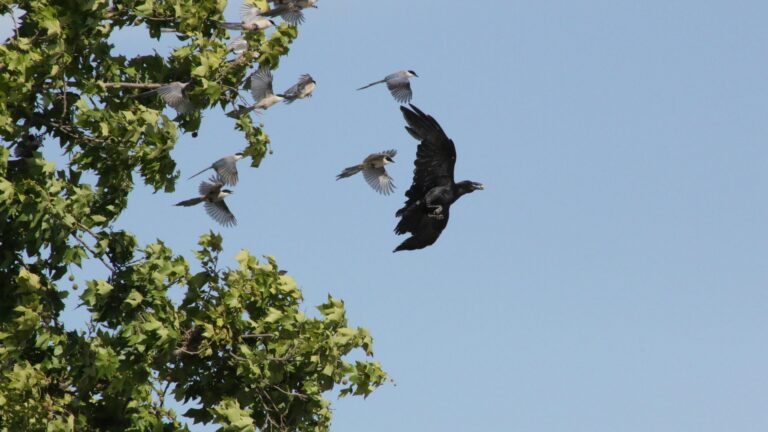
The second response is more like a war cry. Known as a mobbing call, it alerts other birds to gather around a predator – perhaps an owl approaching a parakeet’s nest – and harass it in an attempt to drive it away.
We might assume that a sparrow’s alarm call is meant for other sparrows, and a parakeet’s mobbing call for other parakeets. But is that really the case?
Researchers Agnishikhe Kumar of Xi’an Jiaotong-Liverpool University, China, and his colleagues wanted to investigate whether the diversity of bird species influenced the flow of ecological information through these defensive calls.
In simpler terms, they wanted to find out whether birds of different species listen to each other’s warning calls and act on information about a common threat.
Bird Diversity and Warning Signals Against Predators
The researchers conducted fieldwork over two years in 10 nature reserves in eastern China, covering an area along a 1,650-km north-south gradient.
In the first set of experiments, they used models of two types of predators:
- A flying hawk model to trigger alarm calls among birds.
- A perched owl model to trigger mobbing calls, prompting birds to gather around and attempt to drive it away.
They observed how many bird species responded, how many individuals joined in, how frequently they called and how quickly they reacted.
In the second set of experiments, the team played recordings of bird calls through speakers to observe how local birds responded. The recordings contained calls from one, two, four or eight bird species.
As a control, they also played recordings of cricket sounds, which elicited no response from the birds.
The researchers ensured that the recordings represented different individuals and locations, rather than repeatedly using calls from the same birds.
Read More: Unbelievable Aging Seen in Birds Living in Cities
The Findings
The results revealed an interesting relationship between bird diversity and communication.
A. More species meant more warning calls
Bird communities with greater species diversity produced more calls and involved more individual birds. They also had a wider range of vocal frequencies.
This pattern was observed with both mobbing and alarm calls, although alarm calls were much less frequent, as they are associated with more immediate danger.
B. Birds responded faster when more species were involved
Birds responding to recordings containing calls from more species were more likely to join in during the first minute of playback.
The researchers also found that the range of sound frequencies increased with species richness.
This matters because birds are more likely to recognise calls that share acoustic characteristics with their own. A wider range of frequencies could therefore make warning signals accessible to more species.
C. Birds listen to species other than their own
The playback experiments showed that birds responded not only to calls from their own species but also to calls made by other species.
When researchers played recordings containing calls from more species, more birds joined in the response.
In other words, birds were using information supplied by their neighbours, even when those neighbours belonged to entirely different species.
The researchers identified two possible reasons for this:
- Complementary information: Different species have different types of calls, with varying acoustic characteristics. Together, these create a wider range of signals that more birds can recognise and respond to.
- More voices, more information: As more species participate, more individual birds contribute to the calls. This increases the overall volume and frequency of warning signals.
Interestingly, the researchers found little evidence that one particular bird species was responsible for the stronger response. It was the diversity of species, rather than the presence of a single key species, that mattered.
Why Biodiversity Matters
This research offers another reason why biodiversity matters beyond simply keeping ecosystems rich in species.
A forest with several bird species is not just home to more kinds of birds. It also has a more extensive network of communication.
Birds can benefit from information gathered by other species, helping them recognise danger and respond to predators without having to encounter the threat themselves.
When habitats become fragmented and species disappear, this information network could weaken too. Birds may receive fewer warning signals and have to rely more on their own observations, potentially exposing themselves to greater danger.
The researchers suggest that this principle could extend beyond predator warnings to other animal behaviours, including finding food and selecting suitable habitats.
The study was conducted by Agnishikhe Kumar, Jiahao Wu, Ping Ding, Jakob Bro-Jørgensen, Mylène Dutour, Ari E. Martínez, Xingfeng Si, Qiang Zhang and Eben Goodale.
Read More: These Are the Most Threatened Birds of India
Sources: PLOS Press Preview | Asia Research News | Original research paper – PLOS Biology