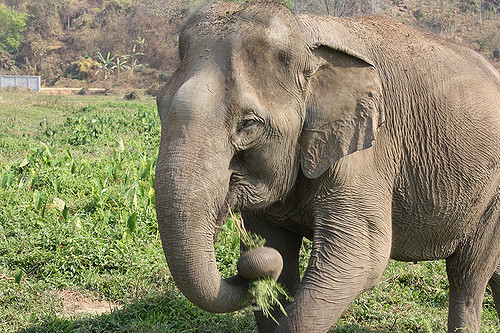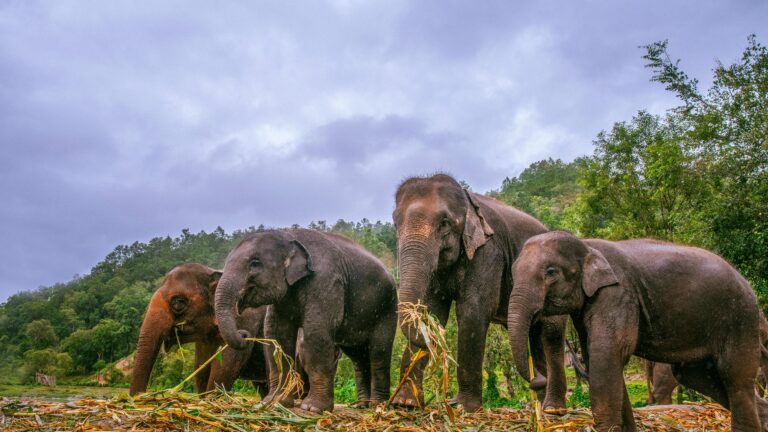
Based on a recent study by a team of researchers in Malaysia, it has been observed that Asian elephants (Elephas maximus) are now adjusting their diets in response to alterations in their habitats.This is particularly true in regions where forests have been fragmented for the construction of dams or entirely replaced by agricultural land for oil palm plantations. Although this adaptability does reflect the resilience of the species, scientists warn that it also indicates growing environmental stress and shrinking natural habitats, highlighting the need for urgent action.
How Scientists Tracked Elephant Diets
Researchers studied Asian elephant populations in peninsular Malaysia by comparing two contrasting environments:
- A logging-affected forest landscape experiencing fragmentation due to the ongoing development of a hydropower dam.
- A plantation-dominated landscape that has largely been converted into oil palm farms.
In the past, Asian elephants that lived in these areas had a diet that primarily consisted of native tree and plant species such as figs (Ficus), giant clumping bamboos (Dendrocalamus), wild bananas (Musa) and various types of grasses.
By performing DNA sequencing on elephant dung, the researchers were able to reconstruct the animals’ diet in either setting, allowing them to study how the diets of the elephants shifted depending on the availability of natural vegetation.
7 Elephant Deaths a Month: Odisha’s Silent Elephant Crisis
Diet Flexibility in Fragmented Forests
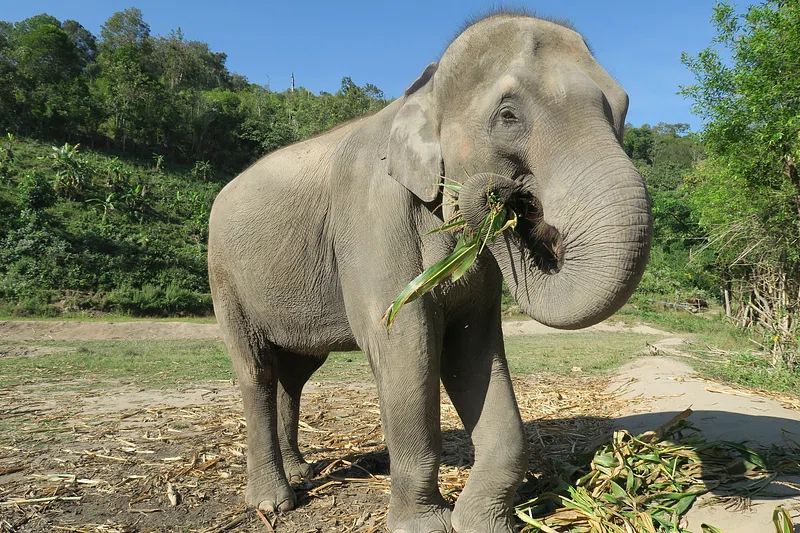
In forest areas affected by logging and fragmentation, elephants were found to have significantly diversified their diets. Instead of relying on a few preferred plant species, they consumed a wide variety of vegetation across grasslands, secondary forests and regenerating vegetation. Hence, this suggests that when preferred food sources decline, elephants compensate by becoming dietary generalists that utilise whatever resources are available in the vicinity to meet their nutritional needs.
As large herbivores, elephants require vast quantities of food daily, so their diet adaptability allows them to survive in changing environments. However, this also means that they are increasingly forced to forage for food outside protected areas, often being compelled to enter human settlements.
Risks Arising with Feeding in Agricultural Plantations
In the case of forested areas that were converted into oil palm plantations, elephants were found to have a lot more limited and predictable diets that were heavily centred on the crops being cultivated by humans.
This pattern isn’t limited to just oil palms in Malaysia and Southeast Asia; even in parts of India, incidents of elephants raiding crops like rice, maize, wheat and sugarcane have been increasingly recorded. The growing exposure of elephants to agricultural landscapes can be devastating as it heightens their dependence on those crops, brings them into direct conflict with farmers and possibly exposes them to violent retaliation that might lead to injuries or death.
India Has Fewer Elephants Than We Thought, Finds First DNA Survey
Resulting Impact on Ecosystems
A recent study led by Sanjeeta Sharma Pokharel, Assistant Professor at Kyoto University’s Hakubi Centre, and Professor Raman Sukumar from the Centre for Ecological Sciences, Indian Institute of Science, investigated the changes in the lifestyle of Indian elephants living in fragmented, human-dominated landscapes.
The study revealed that such elephants:
- Experienced higher physiological stress levels
- Consumed lower-quality diets in various regions
- Altered their feeding times to avoid human interactions, often becoming more nocturnal
Something unique about elephants is that when they stick to their regular diet, they benefit the ecosystem by aiding in the dispersal of seeds, shaping vegetation structure and maintaining grassland-forest dynamics. Unfortunately, the shifting dietary patterns of Asian elephants thus negatively impact the entire ecosystem of the region, signalling a broader ecological disruption.
Chase LaDue, Executive Director of the Sri Lanka Elephant Project, had the following to say regarding the research conducted in Malaysia.
“What makes this research so important is that it demonstrates how habitat loss doesn’t just remove species: it degrades ecosystems at every level, altering animal behaviour, nutritional health, and the ecological services that elephants provide as seed dispersers and forest engineers.”
As the natural habitats of Asian elephants continue to decline due to logging, infrastructure development, agricultural expansion and climate change, the species is being forced into riskier and marginal territories.
Based on the findings of the research, some things that ought to be prioritised for the conservation of wild Asian elephant populations and their dietary patterns include:
- Protection of natural forage: Preserving and restoring natural vegetation is critical to ensure that elephants can access their preferred diets without entering human landscapes.
- Maintaining ecological corridors: It might be possible to connect certain fragmented habitats to form ecological corridors that allow elephants to safely travel between feeding areas without crossing farms or settlements.
- Further reduction of human-elephant conflict: Implementations such as early-warning systems, land-use planning and general laws restricting encroachment into protected habitats may help minimise dangerous encounters with the species.
- Science-based planning: “DNA-based dietary data can help identify key plant species that should be conserved, restored or even planted where necessary,” according to Mohammad Saiful Mansor, co-author of the study from the National University of Malaysia.
Asian elephants are currently classified as “Endangered” on the IUCN Red List. Continued habitat loss could push local populations of the species towards further devastation, which is why the time to act is now.
Species At a Glance: Asian Elephant
Scientific name: Elephas maximu
Common name: Hathi, Gaj
IUCN Status: Endangered
Population: Approximately 22, 446 in India (as of All-India Synchronous Elephant Estimation (SAIEE) 2025)
Range: India, Sri Lanka, Nepal, Bhutan, Bangladesh, Myanmar, Thailand, Laos, Cambodia, Vietnam, Malaysia, Indonesia
Habitat: Tropical and subtropical forests, grasslands, scrub forests, and human-dominated landscapes
Major Threats: Habitat loss and fragmentation, human–elephant conflict, linear infrastructure (roads, railways, power lines), poaching, climate-related stress
Conservation Status in India: Protected under Schedule I of the Wildlife (Protection) Act, 1972; included in Project Elephant
Ecological Role: Keystone species that shapes forest structure and aids seed dispersal
Reference:
1. Changing landscapes drive dietary diversification in Asian elephants | Scientific Reports
2. Elephants adjust what they eat in altered habitats, signalling growing pressure
3. Expanding elephant range fuels human-wildlife conflict
5. Fragmented forests and human disturbances create stress in Asian elephants
Featured image via Pexels