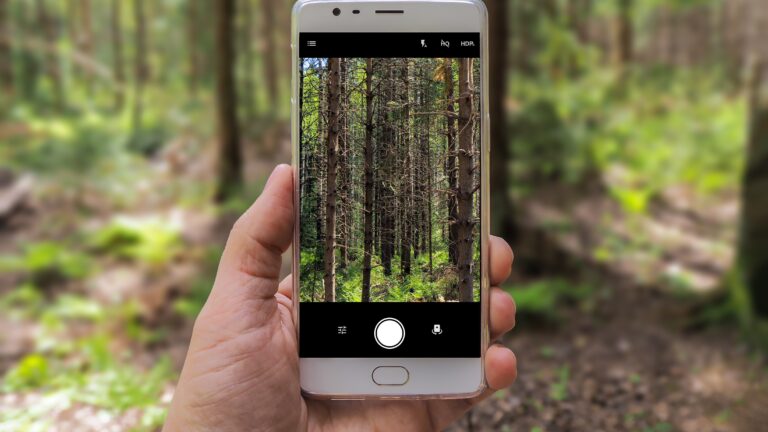
Marking a massive shift in India’s wildlife tourism policy, many of the country’s leading national parks and tiger reserves have recently prohibited the use of mobile phones during safaris. This decision was implemented in accordance with Supreme Court guidelines issued in November 2025 and aims to reduce human disturbance in these protected regions and prioritise conservation over tourism-driven behaviour,
The enforcement of the phone ban varies slightly across parks and reserves, but it follows a broadly similar structure. In most parks, tourists are now supposed to deposit their phones at the entry gates or store them in lockers before beginning the safari, while some parks allow tourists to carry their phones as long as they are switched off throughout the ride. Professional and personal cameras are still allowed on the rides, provided that visitors pay the corresponding fee and follow wildlife photography regulations. Any violation of the ban can potentially lead to fines or even the cancellation of the perpetrators’ safari permits.
Some of the major national parks and tiger reserves that have begun enforcing this ban include Ranthambore National Park, Corbett Tiger Reserve, Sariska Tiger Reserve, Bandhavgarh National Park and Kanha Tiger Reserve.
Read More: Bees Stop Buzzing During Solar Eclipse
Reasons for the Ban
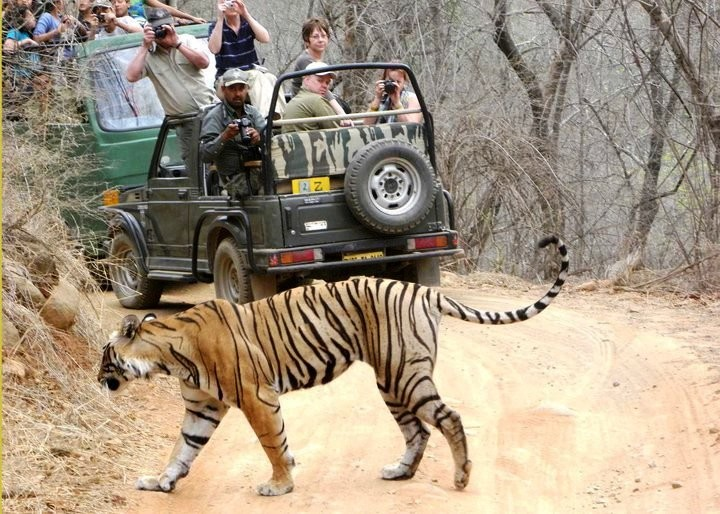
Disturbance to wildlife: Forest officials have noted that increased smartphone use has disrupted natural animal behaviour. They state that tourists are focusing more on capturing viral videos of the animals to get more traction on social media, hence making noise and crowding around the animals to try and get a better shot.
Vehicle congestion: Tourists often share the real-time locations of the animals with other visitors, causing multiple vehicles to be present at the same spot. As a result, the natural pathways of the animals are blocked, forcing them to find alternate movement patterns. This, coupled with the general disturbance caused by excessive engine noise, disrupts the habitat of the region.
Meanwhile, tourists are permitted to carry DSLR, mirrorless or point-and-shoot cameras as these are used solely for photography, unlike smartphones, which support distracting functions like calling and internet sharing. Furthermore, drivers and guides can carry mobile phones in case of any emergencies.
Intended Outcomes
Some of the key goals of this ban include:
- Ensuring a more peaceful and immersive wildlife experience
- Minimisation of human interference in fragile ecosystems
- Restoration of natural animal behaviour and movement patterns
- Prioritisation of visitor safety through the reduction of risky behaviour, such as leaning out of the vehicle to click pictures
The response to the mobile phone ban has been mixed. Wildlife enthusiasts and conservationists have largely welcomed the move, considering it to be necessary for protecting sensitive species and habitats. However, some tourists have branded the move as an inconvenience, stating that it is easier to carry mobile phones than cameras, while also adding that many modern smartphones come with cameras that can even rival DSLRs in terms of image quality. In fact, certain people on the Internet are even outright refusing to go on safaris if they cannot bring their phones with them.
Writer’s Note
It is too early to determine whether the banning of mobile phones will have a positive impact on the habitat in national parks and tiger reserves. I do partly agree with this decision, but a few changes would be beneficial for both sides of the argument, in my opinion. I think the phones should be handed over to the driver or guide at the beginning of the safari and should be kept on silent mode or flight mode throughout the ride. This way, tourists who don’t have cameras with them can ask for their phones whenever they need to take pictures, while the guide ensures that silence is maintained and basic regulations are followed. Moreover, even DSLRs and similar cameras come with mechanical shutters that make noise when taking pictures, so even these devices should have some regulations in place for proper usage. Ultimately, what matters is how stringently and consistently the changes are enforced, along with public co-operation.
Read More: It’s Confirmed, Tigers Spotted in Gujarat after 19 Years