In Brief
- Researchers from the University of Delhi and Harvard University discovered five new species of grape-sized horned frogs (Jingophrys) in Arunachal Pradesh, multiplying India’s known diversity in the genus seven-fold and doubling it worldwide.
- Using DNA and mating calls to distinguish lookalike species, the team documented the first known snail-eating behavior in the Asian horned frog family (Jingophrys tanogogo), alongside unusual umbrella-shaped tadpoles.
- Finding up to four closely related species within a 10-kilometer radius—separated by major rivers and elevation shifts—proves the Eastern Himalayas are an active center where new species evolve locally rather than just migrating in.
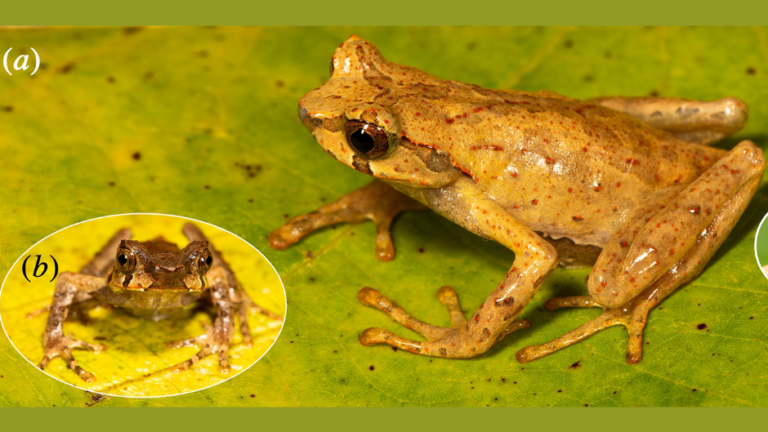
Imagine frogs the size of grapes—measuring roughly 22 mm to 43 mm. On a forest floor carpeted with leaf litter, you might not even notice them, let alone tell them apart. Yet over the course of five years, researchers from Harvard University and the University of Delhi scoured the Eastern Himalayan forests to track down these tiny amphibians. Their fieldwork yielded five brand-new species, all from Arunachal Pradesh—including one that eats snails, a first for the entire Asian horned frog family.
The Asian horned frog family (Megophryidae), found across South, Southeast, and East Asia, is the largest living group of “primitive” frogs (Archaeobatrachia)—an ancient lineage on the evolutionary tree that branched off before “modern” frogs (Neobatrachia) evolved.
Within this family sits Jingophrys, a genus of small horned frogs previously thought to contain just six species scattered across disconnected pockets of the Himalayas and the Indo-Burma region.
By combining DNA family-tree analysis, detailed physical measurements, and behavioral observations, the researchers uncovered five new species, divided the genus into two main sub-groups, recorded two previously known species in India for the very first time, and flagged several additional distinct genetic lineages that await formal naming. Together, these findings represent a seven-fold increase in India’s known Jingophrys diversity and more than double the species count for the genus worldwide.
The study—authored by Sonali Garg, S. D. Biju, Tage Tajo, Radhakrishna Upadhyaya K., and James Hanken—was published in the journal Royal Society Open Science.
The Five Newly Discovered Species
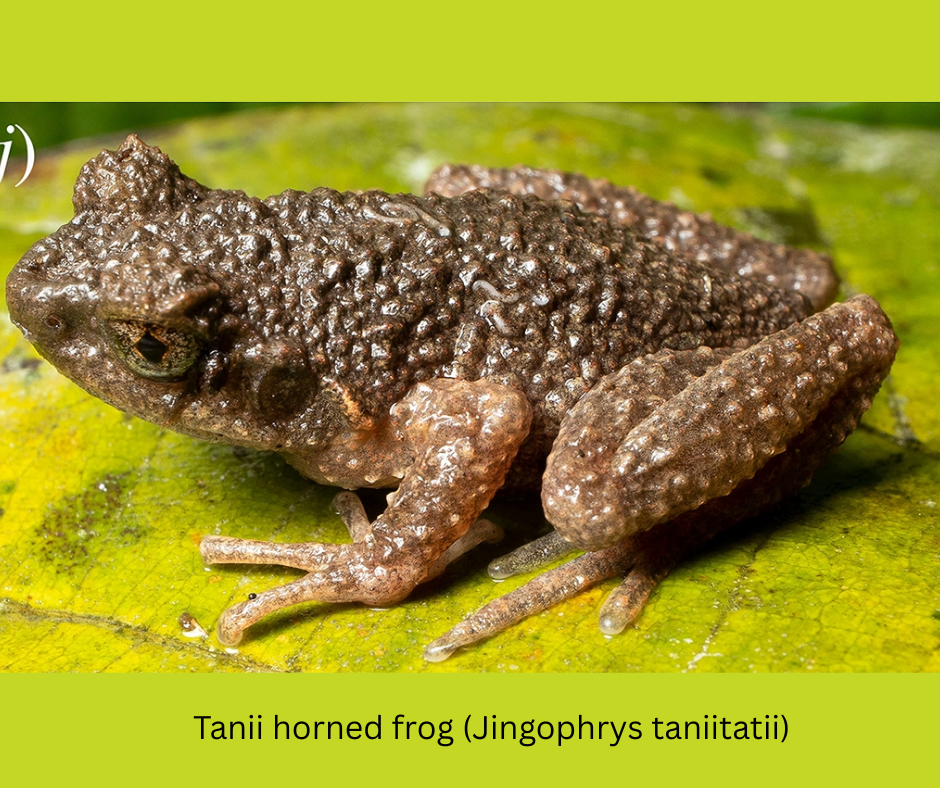
Tanii horned frog (Jingophrys taniitatii)
Named in honor of the Tanii (Apatani) community of Arunachal Pradesh, the species name combines the community’s name with tatti, the local Apatani word for frog.
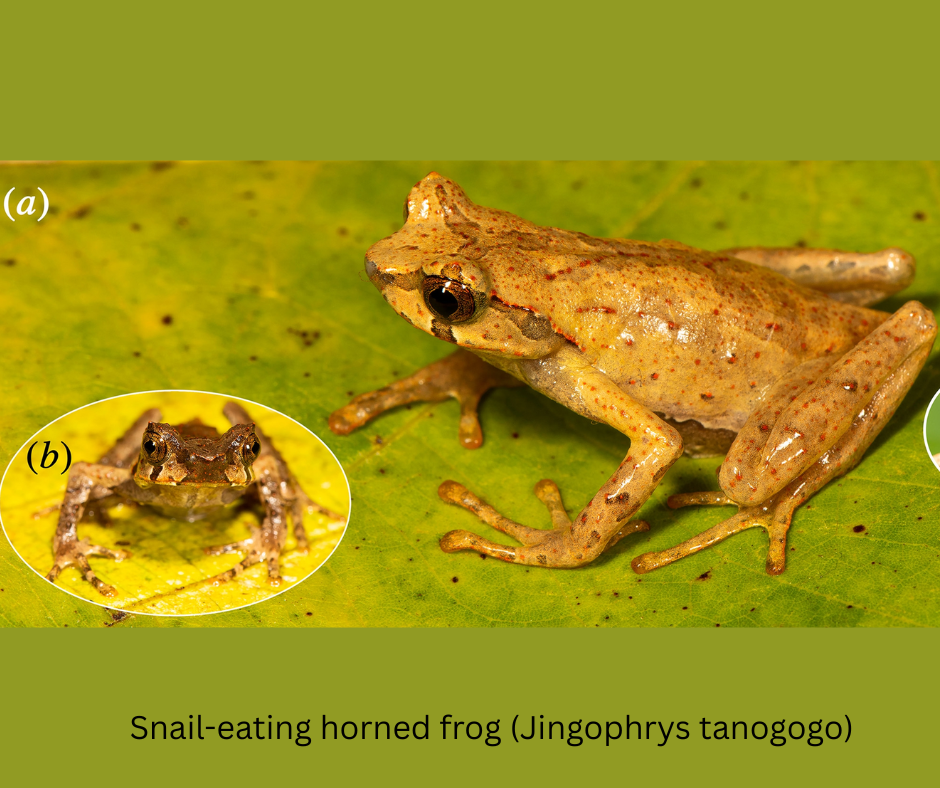
Snail-eating horned frog (Jingophrys tanogogo)
While frogs typically feed on insects and soft-bodied invertebrates, researchers found whole land snail shells inside the digestive tract of this species—marking the first documented snail-eating behavior in the entire Megophryidae family.
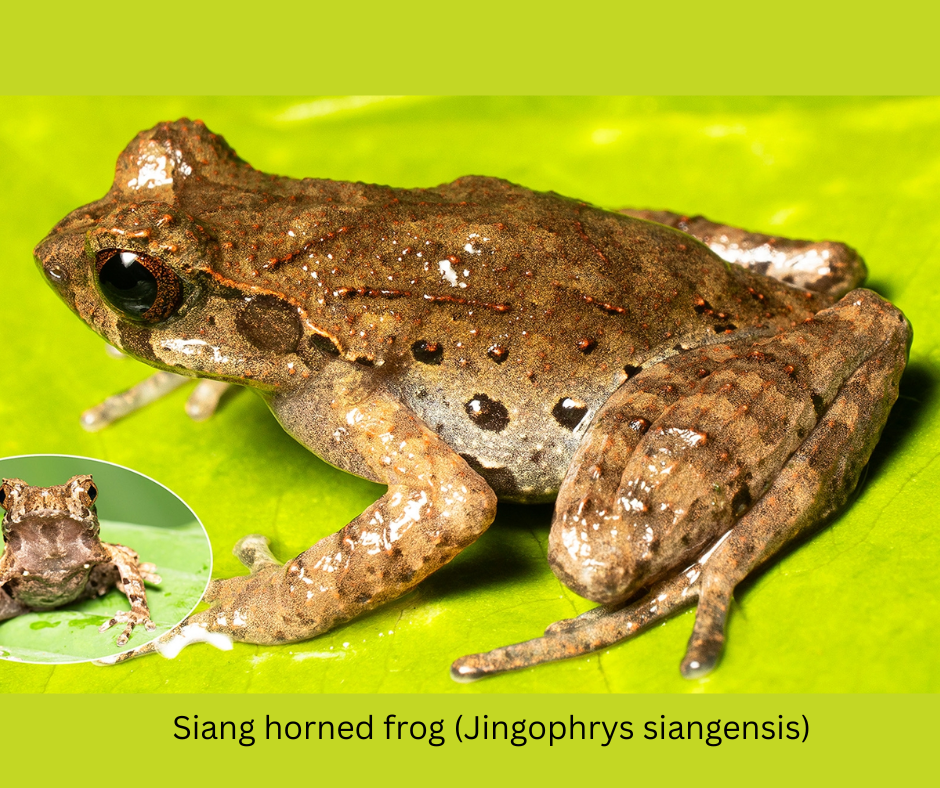
Siang horned frog (Jingophrys siangensis)
Named after Arunachal Pradesh’s Siang region, where it was discovered.
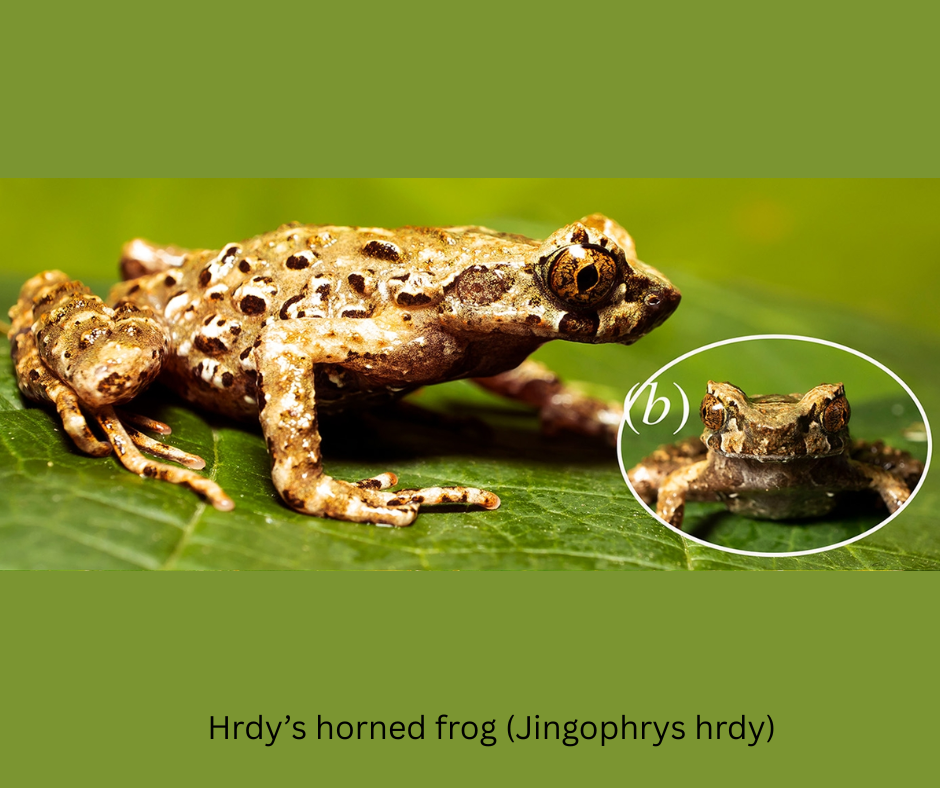
Hrdy’s horned frog (Jingophrys hrdy)
Named after anthropologist Sarah Blaffer Hrdy, medical professor Daniel Bruce Hrdy of Harvard University’s herpetology research.
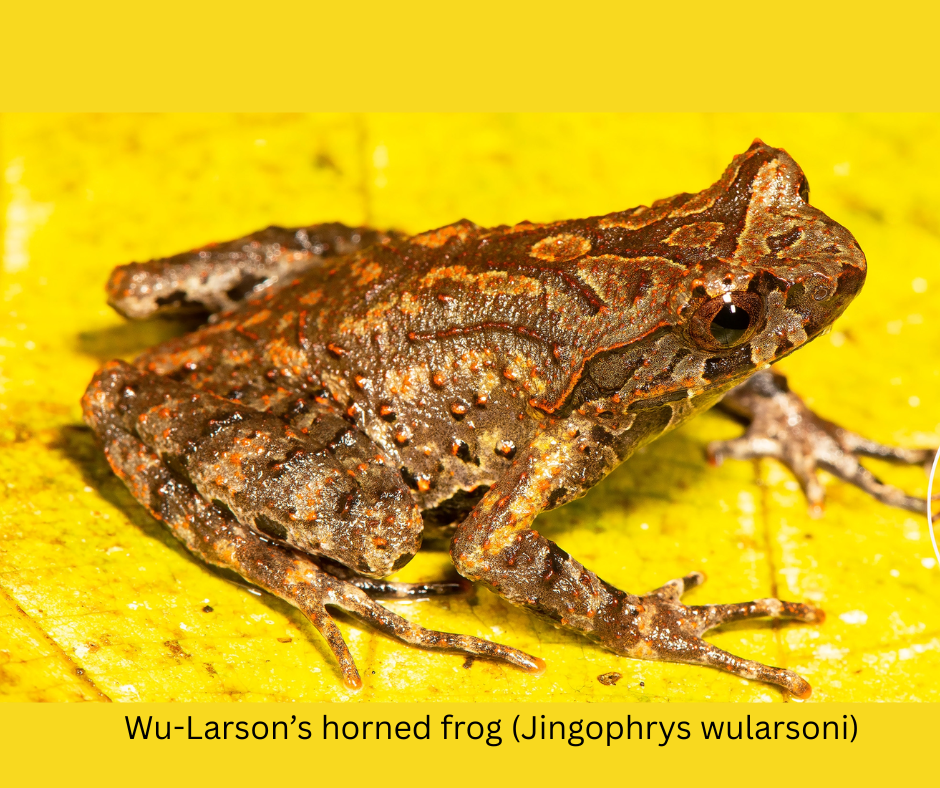
Wu-Larson’s horned frog (Jingophrys wularsoni)
Also named in recognition of herpetologists Barbara Wu and Eric Larson at Harvard University in recognition of their contributions towards herpetological field research and the study of conservation biology.
Jingophrys tanogogo is the smallest of the five new discoveries (males starting around 24.9 mm), while Jingophrys wularsoni is the largest (males up to 40.8 mm, and a single known female reaching 47.6 mm).
| Species | Common Name | Adult Male Length (SVL) | Adult Female Length (SVL) |
| Jingophrys tanogogo | Snail-eating horned frog | 24.9–30.3 mm | 31.8–35.5 mm |
| Jingophrys taniitatii | Tanii horned frog | 27.4–31.1 mm | Not recorded |
| Jingophrys siangensis | Siang horned frog | 28.6–31.3 mm | Not recorded |
| Jingophrys hrdy | Hrdy’s horned frog | 30.0–36.2 mm | Not recorded |
| Jingophrys wularsoni | Wu-Larson’s horned frog | 36.4–40.8 mm | 47.6 mm (single known specimen) |
Because many of these frogs look remarkably alike, physical traits alone were not enough. Acoustic recordings of mating calls and genetic data proved crucial in separating species that would otherwise have been mistaken for one another. Alongside the new species descriptions, the team documented the vocal repertoires of all eight Indian members of the genus and described the unusual, umbrella-shaped (umbelliform) tadpoles of three species.
Read More: Meet the Indian Frogs that Bite, Scream and Stand Tall to Scare Predators
An Evolutionary Engine in the Mountains
Beyond the species count, the study’s central finding reshapes how scientists view the evolutionary history of the region. The researchers suggest that the geological rise of the Himalayas and the intensification of the South Asian monsoon over millions of years created the exact conditions needed for isolated frog populations to diverge into separate species.
Two geographical barriers in particular appear to have driven this split:
- Rivers: Major rivers cutting through the Eastern Himalayas from west to east acted as physical barriers, isolating frog populations and preventing them from interbreeding.
- Elevation: Steep changes in altitude created distinct micro-habitats along mountain slopes, allowing populations at different heights to adapt and evolve independently.
Because of these sharp geographic divisions, researchers found that as many as four closely related Jingophrys species can live within a radius of just 10 kilometers.
This finding challenges the long-held view that the Himalayas merely served as a passive corridor where species occasionally drifted in from elsewhere. Instead, the evidence shows that the mountains are a dynamic center of in situ diversification—an evolutionary engine where frog lineages actively split, multiply, and become distinct species right where they are.