In Brief
- Gujarat is set to receive four Great Indian Bustard chicks (two males and two females) from Rajasthan in early 2027, raising the state’s population to eight birds and improving prospects for establishing a breeding population.
- The move follows the successful hatching of a male chick in Kutch in May 2026 through the Jump Start initiative, which involved replacing an infertile egg in a female’s nest with a fertile egg transported from Rajasthan.
- The chicks will initially be housed at the new 15 sq. km. soft-release centre in Naliya, where restored grassland, predator-proof fencing and minimal human interaction will prepare them for eventual release into the wild.
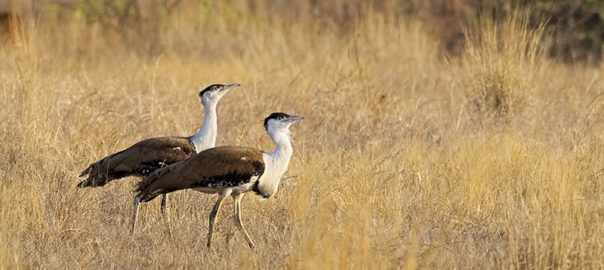
Good news for Gujarat. The state is set to receive four Great Indian Bustard chicks from Rajasthan in an effort to revive the population of the critically endangered bird.
Once found across the grasslands of Saurashtra, including Jamnagar and Kutch, the Great Indian Bustard has all but disappeared from Gujarat. From 48 birds recorded in the Kutch sanctuary in 2007, the population has dwindled to just three females sighted in the state.
But the new year could bring fresh hope. Four chicks – two males and two females – are expected to be relocated from Rajasthan to Gujarat’s newly inaugurated soft-release centre in Naliya, Kutch.
A Male Chick Through Egg Swapping
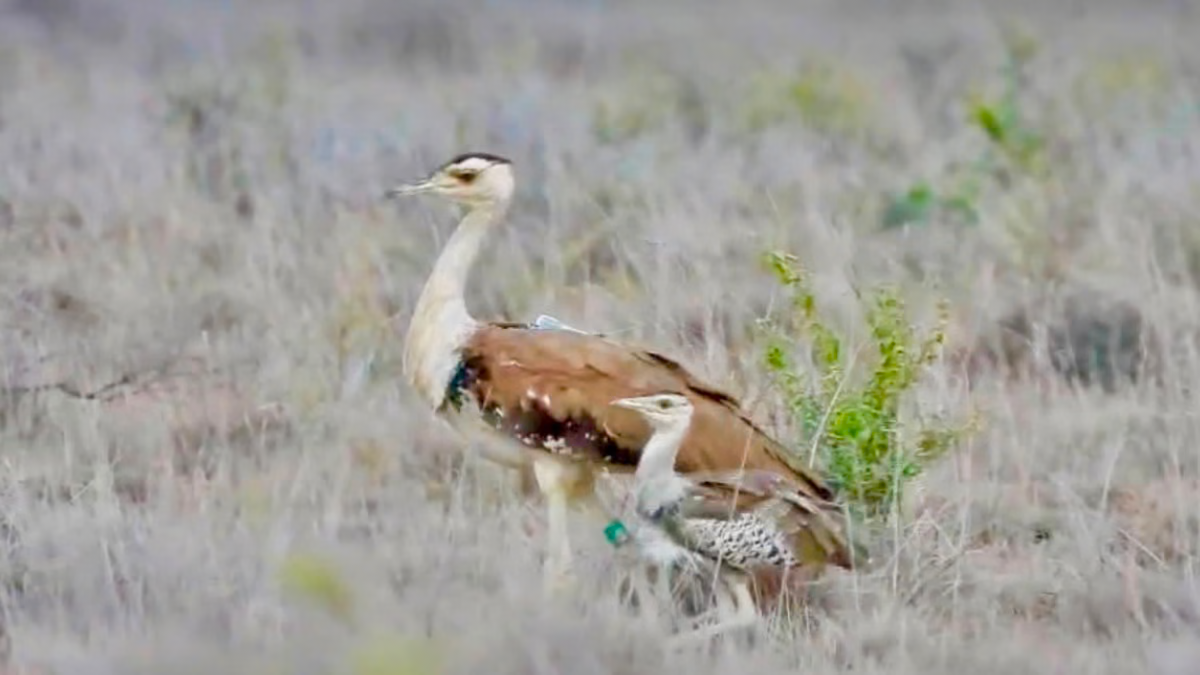
Their arrival comes six months after a male chick hatched in Kutch in May 2026 under the Forest Department’s Jump Start initiative. Gujarat had not recorded a male Great Indian Bustard since 2018, making the birth a significant milestone for conservation in the state.
Read More: Don’t Be Extinct Yet. The Bustard Breeding Centre is Coming Soon
What made the achievement particularly remarkable was that the egg had been transported from Rajasthan and placed under the care of a female bustard in Gujarat replacing its infertile egg with a viable one. The bird accepted the egg, successfully incubated it and raised the chick, which survived in the wild with minimal human interference.
The experiment, however, came with lessons from an earlier setback. A previous attempt in March 2026 using the same approach had resulted in a successful hatching, but the chick survived for only 24 days before being killed by a predator. Following the loss, forest officials strengthened protection measures to improve the chances of survival.
Why are Great Indian Bustard Eggs being Relocated?
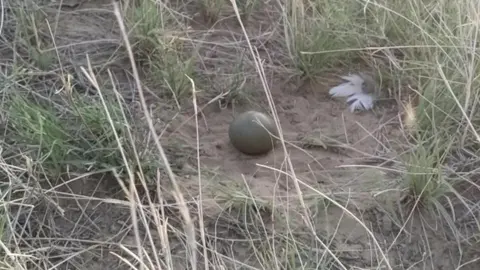
The answer lies in the bird’s unusually slow reproductive cycle. A female Great Indian Bustard generally lays just one egg during the breeding season, which lasts from March to September. She incubates it alone for around 25 days, without any assistance from the male.
The fact that the bird nests directly on the ground makes its eggs particularly vulnerable to predators, livestock and disturbance. Even when an egg hatches successfully, the chick faces considerable survival challenges and remains with its mother for almost a year.
For a species with such a low reproductive rate, losing even one egg can be a significant setback.
Read More: The Perils of Being a Great Indian Bustard
To improve the chances of survival, conservationists in Rajasthan collect some eggs from the wild and artificially incubate them in protected breeding centres. The resulting chicks are raised under controlled conditions to build a population that can eventually be reintroduced into the wild.
The technique is now also helping Gujarat, where all surviving wild Great Indian Bustards are female. By replacing their infertile eggs with fertile ones brought from Rajasthan, conservationists are giving these females an opportunity to hatch and raise chicks.
Critical First Few Months at the Centre
With the arrival of the four new chicks, Gujarat’s Great Indian Bustard population is expected to rise to eight birds, including three males. More importantly, the addition of males and females could pave the way for breeding pairs to form and eventually establish a naturally reproducing population in the state.
Once the chicks arrive they will spend the crucial first few months in the Naliya centre inaugurated in September this year. The centre has 30 km. of predator-proof fencing covering 15 sq. km. The forest officials have also restored around 11 sq. km. of grassland infested with the invasive Prosopis juliflora in the area to make it a more suitable habitat for the grassland species.
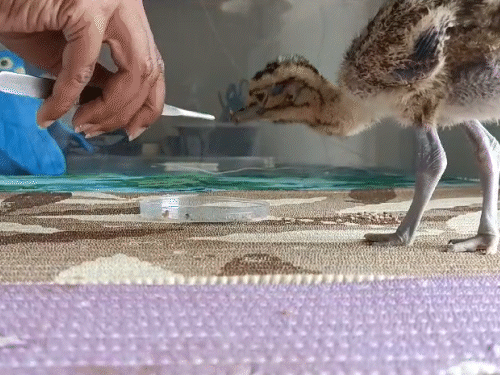
While in the centre, it will be ensured that the chicks get minimum human interaction and do not start associating humans with food in order to increase their chances of survival in the wild without human help.