In Brief
- Once declared extinct in the wild by the IUCN in 2002, the black softshell turtle is showing signs of recovery through collaborative conservation efforts involving state forest divisions and organizations like the Wildlife Survival Alliance Foundation India (WSAFI).
- On November 7, 2026, 240 artificially incubated hatchlings—collected from the Nagshankar Temple and reared under controlled conditions—were released into the Biswanath Wildlife Division in North Assam.
- Partnering with temple authorities to protect eggs and provide safe rearing environments has successfully helped reestablish stable populations of these sacred turtles within the Brahmaputra-Kaziranga landscape.
In 2002, the International Union for Conservation of Nature (IUCN) declared the black softshell turtle ‘Extinct in the Wild.’ For any species, that designation is a death knell—signaling that the population is nearly gone from Earth, save for a few individuals in zoos.
Miraculously, the black softshell turtle did not disappear entirely. A few were found surviving in Assam’s Hayagriva Madhava Temple pond and the Kalyan Sagar lake at the Tripura Sundari Temple in Tripura, India.
Since then, thanks to the dedicated efforts of state governments and committed conservation organisations, this fascinating species is showing signs of recovery. Consequently, the IUCN reclassified its status on the Red List of Threatened Species from ‘Extinct in the Wild’ to ‘Critically Endangered.’
Read More: What Causes a Sea Turtle to be Female or a Male?
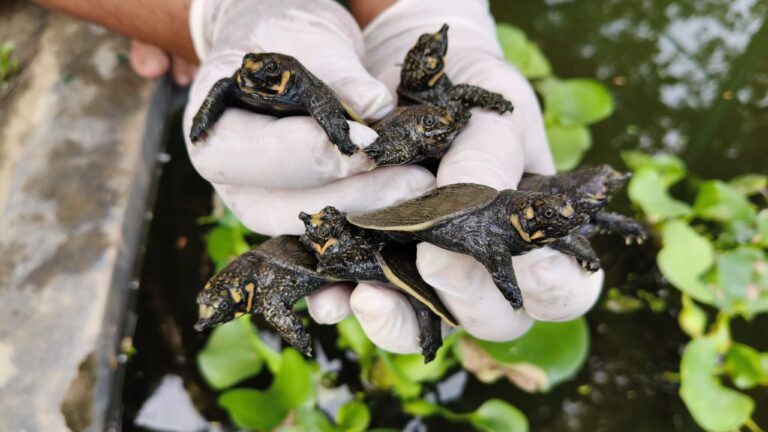
On 7 November 2026, 240 black softshell turtle hatchlings were released into the Biswanath Wildlife Division in North Assam. This was part of a joint conservation effort between the state forest division and the Wildlife Survival Alliance Foundation India (WSAFI), which began nearly a decade ago and has since returned thousands of hatchlings to the Brahmaputra basin by working with temples and the sacred turtles in their ponds.
A turtle of myths, legends, and cultural significance
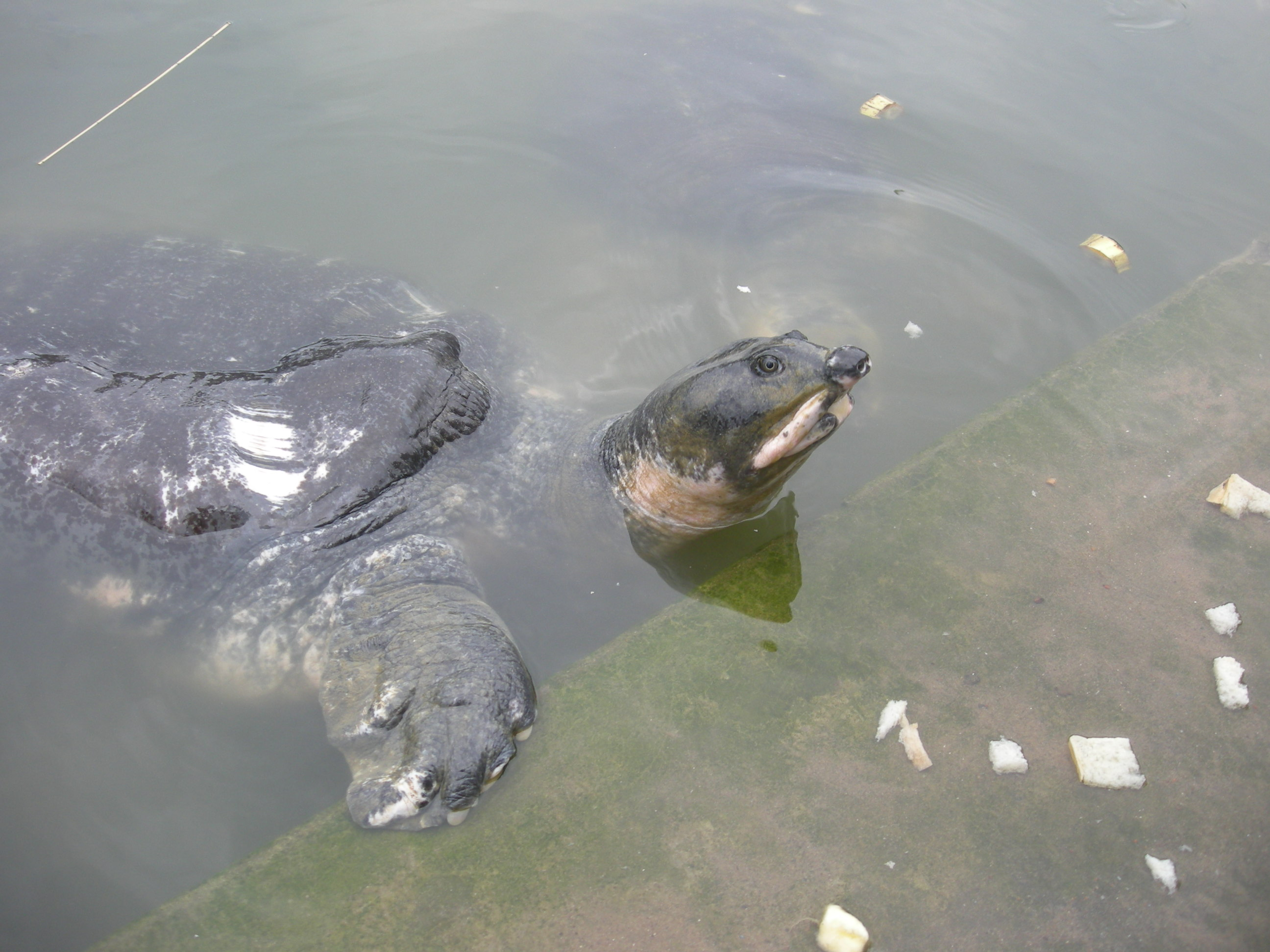
The black softshell turtle (Nilssonia nigricans) is native to India and Bangladesh. Legend has it that centuries ago, the Sufi saint Hazrat Bayezid Bostami brought these turtles from Iran to a shrine pond in Chittagong, Bangladesh—which is why they are also known as Bostami turtles.
In Assam, turtles are considered sacred and are traditionally offered to temples, particularly those dedicated to Lord Shiva. Consequently, in many temples across Assam and Tripura, the black softshell turtle—locally called the Bormuria kaso—has survived in temple ponds, even as its wild relatives faced near-extinction due to overexploitation for meat.
However, living in semi-captivity within temple ponds, even as revered religious symbols, presents significant challenges.
Temple visitors frequently feed the turtles fruits, vegetables, and sweets, which do not meet their nutritional requirements. Furthermore, these ponds often lack the natural features essential to their habitat, such as adequate basking space, shaded areas, and suitable nesting sites. Without proper protection, eggs face high mortality rates, and hatchlings are vulnerable to predation by feral dogs and mongooses.
In 2012, conservation efforts gained momentum when researchers began collaborating with temple authorities to improve conditions within the premises. They worked to safeguard eggs and provide hatchlings with a safer environment to mature, supported by state zoos.
Read More: Turtle Thought to be Extinct in the Wild, Discovered in Nagaland
This initiative evolved into the “Conservation and Recovery of Black Softshell Turtle in Assam” project, under which eggs collected from temple ponds were transferred to state zoos for incubation. The first release of hatchlings into the Pobitora Wildlife Sanctuary took place in 2016.
The most recent hatchlings released in November emerged from eggs collected at the Nagshankar Temple in Assam during March and April 2026. They were artificially incubated under controlled conditions at the Biswanath Brahmaputra Ghat. After hatching in July and August, the young turtles were transferred to a grow-out facility and fed small fresh fish for nearly three months to boost their weight prior to release.
“The species now has a stable population in the Brahmaputra-Kaziranga landscape, owing to sustained conservation efforts and is now listed as critically endangered. Nagshankar Temple has played a key role in this initiative,” the WSAFI said.
Although further research is required to evaluate wild survival rates and assess current population trends, the collaborative efforts of temple authorities, conservation organisations, and the state government offer a promising path forward for the species and is a great example how communities and sometimes religious sentiments can play a key role in the conservation of a species.
Read More: Man-Made Flippers Give Crippled Turtle a Chance to Swim Again