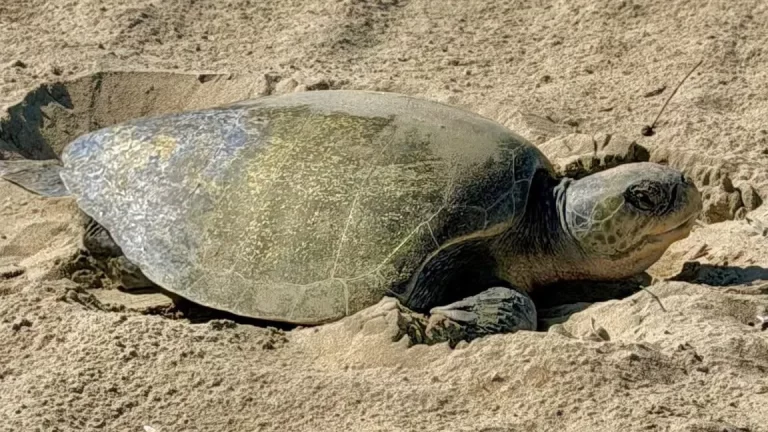
It is the first time in recorded history that an Olive Ridley Sea Turtle has laid eggs on a Southern California beach. Scientists fear this to be a sign of warming waters when a tropical turtle moves north to lay eggs.
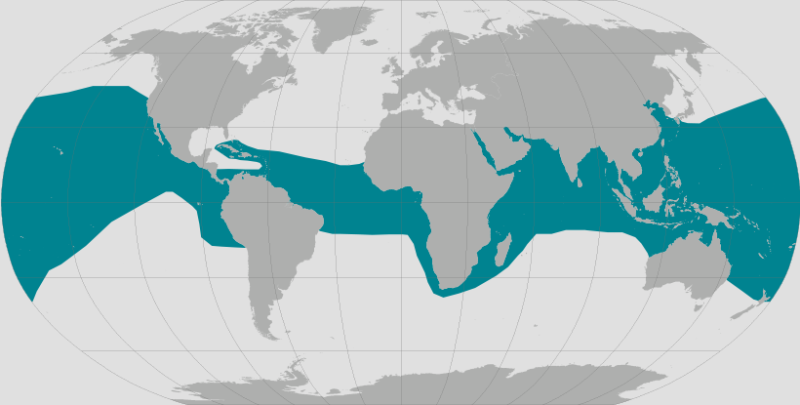
Olive Ridley turtles are known to live in tropical regions of the Atlantic, Pacific and Indian Oceans. Off the coast of India and Mexico, the waters are ideal for their survival and for nesting, where they are most famous for their mass nesting strategy called ‘Arribada’, meaning arrival in Spanish.
Every year, hundreds to thousands of female turtles congregate on the beaches of Mexico and India to lay eggs together. Gahirmata and Rushikulya beaches of Odisha in India are some of their favourite Arribada destinations.
The turtles also nest solitarily. According to NOAA, “Solitary nesting also occurs extensively throughout this species’ range, and nesting has been documented in approximately 40 countries worldwide. Arribada nesting, however, occurs on only a few beaches worldwide.”
In Uncharted Territory
On 16 September 2026, an olive ridley turtle was seen digging a nest on a coastal area near Seal Beach, California, and laying eggs. Three days later, a turtle was seen again further south near the Huntington Pier, laying eggs. It has since been confirmed that these were two different turtles. Both the areas have been fenced and visitors have been asked not to disturb the sites.
What is, however, concerning to scientists is the very presence and nesting behaviour of the species in this region. This is the first documented evidence of a sea turtle nesting naturally on the West Coast of the USA.
As per The New York Times, which first published this news, “On Tuesday, scientists said that the turtle’s appearance is a sign of what is to come in California. Waters off the West Coast have been warming for many years, attracting species accustomed to warmer climates, such as brightly colored tropical sea slugs and Humboldt squid. This year, the trend has intensified because of a strong El Niño — a periodic climate phenomenon characterized by warmer temperatures in the Pacific Ocean.”
As per the world map showing the range of olive ridley turtles, the area where the turtles lay eggs in the USA falls just around the border of this range.
It is possible that the incident is one of those solitary turtles that might have felt the beach safe enough to lay eggs.
But scientists do not yet know whether these two nests represent the beginning of a shift in the species’ nesting range or are simply two unusual, isolated events.
Warming ocean temperatures can affect where sea turtles live, forage and migrate. As waters become warmer, species that normally live in tropical regions may find suitable conditions further north. But nesting is a different matter. A turtle may reach a new area because of changes in ocean conditions, but the beach must still provide the right conditions for the eggs to develop and hatch successfully.
Read More: What Causes a Sea Turtle to be a Female or a Male?
More Climate Change Worries for Sea Turtles
On the other hand, there is another threat sea turtles are facing because of warming temperatures. Higher sand temperature can lead to more females than males in turtles, as the sex of the hatchling is determined not during fertilization but by the temperature of the sand where the egg has been laid.
Research shows that if a turtle’s eggs incubate below 27.7° Celsius (81.86° Fahrenheit), the turtle hatchlings will be male. If the eggs incubate above 31° Celsius (88.8° Fahrenheit), however, the hatchlings will be female. Temperatures that fluctuate between the two extremes will produce a mix of male and female baby turtles.
Will the California Hatchlings Survive?
The two California nests now offer scientists an unusual opportunity to observe what happens when olive ridleys lay their eggs at the northern edge of their known range.
Olive ridley eggs generally take around 45 to 60 days to hatch. During this period, the temperature of the sand, rainfall, tides, storms and other conditions can affect the developing eggs and hatchlings.
If the eggs hatch successfully, scientists will also be able to observe whether the California beach provides suitable conditions for the young turtles. The sex of the hatchlings could offer another important clue because warmer sand produces more female hatchlings.
For now, the two nests remain an unusual event. Whether they are simply two solitary turtles that ventured beyond their usual nesting grounds or an early indication of a changing range is something scientists will have to watch.
Read More: Sea Turtles are Attracted to Stinky Plastic
Read More: Turtle Thought to be Extinct in the Wild, Re-discovered in Nagaland