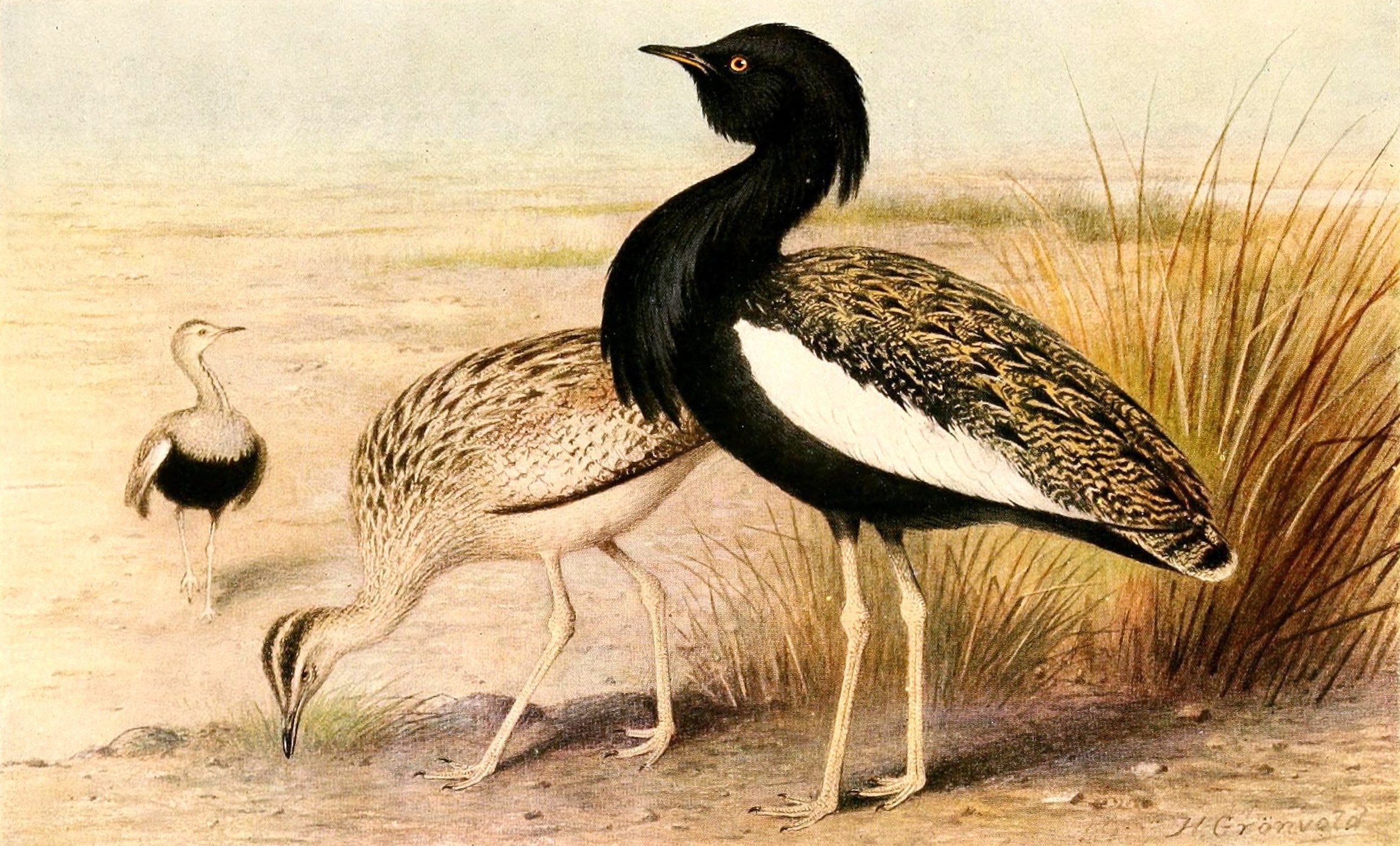
Jerdon’s Courser is species handpicked for Week 3 of our 2026 series 52 Weeks. 52 Threatened Species. To read about the project and other species visit The Jar
Jerdon’s Courser (Rhinoptilus bitorquatus) is one of India’s most enigmatic and imperiled birds — a nocturnal, ground-dwelling species that has teased naturalists for nearly two centuries with its rarity and elusiveness. Its story is one of hope, mystery, and the urgent need for habitat protection.
A Bird Lost and Found Again — More than Once
Thomas C. Jerdon first described this secretive courser in 1848, based on a handful of specimens and records from peninsular India. For decades thereafter it vanished from scientific sight — so thoroughly that it was presumed extinct.
Then, in 1986, the species was rediscovered in scrub habitats of the Eastern Ghats in southern Andhra Pradesh by ornithologist Bharat Bhushan of the Bombay Natural History Society, nearly 86 years after the last confirmed record. Its rediscovery led to the creation of the Sri Lankamalleswara Wildlife Sanctuary to protect its remaining habitat.
Despite this breakthrough, Jerdon’s Courser remained extremely rare. There were no confirmed sightings after 2004, even as acoustic surveys in the 2000s suggested its presence. It wasn’t heard or seen for more than two decades — sealing its reputation as India’s “ghost bird.”
Rediscovery in 2025 — Hope Beyond Its Known Range
In August 2025, a team of dedicated birdwatchers recorded distinctive calls of the courser at dusk in Andhra Pradesh — the first confirmed evidence of the species since 2004 and the first outside the traditional Lankamalleswara site in over a century. This acoustic confirmation was achieved using sound recording equipment, highlighting just how elusive a species this is.
Although no clear photographs accompanied the rediscovery, the repeated calls have been authenticated by experts, offering renewed hope that undiscovered populations might exist in other scrublands of the Eastern Ghats.
Here is a useful field booklet prepared by the team that searched and heard the calls of the Jerdon’s Courser in 2025,
What Makes the Jerdon’s Courser Unique?
Appearance & Behaviour
- A cryptically brown, ground-dwelling bird, roughly the size of a dove, with long legs and a discreet demeanor.
- It is nocturnal and crepuscular, moving quietly over thorn scrub and bare ground, often active at dusk and night — which contributes to its rarity of sight.
- Very little is known about its breeding behaviour, nesting, or reproductive biology.
Population & Distribution
- Endemic to southern India, mostly known historically from Andhra Pradesh’s Eastern Ghats.
- Population estimates range from as few as ~50 to a couple of hundred individuals — but these figures are very uncertain due to the bird’s secretive habits.
- Until 2025, confirmed records were almost exclusively limited to a tiny stretch of scrub forest within the Sri Lankamalleswara Wildlife Sanctuary.
Threats: Scrubland Under Siege
Jerdon’s Courser lives where few human observers go — in open, thorny scrub forests with patches of bare soil. But these habitats are among the most threatened landscapes in peninsular India. Habitat loss and fragmentation due to agriculture, livestock grazing, and development projects; infrastructure projects such as canals and roads that cut through scrubland; encroachment and human disturbance that degrade the ecologically fragile environment the bird depends on are some of the major threats the bird is facing today.
Efforts to sustain and expand suitable habitat remain fragmented and underfunded, even as these low, thorny forests are often overlooked in conservation planning. Protecting them could be key not just for Jerdon’s Courser, but for many other scrubland specialist species.
The 2025 acoustic rediscovery underscores a truth about the Jerdon’s Courser: absence of evidence is not evidence of absence. It is an exceptionally hard species to document with human eyes, but technology — from audio recorders to camera traps — is helping researchers probe where traditional surveys have failed.
For conservationists, the priority is:
- Protect existing scrub ecosystems and prevent further destruction.
- Expand systematic surveys across suspected habitats.
- Engage local communities, whose cooperation can make or break habitat protection.
- Maintain long-term monitoring, especially using non-invasive methods given the bird’s sensitivity to disturbance.
Further Reading (India’s Endangered Archive)
🟦 Jerdon’s Courser: A Precious Rarity — detailed ecological and historical background
🟧 The Rarest Egg in the World — fascinating historical vanishing and rediscovery narrative
🟨 India’s Ghost Bird Heard Beyond Its Known Range — latest rediscovery and range update