Quick Glance:
- Tamil Nadu is actively restoring forest ecosystems by eradicating Senna spectabilis, invasive plants spreading across the Western Ghats.
- The state has cleared most affected areas through systematic removal and by converting the biomass into eco-friendly paper pulp.
- The initiative highlights that effective climate action depends on protecting native biodiversity, not just planting more trees.
As the world looks to trees as a solution to climate change, Tamil Nadu’s forests are telling a more complicated story. In the Western Ghats, the state has been quietly waging a large-scale ecological battle—not to plant more trees, but to remove one. By systematically eradicating Senna spectabilis, a fast-spreading invasive species choking native forests, the Tamil Nadu Forest Department is restoring nearly 2,500 hectares of critical habitat and turning the cleared biomass into eco-friendly paper pulp.
Local and Governmental Measures to Curb Senna Growth
The Tamil Nadu Forest Department has targeted to get rid of Senna spectabilis, a yellow-flowering invasive tree species that has spread across the Nilgiris and other parts of the Western Ghats, by March 2026.
The work done has been systematic; Senna has already been cleared from more than 1,963 hectares of the 2,446 hectares where it was present in Tamil Nadu, leaving just 483 hectares of forest space to be handled in the coming three months.
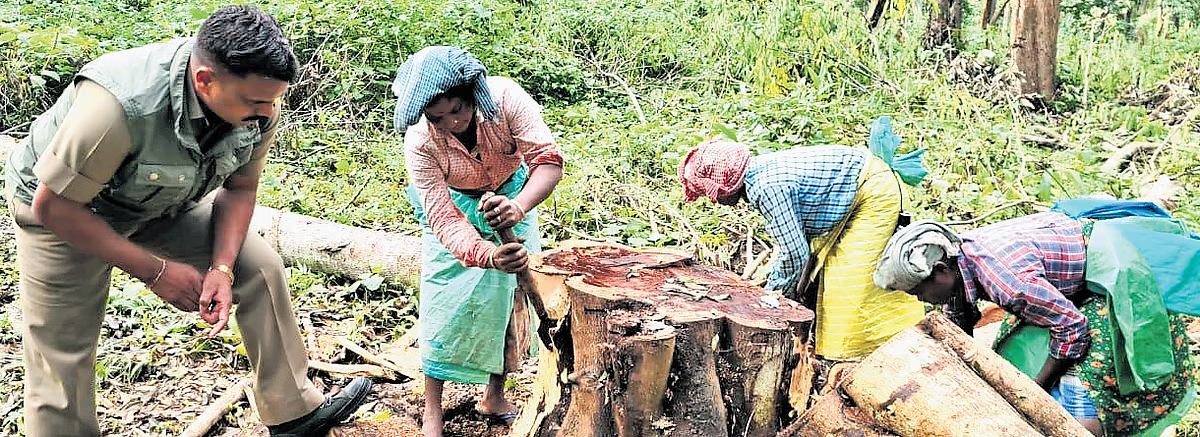
What’s more, the state has partnered with Tamil Nadu Newsprint and Papers Limited (TNPL) and Seshasayee Paper and Boards Limited (SPB) for converting Senna invasive plants biomass into eco-friendly paper pulp. Through this initiative, Tamil Nadu has been able to remove more than 31,258 metric tonnes of Senna from places like Mudumalai Tiger Reserve, Sathyamangalam Tiger Reserve, Dindigul, Pollachi, Erode, Sathyamangalam, Udhagai and Masinagudi. This way, the state is restoring native habitats while also making good use of the removed Senna.
Tamil Nadu isn’t the only state to focus on the removal of these invasive plants. In fact, the first science-based, community-driven eradication of Senna in India happened in the Tholpetty range of Wayanad, Kerala, where the species had been widely popular upon introduction from South and Central America due to its resemblance to Kerala’s state flower, kanikkonna (Cassia fistula).
Read More: Invasion of Invasive Plants, 11 Species Eating Away India’s Forests
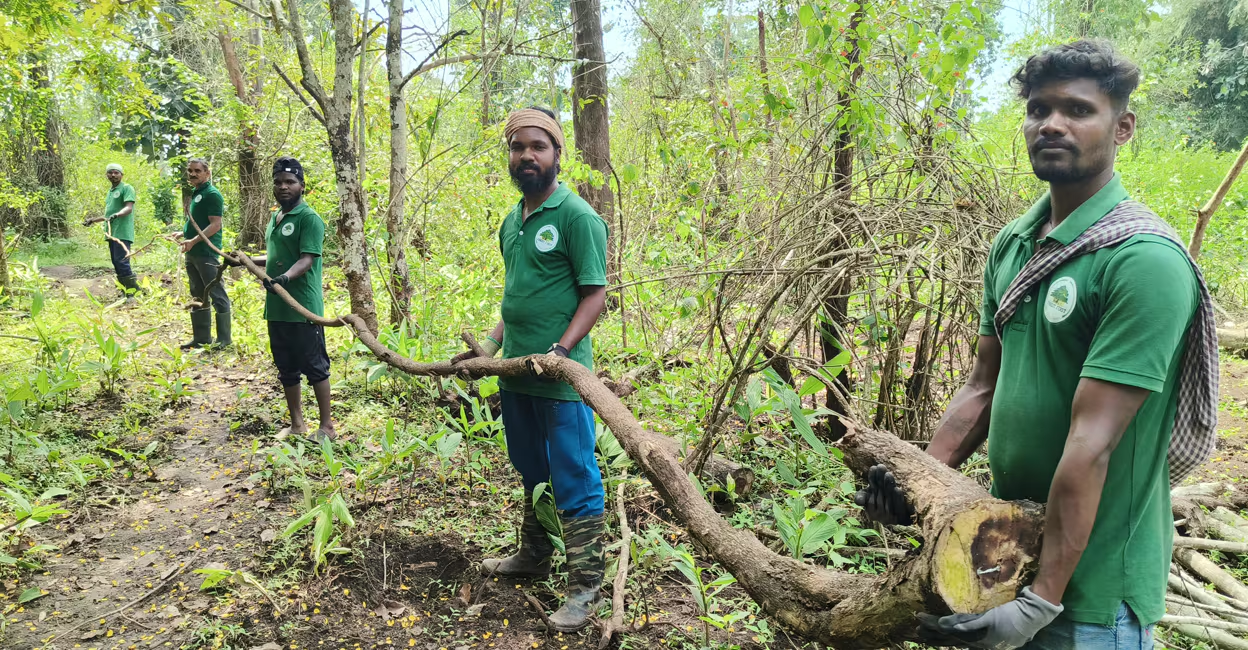
This was possible due to the “Wayanad model”, which involved the collaboration of the Kerala Forest Department, a Wayanad-based NGO known as the Forest First Samithi, and youth from the local tribes of Kurichiya and Kattunaikka. With the help of this model, the state was successfully able to uproot over 46,450 Senna trees from the region, utilising handheld uprooting tools that could be used even by untrained workers to extract whole root balls. This success is what inspired other South Indian states to take similar measures to eradicate and curb the growth of the invasive plants in their regions.
Looming Threat of Invasive Plants in India’s Forests
Global warming and climate change are two of the greatest threats that our planet faces in the present scenario, and many people hold the notion that growing more trees and plants can be a possible solution. While this idea does carry some weight, it is very important to note that there are some plant species that should not be grown in certain regions. A plant native to a particular region automatically becomes invasive plant in another region if that is not its habitat.
This is especially true in the case of invasive plants, which can be inadvertently brought to new areas where they can rapidly spread and create an imbalance in the environment by affecting the local biodiversity. By displacing the indigenous plant life, invasive species remove the food base of herbivores, which are then forced to move into human settlements, often followed by carnivores as well.

One of the worst aspects of invasive plants is their ability to grow and spread rapidly, often unnoticed until they begin to exhibit their adverse impacts. Lantana camara may look like a colourful flowering plant, but it is an extremely notorious weed, being included in the IUCN’s “List of the world’s 100 worst invasive species”. Originating from South and Central America, Lantana was introduced to India during the colonial period; by 2023, the plant species had spread to nearly 50% of all the natural areas in our country.
Read More: 11 Threatened Plant Species of India
Even Mimosa diplotricha, which is related to and displays leaf movements similar to those of the aptly named touch-me-not (Mimosa pudica), is unfortunately considered to be an invasive species in the country. These are just 2 of the 54 invasive plants species in India, and there are plenty more aquatic plant, fungi and animal species that are negatively impacting India’s rich biodiversity.
The Need for Continuous and Large-Scale Action
The fight isn’t over yet. Senna is quite a persistent species, and new seedlings can continue to appear despite multiple clearings. Thus, constant eradication efforts are required to actually make a difference.
“We need to maintain the landscape for at least two to three years to effect permanent change. New Senna shoots emerge from deep roots. Maintenance is key,” says R. Kiruba Shankar, Field Director of the Mudumalai Tiger Reserve.
Moreover, Senna is one of the invasive plants with a comparatively milder impact on the environment than some of the other species, as it isn’t considered to be an economical and health hazard. Unlike Senna, Lantanum and Congress Grass (Parthenium hysterophorus) are known to be toxic to livestock and also cause various allergic reactions.
“This is not about a single weed,” states Meera Chandran, co-founder of Forest First Samithi. “Across India, invasive species like Lantana, Eupatorium, Acacia and Senna are erasing ecosystems silently. If we don’t act now, we risk losing the very forests we claim to protect.”
Read More: Invasive Species Eating Away Forest Cover of Andman Islands