Sometimes, it takes just one birth to change the course of conservation history.
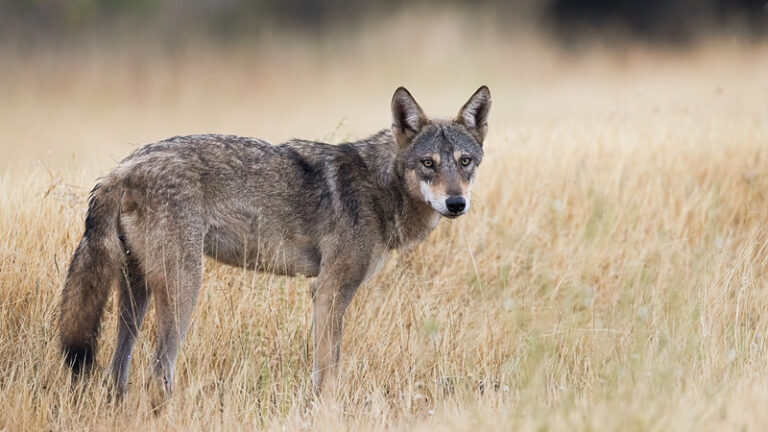
“Randeepak” — a male wolf pup — was born in the wild to captive-bred Indian wolf parents, Sona and Pradeep, who were released last year into the open grasslands of Kutch’s Nadabet under Gujarat’s Wolf Breeding and Conservation Programme.
This birth marks a historic milestone: Randeepak is the first pup in India to be born in the wild to captive-bred wolves. It is also the country’s very first attempt to reintroduce a zoo-bred carnivore into its natural habitat — and, according to officials, only the second such case in the world. The first was the reintroduction of red wolves in the United States.
Returning to the Wild
Sona, then 3 years old, and Pradeep, aged 4, were released in Nadabet in September 2024 along with two pups. Three months later, in December, another five wolves were released into the wild in Satalpur Taluka. The Gujarat Forest Department monitored their progress closely, and the results were promising.
“Data reveals that 90% of their kills are nilgais. Wild boars, rabbits, and other small animals make up the remaining 10%,” said Chirag Amin, Deputy Conservator of Forest, Banaskantha Wildlife Division, in an interview with The Times of India.
This is no small feat. Releasing an animal born or raised in captivity into the wild is like sending a soldier into battle without any ammunition. Even with some preparation, survival demands constant vigilance — finding and hunting prey, navigating unfamiliar terrain, avoiding natural hazards, and integrating socially with wild-born counterparts. For a social species like the wolf, which thrives in packs, failing to fit in can be fatal.
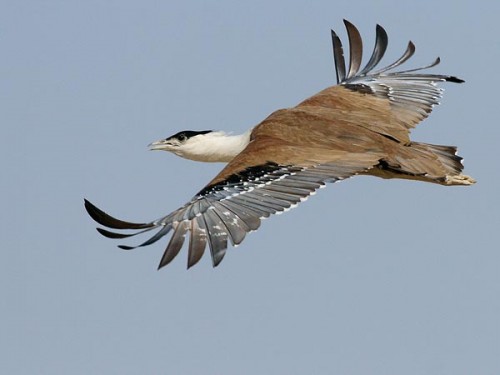
Read More: IUCN Report Hastens Plans for a Great Indian Bustard Breeding Centre
Indian Wolves: Guardians of the Grasslands
The Indian wolf Canis lupus pallipes is an endangered species. It is a subspecies of the Grey Wolf inhabiting thorn forests, scrub-lands, arid and semi-arid grassland habitats in India. Experts often note that while tigers and leopards ruled the forests, wolves evolved as the apex predators of the open, arid grasslands — a testament to how deeply their survival is intertwined with these habitats.
By preying on both large and small herbivores, wolves help regulate their populations and even reduce crop damage — a role often overlooked.
Indian wolf population is estimated to be approximately 3,100 adult wolves in India according to a 2022 model-based estimate. A 2023 census in Gujarat alone counted 222 wolves in 13 districts. Apart from Gujarat, they are also found in isolated pockets in Madhya Pradesh, Karnataka, Maharashtra, Andhra Pradesh, Rajasthan, Odisha, Bihar, West Bengal, Uttar Pradesh and Haryana.
The birth of Randeepak proves that Sona and Pradeep not only overcame these challenges but also felt secure enough to raise the next generation. It is a powerful sign that the years of effort to equip them with the skills for life in the wild are paying off — and that hope for India’s wolves is running on four very energetic little legs.

One thought on “Historic First: Captive-Bred Wolves Give Birth in the Wild in Gujarat’s Grasslands”