Quick Summary
- The endangered musk deer (Kasturi Mrig) has been photographed in West Bengal’s Neora Valley National Park for the first time since 1955.
- India has four musk deer species, all endangered and found across the Himalayan states.
- Musk deer are ancient, Schedule I–protected animals threatened by poaching for their valuable musk.
The last time a Musk Deer was seen in West Bengal was in 1955. Now, 70 years later scientists photographed the rare and endangered Musk Deer again in Neora Valley National Park in West Bengal which forms part of Kangchenjunga transboundary landscape in the Central Himalayas.
There are 4 species of Musk Deers known in India. The black musk deer (Moschus fuscus), Himalayan musk deer (Moschus leucogaster), alpine musk deer (Moschus chrysogaster), and Kashmir musk deer (Moschus cupreus). All of them are found in the Himalayan region in Jammu & Kashmir, Himachal Pradesh, Arunachal Pradesh, Sikkim and Uttarakhand. While its presence in West Bengal was known, this is the first time the deer has been photographed in recent times.
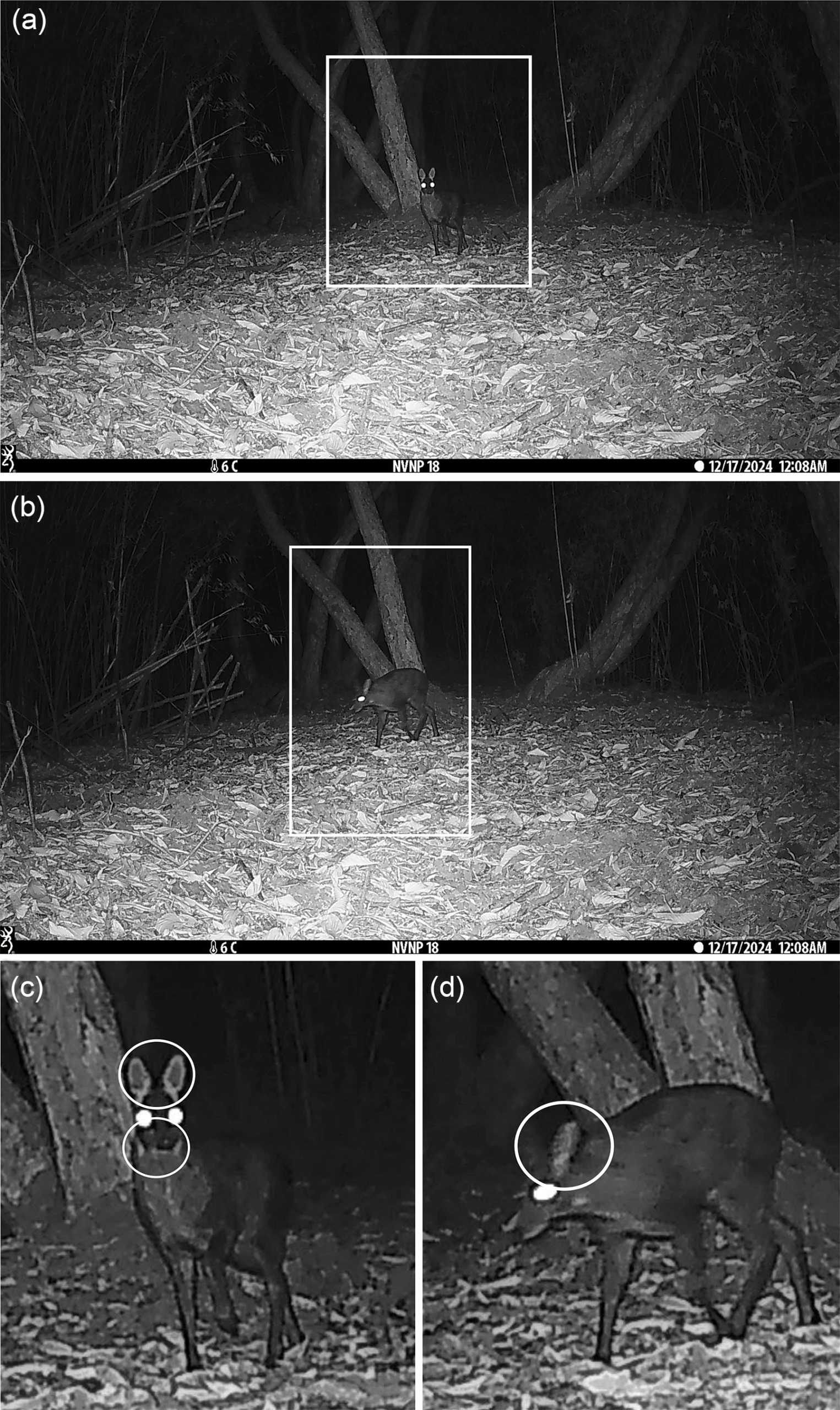
The photos are from a camera trap study of the region initiated in December 2023 under the Pan-India Assessment and Monitoring of Endangered Species program focused on the Red Panda. The traps captured 6 images of the deer on 17 December 2024 at an altitude of 3,112 meters in the park’s temperate forest.
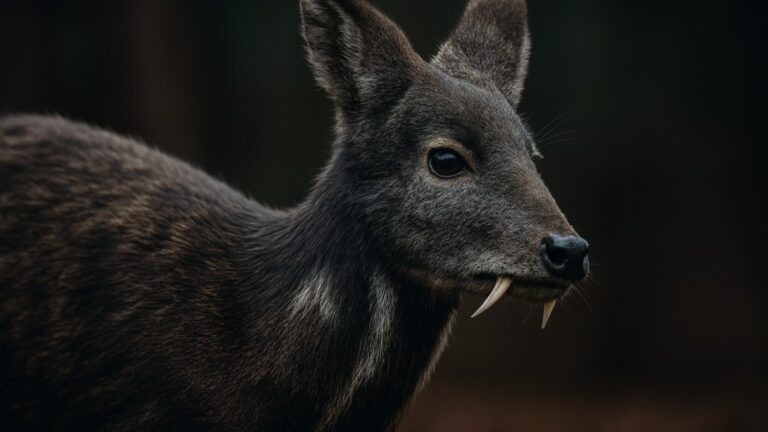
The musk deers are most recognisable because of their tiny tusks. Instead of antlers, the males have striking, curved “fangs” that peek out like tusks, giving them a mysterious, almost mythical look. These are the upper canines that come out of the mouth. The canines are not for feeding but are used mainly by males to fight other males during the breeding season.
With long, alert ears and strong back legs that make them look slightly hunched, they move lightly and silently across rocky slopes, blending into the forest like a shadow.
In the photographs from Neora Valley National Park, while the scientists have been able to definitely identify the deer because of its facial features, the exact species could not be determined as the photos were captured at night and are grainy. The last confirmed record of a musk deer in West Bengal was in 1955 in Singalila National Park, Darjeeling.
Read More: Snow Leopard Habitat Mapped in J&K for the First Time
Ancient Lineage: How Old Is the Musk Deer?
Musk deer are one of the oldest surviving lineages of deer on Earth. Also known as the Kasturi Mrig (कस्तूरी मृग) in India, the deer appear beautifully and symbolically in Indian folklore, mythology, and poetry.
The deer split from all other deer 25–30 million years ago (Oligocene period). They are not “true deer” like sambar or chital and retain ancient features:
- No antlers
- Long protruding canines
- Primitive limb and dental structure
Fossils of musk-deer–like ancestors are found in Tibet, Mongolia, Northern China and the Himalayan foothills. These early forms date back 5–20 million years, meaning musk deer have survived multiple ice ages and climate shifts with very little evolutionary change. They are considered “relict species” from ancient Asian forests.
Old records from the colonial and pre-colonial era show musk pods coming from Kashmir, Bhutan, Sikkim, Garhwal, Kumaon and Tawang region, showing the deer were always present in the Himalayan range states.
Read More: 11 Himalayan Animals And Plants Fighting Climate Change
Protected Species
Musk deer are protected under Schedule I of India’s Wildlife (Protection) Act, 1972, which gives them the highest level of legal protection. All 4 species found in India are endangered owing to poaching and habitat destruction. Male deer are often killed to extract the musk and this leads to more population loss as females and juveniles are also lost in the process.
In India, there have been attempts at captive breeding with breeding centres set up in places like Kufri, Almora, and Chamoli starting in the 1960s–70s. Unfortunately, these captive-breeding efforts largely failed. The Askot Musk Deer Sanctuary was established in Uttarakhand in 1986, specifically to protect musk deer habitat. In the Great Himalayan National Park, the Himalayan musk deer is found in dense, high-altitude forest and rocky slopes.
Continued surveillance and more detailed study in West Bengal can help learn more about the species and if a viable population exists in the state.


One thought on “Endangered Musk Deer (Kasturi Mrig) Seen For The First Time in 70 Years in West Bengal ”