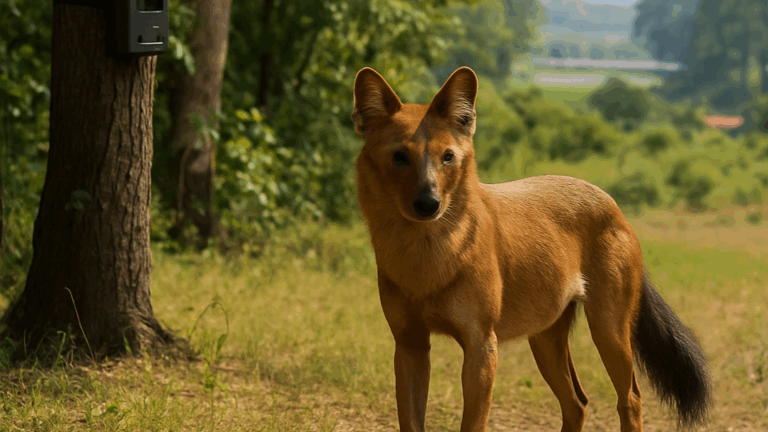
In a significant conservation breakthrough, the elusive Dhole (Cuon alpinus), also known as the Asiatic wild dog, has been rediscovered in the Kaziranga-Karbi Anglong Landscape of Assam. A study by the Wildlife Institute of India (WII) confirmed photographic evidence of the species—once believed extinct in the region since the 1990s.
Camera traps captured images of a single dhole in the Amguri corridor in October 2022. The sighting occurred just 375 metres from NH-37 and close to a human settlement, highlighting how wildlife corridors play a critical role in connecting habitats.
While dholes are endangered and protected under Schedule II of India’s Wildlife Protection Act, their presence in Assam has been sporadic and poorly documented. The last confirmed sighting in the state was in 2010 in the Jeypore-Dihing Reserve Forest.
Historical Perspective and Management Response
Veteran conservationist and former Karbi Anglong bureaucrat Anwaruddin Choudhury told Scroll.in that dholes were once present in Kaziranga National Park (KNP), but growing highway traffic and habitat disturbance likely drove them out after the 1980s. He added that while dholes have been seen in the Karbi Anglong Reserve Forests, sightings in Kaziranga had all but vanished.
When asked about further research, Arun Vignesh, Divisional Forest Officer for Kaziranga’s Eastern Range, said it is too soon to estimate the dhole population based on a single confirmed sighting. He also noted that none of the park’s field staff had reported any dhole presence during routine patrols, though there have been unverified sightings from villagers near the park’s boundaries.
Kaziranga’s mixed habitat of grasslands, forests, and wetlands is theoretically suitable for dholes. However, Vignesh said that given the presence of apex predators like tigers and leopards, the arrival of dholes raises questions about potential competition and its effect on prey populations.
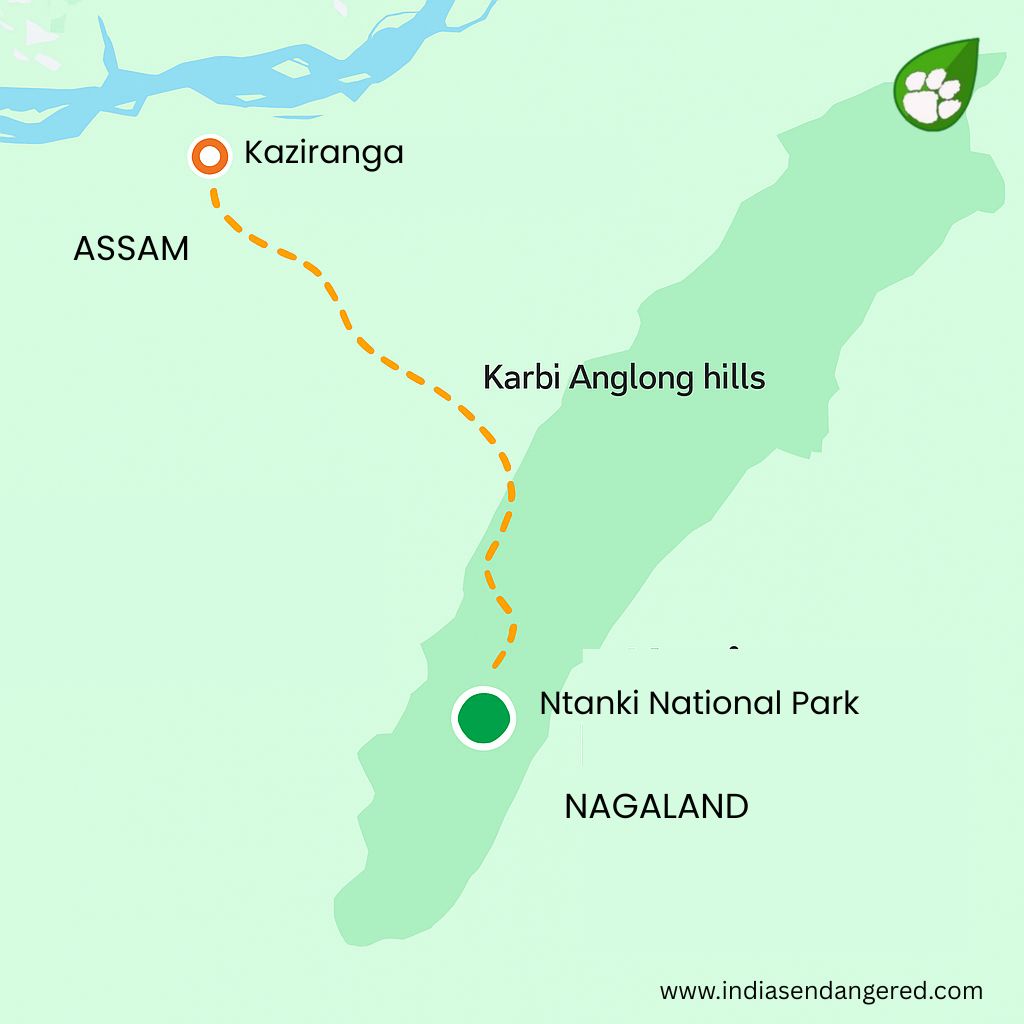
The study authors believe that this individual may have migrated from Ntanki National Park in Nagaland, using the Karbi Anglong hills as a corridor. Protected areas such as Morat Longri and eastern Karbi Anglong could serve as stepping stones for their movement.
Experts stress the need to protect both source populations and fragmented habitats to ensure the long-term survival of dholes in the northeast. Retaliatory killings and habitat loss remain serious threats. According to officials, it’s too early to estimate population numbers, but the rediscovery signals a hopeful future for dholes in Assam.
About the Species
Dholes (Cuon alpinus) are listed as Endangered by the IUCN and protected under Schedule II of India’s Wildlife Protection Act, 1972, which bans their hunting or trade. Their current range spans across central and southeast Asia, including countries such as India, Nepal, Bhutan, Bangladesh, China, Myanmar, Indonesia, Thailand, and Malaysia.