Quick Glance
- Rare caracals have been rediscovered in Jaisalmer’s Ramgarh region, with around ten breeding pairs identified.
- The finding aligns with earlier evidence from Ranthambore (18–35 caracals in 2020) and the 2025 WII small-cats report, which confirmed the species is extremely rare and difficult to detect nationwide.
- Despite this hopeful rediscovery, rapid expansion of wind and solar projects is threatening grassland habitats, putting India’s remaining ~50 caracals at severe risk without urgent conservation action.
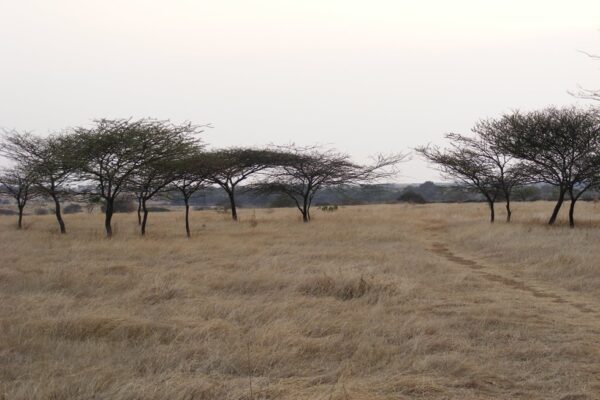
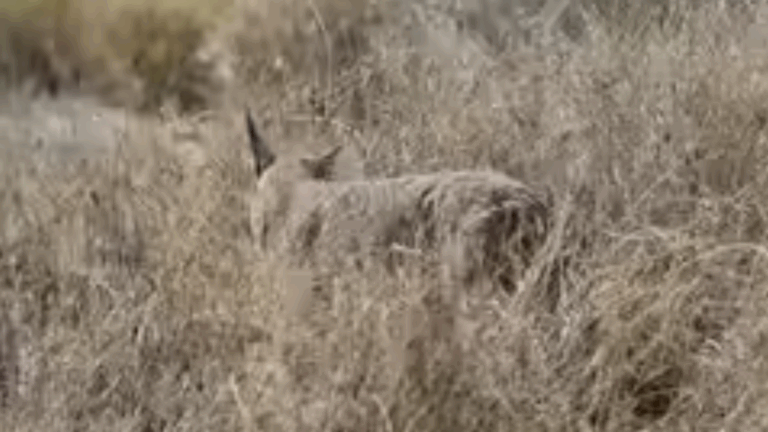
In a major breakthrough for wildlife conservation, the rarely seen Asian caracal has been rediscovered in the Ramgarh region of Jaisalmer, offering renewed hope for a species long believed to be on the brink of extinction in India. The confirmation came from a team led by environmentalist Sumer Singh Sanwata, working closely with BNHS Community Engagement Officer Pankaj Bishnoi.
Sanwata said the elusive cat was photographed near the India–Pakistan border following months of rigorous fieldwork. Researchers, guided by experts from the Bombay Natural History Society (BNHS), combined scientific surveys with the traditional ecological knowledge of local shepherds. Their coordinated efforts led to the confirmation of a small surviving population on 14-15 November, 2025.
Initial assessments suggest that nearly 10 breeding pairs may still persist in the Ramgarh grasslands — a revelation of significant conservation importance.
A Species That Has Nearly Disappeared From Its Indian Range
The rediscovery in Jaisalmer becomes even more significant when placed in historical context for Rajasthan as a state with known habitats of the rare wild cat. A detailed camera-trap study in Ranthambore National Park in 2020 estimated the presence of 18 to 35 caracals, identifying Ranthambore as one of the last habitats where the species still survived in meaningful numbers. The study highlighted that among Ranthambore’s seven small wild cat species, the caracal was already the rarest — confined to scattered pockets of the park.
Historically, caracals — known locally as siyagosh, or “black-eared cat” — were widespread across India’s drylands. But habitat loss, fragmentation, and development have steadily reduced their range to only a few isolated landscapes.
Insights From the 2025 WII Small Cats Report
The 2025 “Status of Small Cats in India” report by the Wildlife Institute of India (WII) deepens this understanding. Based on camera-trap images collected during national tiger monitoring between 2018 and 2022, the report evaluated nine small cat species found across India’s tiger landscapes.
For the caracal, however, the WII scientists found so few detections that they could not build a reliable occupancy model. This scarcity confirms that the species is now among India’s most threatened and least studied wild cats, despite being legally protected under the highest national and international conservation frameworks.
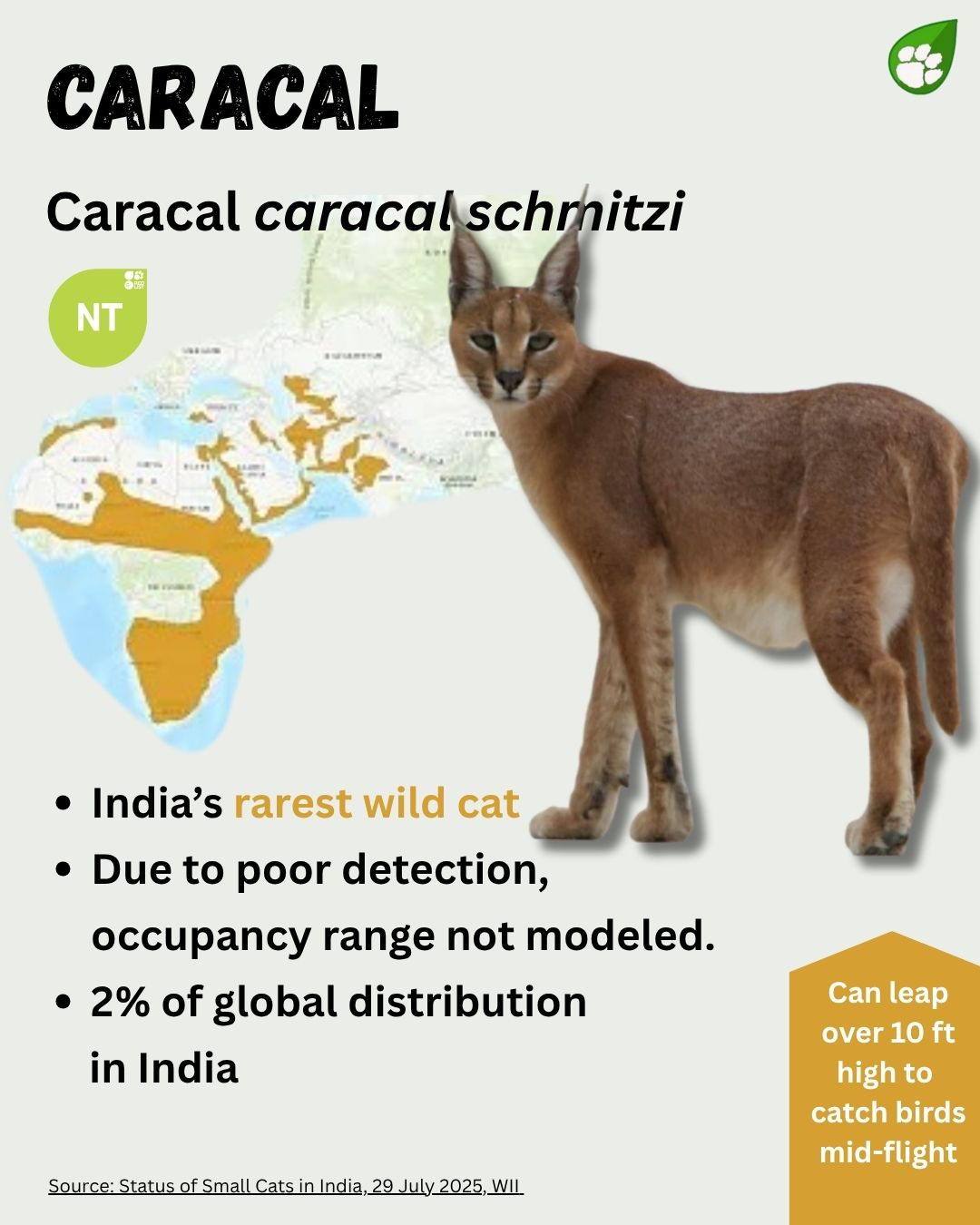
The report also highlights that India’s protected tiger reserves and semi-arid grassland–scrub ecosystems are likely to be crucial for the species’ survival — making rediscoveries like the one in Jaisalmer particularly important for future conservation planning.
Grasslands Under Pressure: Renewable Energy Threats
Sanwata cautioned that while the rediscovery is encouraging, threats to the caracal’s habitat are increasing rapidly. The Ramgarh region of Jaisalmer is witnessing the expansion of large-scale wind and solar power projects, which fragment grasslands and disrupt wildlife movement. Grassland ecosystems — already misunderstood and often misclassified as “wastelands” — face growing pressure from industrial development.
In this regard shepherds and pastoralists, who regularly encounter wildlife while grazing their flocks, remain invaluable partners in tracking and protecting the species.
Conservationists estimate that only around 50 caracals may remain in the wild in India today. The rediscovery in Jaisalmer, when combined with evidence from Ranthambore and insights from the WII report, suggests that small but persistent populations survive across isolated Indian landscapes — but without immediate action, they may not survive for long.
Saving the species will require a multi-pronged approach: protecting remaining grasslands, expanding scientific monitoring, increasing camera-trap coverage, and investing in community-based conservation.