Red Sanders is species handpicked for Week 1 of our 2026 series 52 Weeks. 52 Threatened Species. To read about the project and other species visit The Jar
If you have watched Allu Arjun’s Pushpa, you already know the story — red sanders stacked in dark forest clearings, men running from the police, a timber so valuable it can change a life overnight. The film turned red sanders smuggling into a mass-culture phenomenon. But beyond the stylised action and swagger lies a quieter, older story: a slow-growing tree endemic to southern India, pushed towards extinction by decades of illegal logging and global demand.
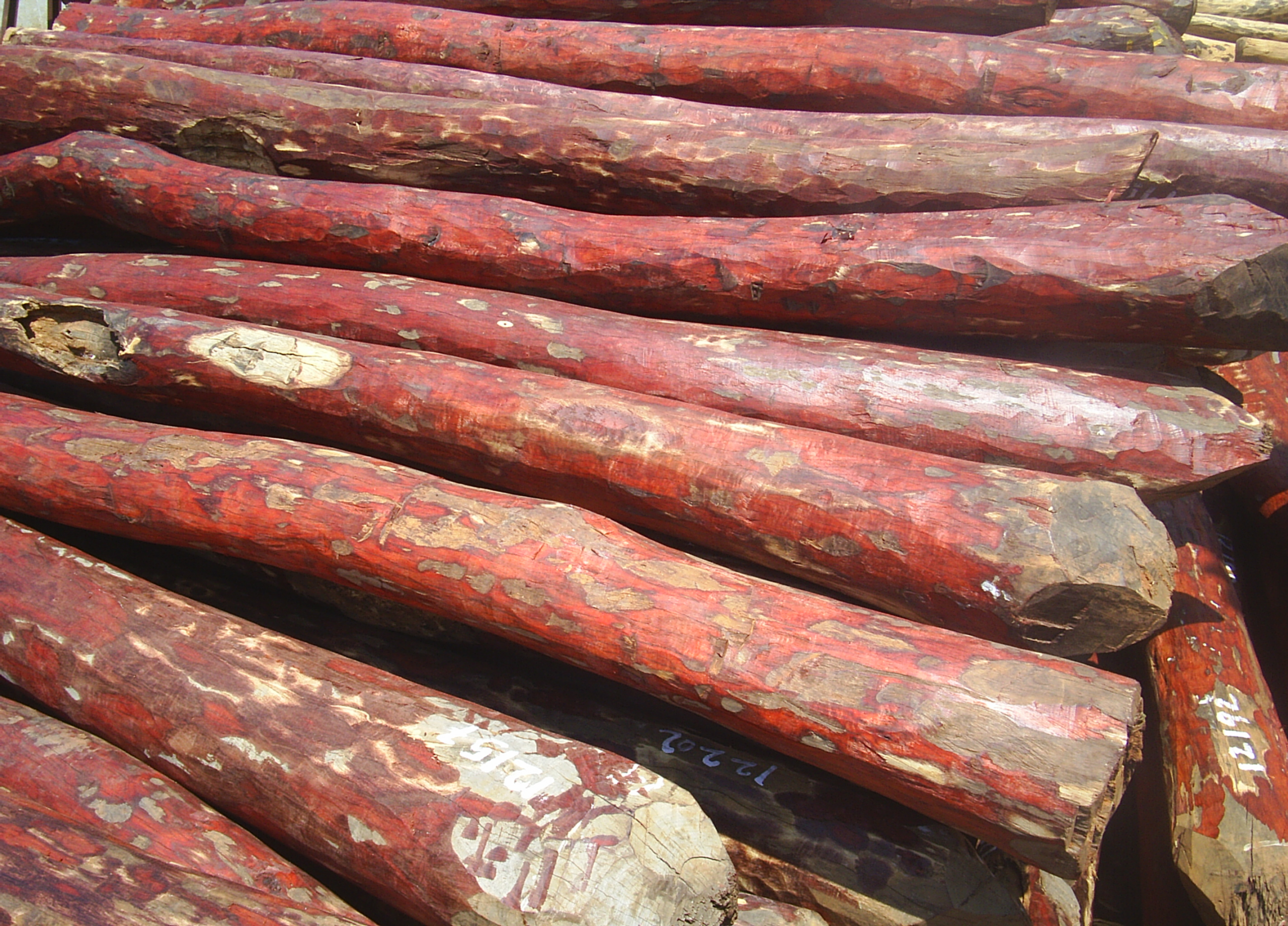
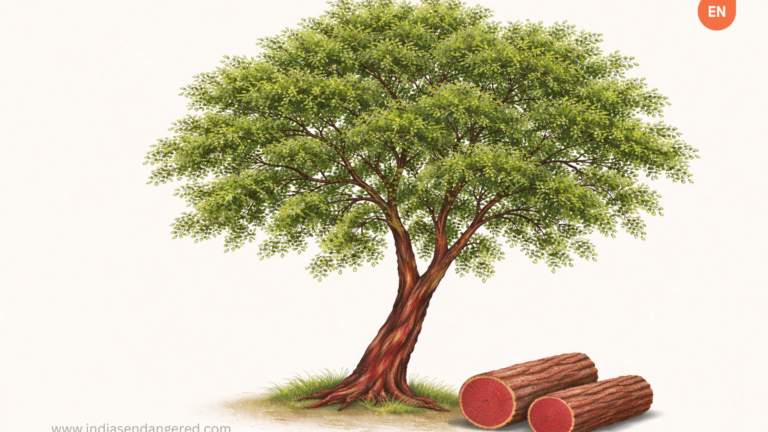
Deep within the dry, rocky hill ranges of the Eastern Ghats in Andhra Pradesh grows a biological treasure so coveted that it has been traded like gold for nearly two millennia. Pterocarpus santalinus, popularly known as Red Sanders or Rakta Chandan, is not just a tree; it is a cultural icon and a major flashpoint in global wildlife conservation.
As of 2026, this “Red Gold” faces its greatest challenge yet: surviving the dual pressures of an insatiable international black market and its own slow-growing nature.
The Imperial Legacy: Why Asia Covets Red Sanders
The popularity of Red Sanders in Southeast and East Asia is not a modern trend. It is rooted in deep-seated historical associations with power, spirituality, and art.
- China’s “Zitan” Obsession: In China, the wood is known as Zitan. Historically, it was so highly valued that during the Ming and Qing Dynasties, it was reserved almost exclusively for the imperial household. Owning Zitan furniture remains a top-tier status symbol today, often associated with longevity and royalty.
- The Soul of Japanese Music: In Japan, the wood has been a staple of high-end craftsmanship since the 1930s. It is specifically prized for the neck and bridge of the Shamisen, a traditional three-stringed lute. The rare “wavy grain” variant of the wood is particularly sought after for its superior acoustic vibrations.
- Spiritual & Medicinal Roots: For centuries, Buddhist monks have used Red Sanders for sacred prayer beads and incense. In Ayurveda and Traditional Chinese Medicine, it is revered for its cooling (Sheetala) properties, used to treat everything from skin disorders and diabetes to inflammation.
The Current Conservation Crisis
Despite its grand history, the Red Sanders is a species in peril. Endemic only to a specific 200,000-hectare tract in the Seshachalam, Palakonda, and Lankamalla hill ranges of Andhra Pradesh, it exists nowhere else in the wild.
After briefly being classified as “Near Threatened” in 2018, Red Sanders was moved back to the Endangered category on the IUCN Red List in late 2021. Experts estimate the wild population has declined by 50–80% over the last three generations due to over-exploitation and habitat loss.
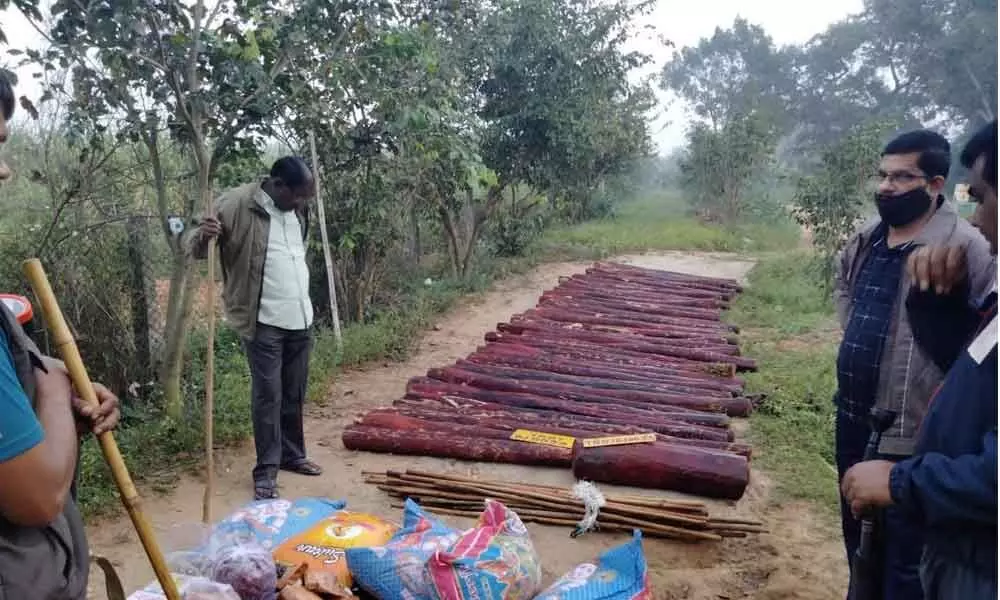
Smuggling remains the biggest threat to this species. Between 2016 and 2020, over 19,000 tonnes of logs were reportedly smuggled out of India, with China, Hong Kong, and Singapore remaining the primary destinations. Even in late 2025, major seizures continue, with the Directorate of Revenue Intelligence (DRI) recently recovering 15 tonnes of logs worth over ₹6 crore in Chennai.
In response to the crisis, the Indian government has tightened legal nets:
- Wildlife (Protection) Act (2022 Amendment): Red Sanders is listed under Schedule IV, granting it strict protection against unauthorised felling and trade.
- CITES Regulations: International trade is regulated under Appendix II. While India has recently been allowed to export wood from cultivated plantations to encourage sustainable farming, a zero-export quota remains strictly in place for wild-harvested specimens.
- State Vigilance: The Andhra Pradesh Red Sanders Anti-Smuggling Task Force (RSASTF) utilises drones, satellite imagery, and intensified forest patrolling to protect the remaining wild stands.
Can We Save The Red Gold?
The future of Red Sanders depends on shifting the demand from wild-harvested timber to sustainable, cultivated sources. In late 2025, the National Biodiversity Authority sanctioned new funds for community-led conservation in Andhra Pradesh, aiming to involve local populations in protecting their natural heritage.
Red Sanders is more than just timber—it is a biological bridge between India’s forests and Asia’s ancient traditions. Protecting it is not just a botanical necessity; it is an act of preserving a 2,000-year-old story.
Read More: Red Alert for Red Sanders, The Rare Red Coloured Timber