Quick Glance
- Scientists found Chinese pangolins in Arunachal Pradesh by placing camera traps using Adi Indigenous knowledge, not standard wildlife trails.
- All pangolin detections came from sites identified by local trackers who read burrows, soil, and footprints.
- The study shows that conservation improves when science works with local ecological knowledge, not around it.
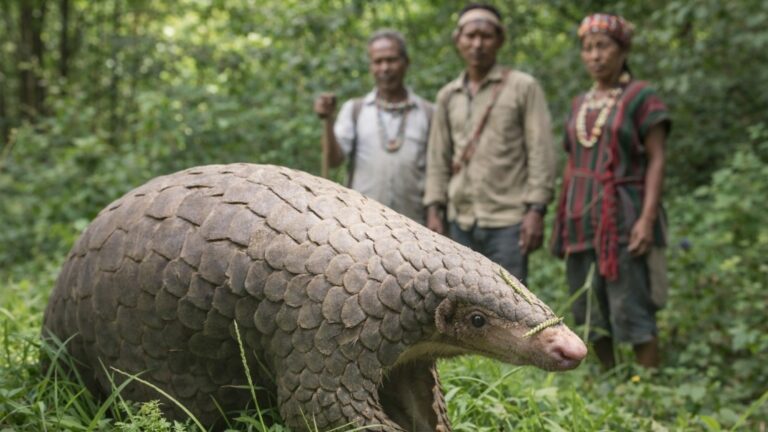
To scientists, the Chinese pangolin is an enigma. A nocturnal, burrowing, and notoriously hard to detect species. To the Adi people of Arunachal Pradesh, this scaled anteater known as Sipit in their local language has been a familiar presence for generations around their forests. And it is this lived, ecological knowledge that has just transformed how scientists found the Chinese pangolins in the wild.
Pangolins are among the most trafficked mammals on Earth, prized for their scales, meat, and mythical medicinal properties. The Chinese pangolin, in particular, is listed as Critically Endangered by the IUCN, with populations battered by habitat loss and illegal trade.
But even as biologists and conservationists try to understand where they are present and how they are thriving in order to make better decisions for their conservation, the animal’s nocturnal habits and subterranean lifestyle make it almost invisible to conventional monitoring.
This is where scientists from the Nature Conservation Foundation (NCF) thought of doing things differently in Arunachal Pradesh. In order to find the elusive Chinese Pangolin, instead of relying solely on their data they turned to those who know the land intimately: the Adi community.
When Science Meets Local Wisdom
The research team consisting of Chiging Pilia, Odan Ratan, Aparajita Datta, and Sahil Nijhawan went to the Daying Ering Wildlife Sanctuary of the Siang River Basin in Arunachal Pradesh with two intentions in mind,
- Determine the presence of the rare Chinese Pangolin in the sanctuary
- Explore the effectiveness of using local knowledge to detect pangolin presence.
According to them, “The Adi community resides in central Arunachal Pradesh in the Siang and Yomgo River basins and is one of the largest ethnic groups Indigenous to the state. The Adi People are traditionally animist, and human–animal relationships are deeply rooted in their everyday life.”The researchers selected Daying Ering Wildlife Sanctuary as no pangolin survey had been conducted previously in this area although Adi people living in the vicinity had always spoken of a decent Pangolin population here.
It was the perfect place to test their theory.
In Pursuit of the Pangolin
Over several days, the team walked 31 kilometres through the sanctuary to find evidence of pangolins through the subtle traces left behind by an animal that spends most of its life underground.
By the end of these walks, the forest had yielded 51 signs of pangolin presence of which 44 were new and old burrows. The rest were feeding signs: termite mounds torn open, soil disturbed around ant nests, patches of ground that looked as if something had rummaged with purpose rather than accident.
The new burrows looked freshly made with their entrances rimmed with loose, newly turned soil and stamped with clear footprints. There were only five. Others appeared abandoned: entrances collapsed or hardened by rain, no fresh soil, sometimes even spider webs stretched delicately across the opening, as if sealing it shut. These were marked as old—thirty-nine in total.
But here is where Indigenous knowledge quietly overturned scientific instinct.
To an outsider, an old burrow looks like a dead end. To the Adi people, it often isn’t. Pangolins, they explained, reuse burrows, rotate between them, or return after long absences. So the researchers resisted the temptation to discard “old” burrows as irrelevant and paid attention to the context around them.
They looked for finer clues: claw marks etched into the soil, scratches near entrances, tiny faecal pellets, footprints that pointed toward or away from the hole, and the faint drag marks left by a heavy, scaled tail. Each sign was small, easy to miss, and meaningless on its own but together they formed a narrative.
Read More: Comic, A Pangolin Life
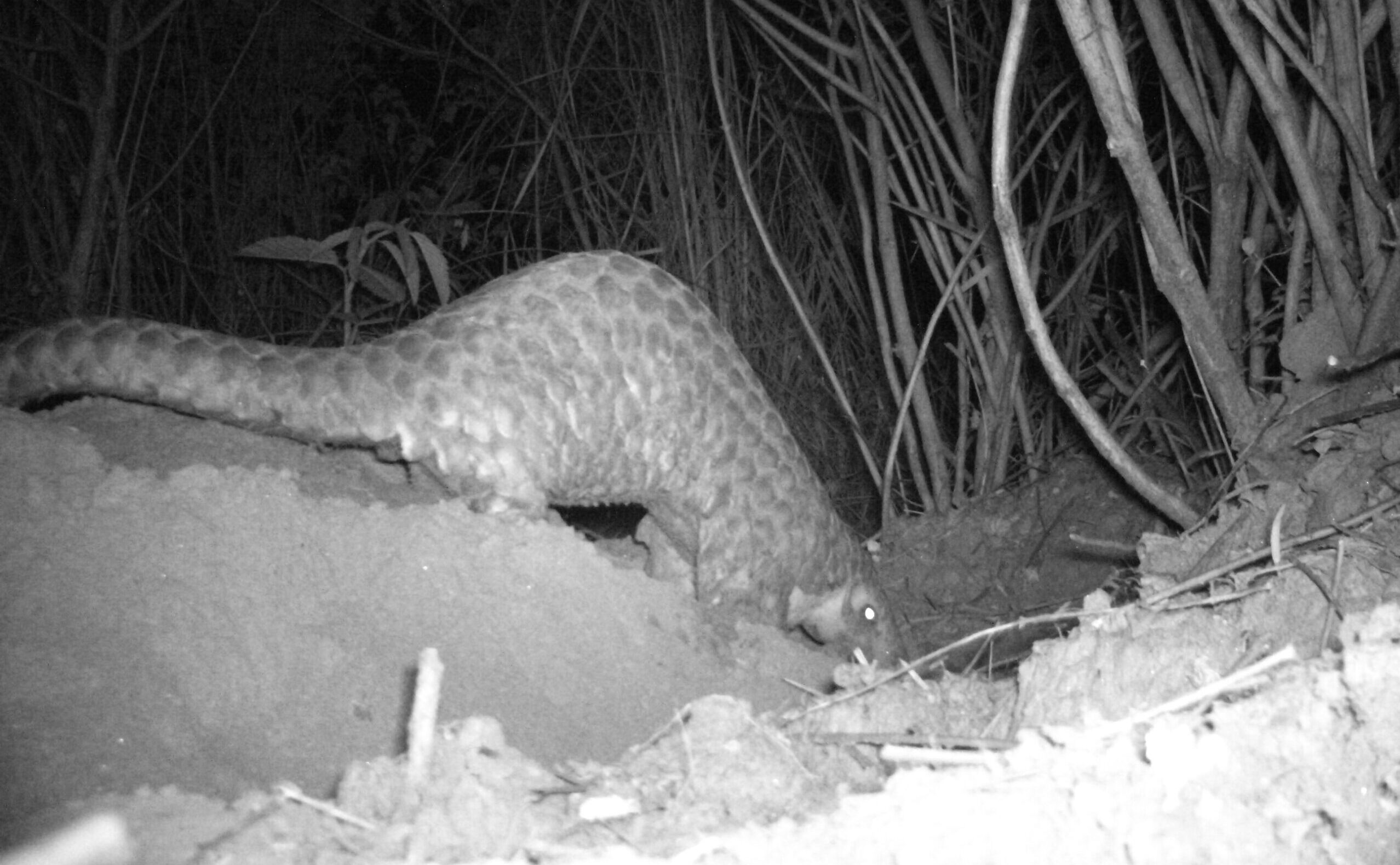
Only after this careful reading of the land and consultation with the locals, the camera traps were laid. Nine camera traps over roughly 10 square kilometres of forest and grassland — seven based on spots identified by Adi trackers, and two on conventional wildlife paths. Over nearly a month of monitoring, something remarkable emerged: every pangolin detection came from the traps placed with Indigenous insight.
Using Knowledge of the People
In 232 trap nights, those culturally informed placements yielded 41 photographs from 12 independent events, translating to a capture rate comparable with or above other pangolin studies globally. From these images, the researchers confirmed a meaningful pangolin population in an area where no formal surveys had ever recorded them before.
Besides the statistics, the study also put a spotlight on how knowledge travels. The Adi people don’t carry field manuals or GPS devices into the bush, yet they have refined, over decades and centuries, an intuition about pangolin microhabitats like red soil near water, termite mounds, old swidden plots with decaying vegetation.
They can read subtle signs — footprints, claw marks, fresh soil at burrow mouths — and interpret them with a precision that modern ecology sometimes struggles to match.
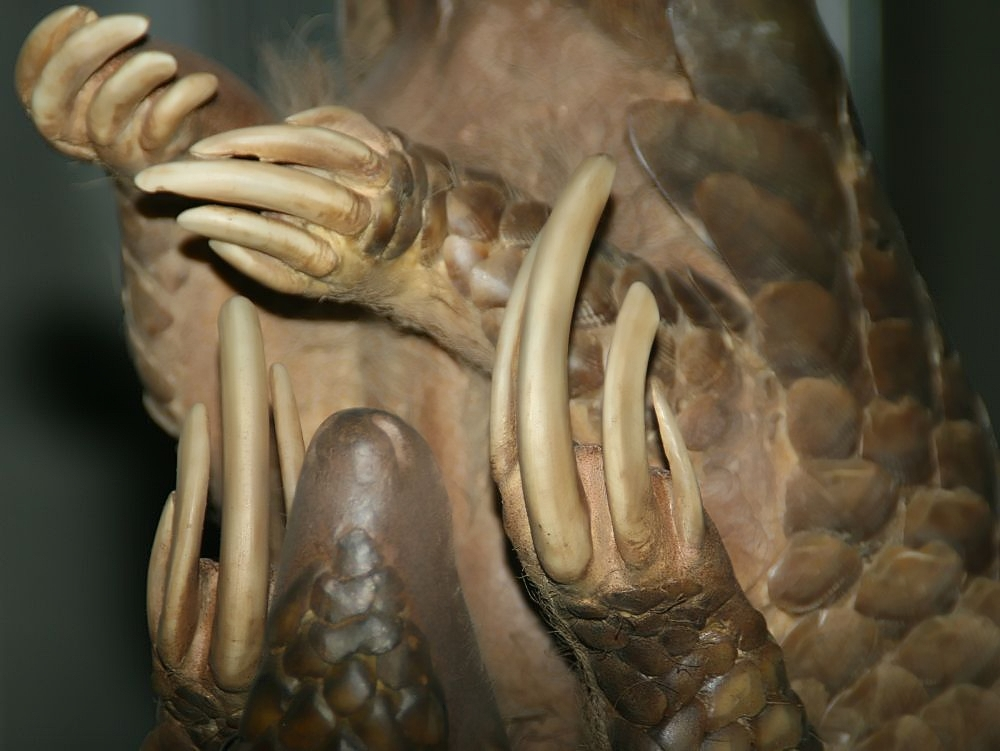
One Adi elder wisdom that came in handy was an interesting observation. “If pangolin footprints go away from the burrow, it means it recently entered; if they come toward the burrow, it means it just exited.”
This may sound like folk wisdom, but it reflects careful observation of posture and gait and the fact that Pangolin front legs have folded nails — knowledge honed through observation, not intuition alone.
Across the tropics, scientists are waking up to the limits of purely technological approaches — grids, random sampling, or automated sensors — especially for species that are rare, secretive, or nocturnal. Pangolins are a poster child for these challenges. But with ancestral knowledge as an aid, this gap between theory and practical wisdom can be filled.
As the researchers point out in their study ‘this applies both to situations where pangolin burrows and signs are numerous but equipment is limited, and where pangolin signs are rare, making it difficult to determine the ideal locations for camera placement.’
In a world where biodiversity is disappearing faster than we can count it, local knowledge passed on through word of mouth can be one of our most powerful tools in saving vulnerable species like the pangolin.
Read More: Zoos and Schools Invited to Create Unique 3D Pangolin
Species At a Glance: Chinese Pangolin
- Scientific name: Manis pentadactyla
Local name: Sipit (name by the Adi people of Arunachal Pradesh) - IUCN Status: Critically Endangered
- Population (India & Global): No precise global or India-specific estimate is available; the species is very rare and in steep decline throughout its range.
- Range (India): Found in northern and northeastern India, especially in the Himalayan foothills and adjoining areas of states such as Arunachal Pradesh, Assam, Nagaland, Meghalaya and parts of Sikkim and West Bengal, Bihar.
- Habitat: Primary and secondary tropical and subtropical forests, bamboo forests, grasslands and agricultural mosaics; requires adequate termite/ant prey and suitable soil for burrowing.
- Major Threats: Illegal hunting and poaching for scales and meat (driven by international demand), heavy trafficking, habitat loss and fragmentation, low detectability in the wild.
- Conservation Status in India: Protected under Schedule I of the Wildlife (Protection) Act, 1972 (highest legal protection), and included in CITES Appendix I which prohibits commercial international trade.
- Ecological Role: Nocturnal insectivore that helps regulate ant and termite populations; its burrowing also influences soil structure and nutrient cycling.
Pilia C, Ratan O, Datta A, Nijhawan S. Indigenous ecological knowledge improves camera-trap detection rates for the Chinese pangolin in Arunachal Pradesh, India. Oryx. Published online 2025:1-5. doi:10.1017/S0030605324001546