Quick Glance
- A family of Hoolock gibbons was found stranded on a single tall ficus tree in Arunachal Pradesh.
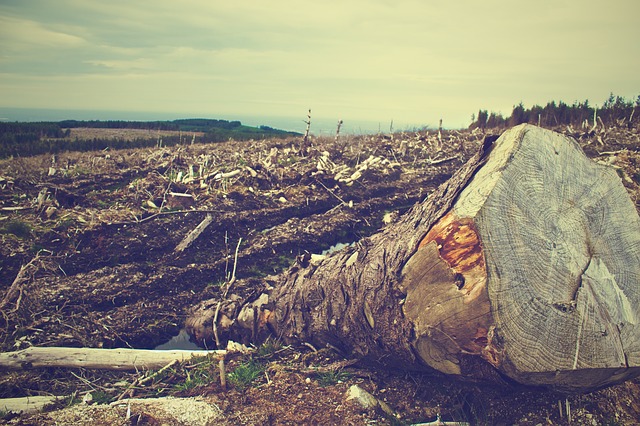
- Their forest had been cleared for agriculture, leaving them hungry and forced to come down to dangerous ground.
- A 30-member Forest Department and WTI team carried out a difficult four-day rescue using rope-climbing techniques.
- The gibbons were safely released into Mehao Wildlife Sanctuary and are now being monitored.
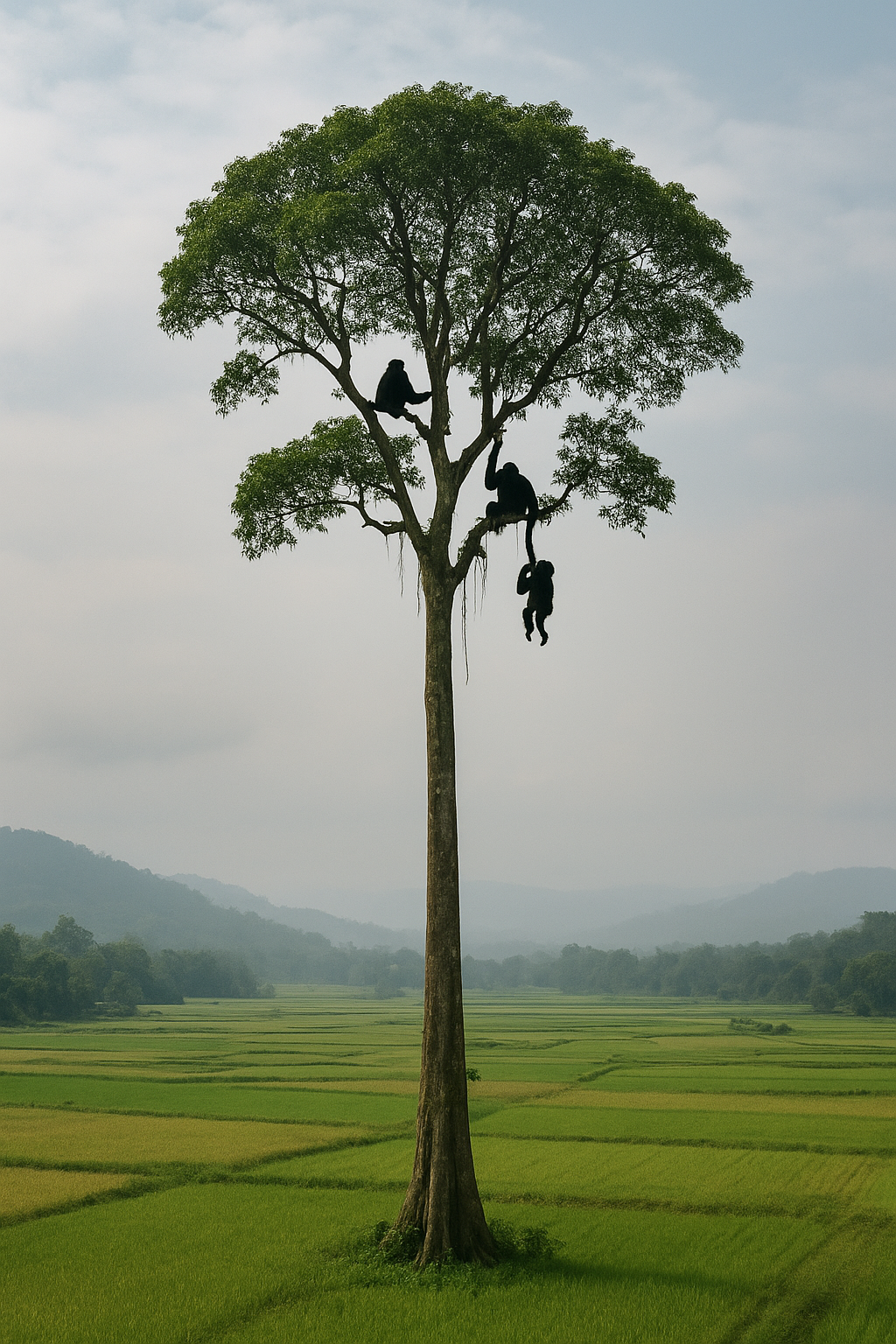
It is not known for how many days, a family of Hoolock gibbons clung to a single ficus tree in Horu Pahar village in Arunachal Pradesh. The 45 metre tall tree was home above a sea of agricultural fields all around. From a distance, it looked like a lone pillar of the old rainforest, holding aloft the last threads of a canopy now cleaved by agriculture. For the three apes marooned in its crown — an adult pair and their juvenile — it had become both home and trap.
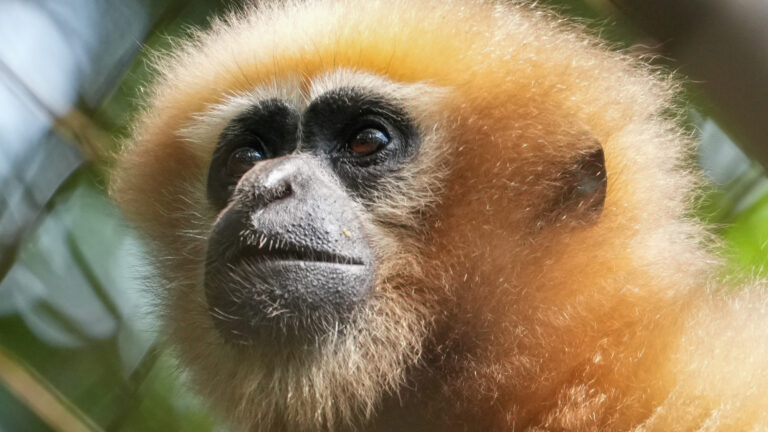
Hoolock gibbons are the only apes found in India. They are built for the air. They move through forests like thrown ropes, their arms unfurling in long, physics-defying arcs. Their entire evolutionary script assumes one thing: that trees touch each other and they can swing from one to another never needing to come down to the ground.
But here, it was a single tree. The gibbons were forced to come down, find something to eat while avoiding the dangers of a human rearranged world – feral dogs, farms, people.
Read More: Facts About Western Hoolock Gibbon
A Rescue Operation Spanning Four Days
When the Wildlife Trust of India (WTI) team and forest officials first spotted the family, they could see the three apes weakened, underfed, and increasingly desperate.
“Their habitat had been reduced to a single tree,” said Mito Rumi, the Divisional Forest Officer of Mehao Wildlife Sanctuary. “With no canopy connectivity, they were being forced to come down, which is extremely dangerous for an arboreal ape.”
The family had been nutritionally stressed for weeks, WTI veterinarians later found. Every risky descent to forage was a roll of the dice.
But rescuing gibbons is not easy. They are fast. They panic. They leap. A fall from 45 metres is almost certainly fatal. And so the operation that followed looked less like wildlife rescue and more like a high-altitude orchestration — a 30-person, rope-and-rigging ballet in which precision mattered more than speed.
A Forest Department team led by DFO Mito Rumi, supported by WTI veterinarians Dr. Bhaskar Choudhury, Dr. Panjit Basumatary & Dr. Mehedi Hasan under the leadership of Mr. Sunil Kyarong, spearheaded the operation.
Monli Meto, Chipra Mekola, Bomken Chisi, Gindo Mena, and Marshal Bhengra, the forest department’s seasoned climbers, scaled the ficus. Joining them were mountaineering volunteers Amaro Meto and Hachu Lombo, whose ropework allowed veterinarians to tranquilise and lower the animals safely.
Above them all, literally and symbolically, hung the risks: one misjudged leap from the gibbons, one misplaced hold from a climber, and the entire rescue could have slipped into tragedy.
It took four days. But when the apes were finally brought down — tired, underweight, deeply confused — the forest team had done what the landscape could no longer do: carry them to safety.
Swipe through the images of the rescue operation shared by Wildlife Trust of India,
They were transported to Mehao Wildlife Sanctuary, where the canopy still stretches in continuous green corridors, and released.
“We spotted all three individuals near the release site on Friday morning,” Rumi said later. “They appear to be in a stable condition.”
For Dr Bhaskar Choudhury and his WTI colleagues, the rescue was more than a logistical feat. It was a reminder of an uncomfortable truth. India’s only ape — protected under Schedule I of the Wild Life (Protection) Act — is living through a slow unravelling of the forests it depends on. “They are vital indicators of forest health,” Choudhury said. “Habitat fragmentation is pushing these populations to the brink.”
And these three are not alone. Additional stranded gibbon families have already been identified in nearby Denlo village. The tree heights are intimidating, the terrain worse. Rescues will continue in phases over the next three months — a testament to how much of the species’ survival now hinges on rope, patience, and human persistence.
Conservation stories often end with triumph or tragedy. But in Arunachal Pradesh, the reality is more complex. The gibbons in Mehao WLS are safe for now, watched closely by biologist Bhaskar Jyoti Das. Yet their rescue is only a temporary victory against a much larger, chronic wound: forests shrunk into fragments, isolates of green held together by memory more than biology.
Still, the operation at Horu Pahar offered something rare — a glimpse of what coordinated, community-backed conservation can look like. “Support from the villagers has been strong,” Rumi said. “Together we will ensure the survival of these gibbons.”
In a forest where trees no longer touch, humans did. And for one family of apes, that made all the difference.
Featured image via wikimedia commons