Quick Glance
- A national study shows 11 invasive plant species are rapidly spreading across India’s forests, farms, and grasslands.
- India loses 15,500 sq km of natural land each year, reducing soil fertility, fodder, fuelwood, and wildlife forage.
- By 2022, 144 million people, 27.9 lakh livestock, and 2,00,000 sq km of farmland were exposed to invasive plants.
- The authors call for an urgent National Invasive Species Mission to coordinate monitoring, quarantine, and long-term management before more land and livelihoods are lost.
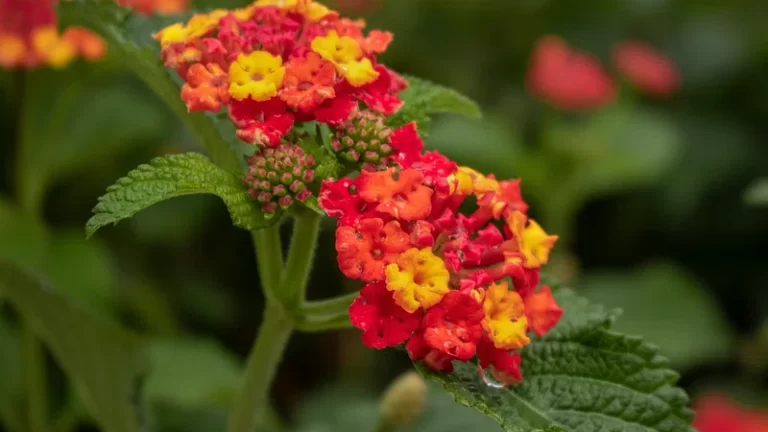
You’ve probably seen the small, bright, colourful cluster of Lantana flowers growing around you and assumed it is just another pretty flowering shrub. But Lantana along with 11 other invasive plants is rapidly overrunning India’s forests and farmlands. A new pan-India study published in Nature Sustainability looked at 20 years of data and found that the ecological and social risks from these invasives in India are now among the highest in the world.
The study, titled ‘Socioecological Risks Amplified by Rising Plant Invasions in India’ found out that 15,500 sq km of natural land in India is being invaded by some kind of invasive plant every year.
This is leading to,
- Low soil fertility
- Low fodder availability in pastoral regions
- Degrading fuel wood sources
The researchers looked at more than one million vegetation records collected by the National Tiger Conservation Authority between 2006 and 2022 during their tiger population surveys. What they found is 11 widespread invasive plant species that have become common sight in India’s protected parks as well as farms, parks, and urban hedges.
Here is the data from the report that should worry everyone,
- Every year nearly 6,000 sq km of tiger range areas are being invaded by invasive plant species.
- More than 11,200 sq km of areas where herbivores are present has shown significant forage loss.
- By 2022 nearly 144 million people were exposed to at least one invasive plant species
- 27.9 lakh of livestock came in contact with an invasive plant species, some of them poisonous for them.
- 2,00,000 sq km of smallholder agricultural land had been exposed to the uncontrollable and unmanageable growth of invasive plants.
- 243 sub-districts and 147 protected areas within the country are at ‘socio-ecological high risk’ which means if urgent action is not taken to eradicate the invasive plants, it can seriously affect the livestock and livelihoods or people dependent on farming, livestock rearing etc.
- India’s economic losses from invasive species between 1960 and 2020 are estimated at $127.3 billion (Rs 8,30,000 crore).
“Invasions don’t recognise boundaries, cutting across farmlands, forests, and protected areas. If we fail to manage them, we risk losing biodiversity, livelihoods and impact herbivore population.” remarked YV Jhala, one of the authors of the study.
From a geographical standpoint, there is no region in India that has been spared. Take a look at these findings,
- In two decades the invasive plants have almost doubled their range in Western Ghats and the biodiverse Northeast.
- In India’s dry regions like Rajasthan and Gujarat, the plant commonly known as Vilayati Babool (Prosopis juliflora) historically introduced to prevent desertification has spread so much that it has replaced native shrubs and grasslands needed by the pastoral community and herbivores.
- Some species that were thought to be limited to the arid region are now also spreading in the Himalayan region.
The most vulnerable of all ecosystems are the Open Natural Ecosystems such as the dry grasslands of peninsular India, wet grasslands along the Ganga and Brahmaputra, shola grasslands in the Western Ghats. This only adds to the woes of the ecosystem species such as the critically endangered Great Indian Bustard, the Grey wolves and numerous other grassland dependent species.
Read More: Invasive Species Eating Away Forest Cover of Andaman Islands
“At current rates, entire ecosystems could shift from native to invasive dominance within a generation,” said lead author Ninad Mungi in a statement to Down to Earth adding, “These plants are moving faster than we can manage or even monitor them.”
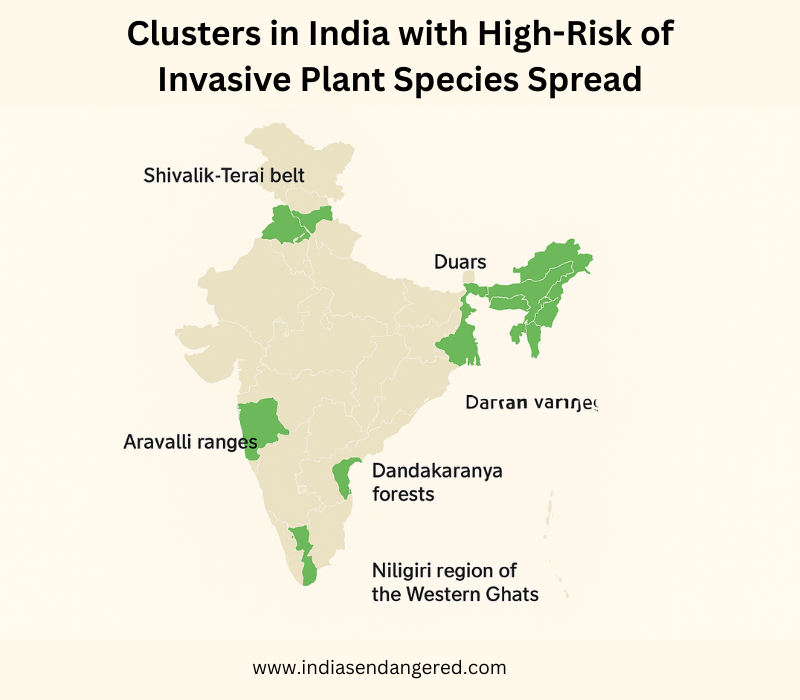
The researchers also mapped the high-risk clusters. These were,
- Shivalik-Terai belt in the north,
- Duars in the north-east,
- Aravalli ranges,
- Dandakaranya forests in central India,
- Nilgiri region of the Western Ghats.
What is Accelerating the Invasion Crisis?
The invasion of the alien plants is being heightened by other factors such as,
- Habitat fragmentation
- Climate Change
- Sporadic wildfires
- Changing land-use patterns
“Wet-habitat invaders are being aided by warming temperatures and more frequent fires, while dry-habitat invaders are benefiting from higher rainfall and declining fire regimes.”
“For rural and pastoral communities, invasive plants reduce fodder and fuelwood, lower soil fertility, and even trigger respiratory ailments. Every hectare lost to invasive plants translates to lost income, nutrition, and resilience. Poverty, in turn, limits the capacity to act, trapping communities into a cycle of ecological and economic vulnerability,” the study said.
Read More: 11 Threatened Plant Species from India
Identify the 11 Invasive Plant Species: What They Look Like, Where They Grow, How They Harm
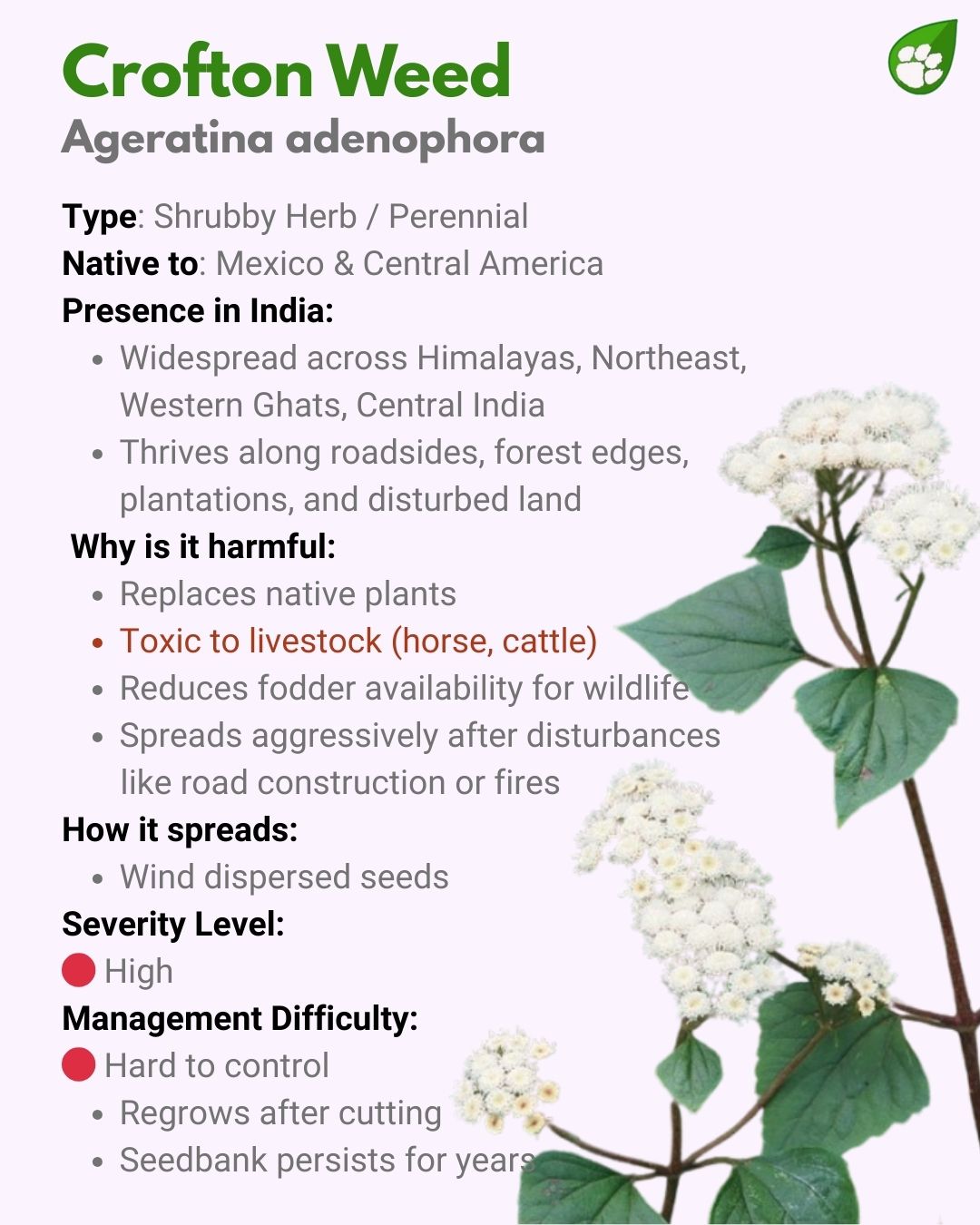
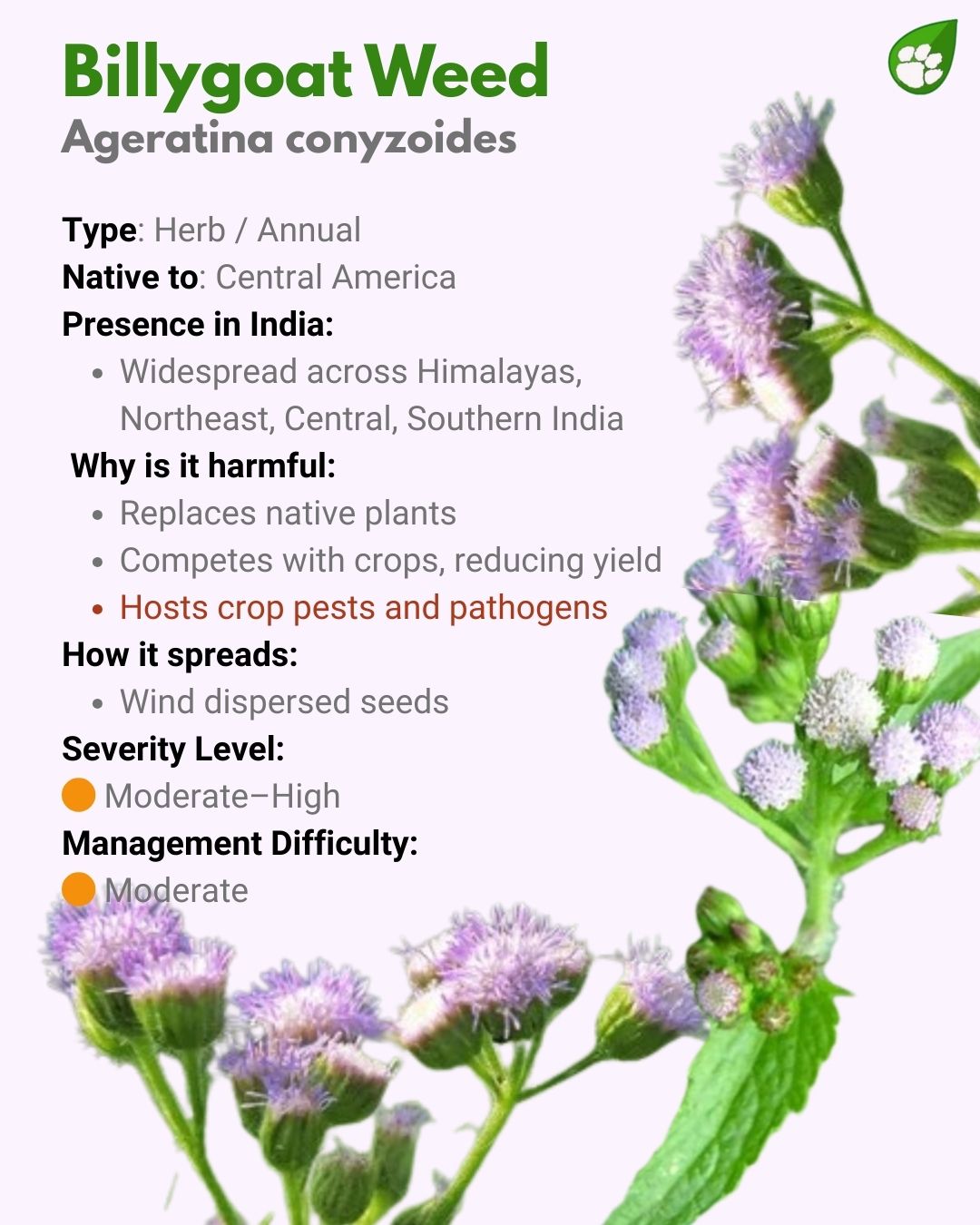
India’s Endangered has put together these quick information cards for each of the 11 invasive plant species identified by the study. The cards will help you identify the invasive plant if it is growing in natural areas, farms and fields around you and take action to reduce their spread.
#1 Ageratina adenophora (Crofton Weed)
A fast-spreading Himalayan invader that forms dense thickets and suppresses native vegetation.
#2 Ageratum conyzoides (Billygoat Weed)
A common weed across India that competes with crops and carries pests harmful to agriculture.
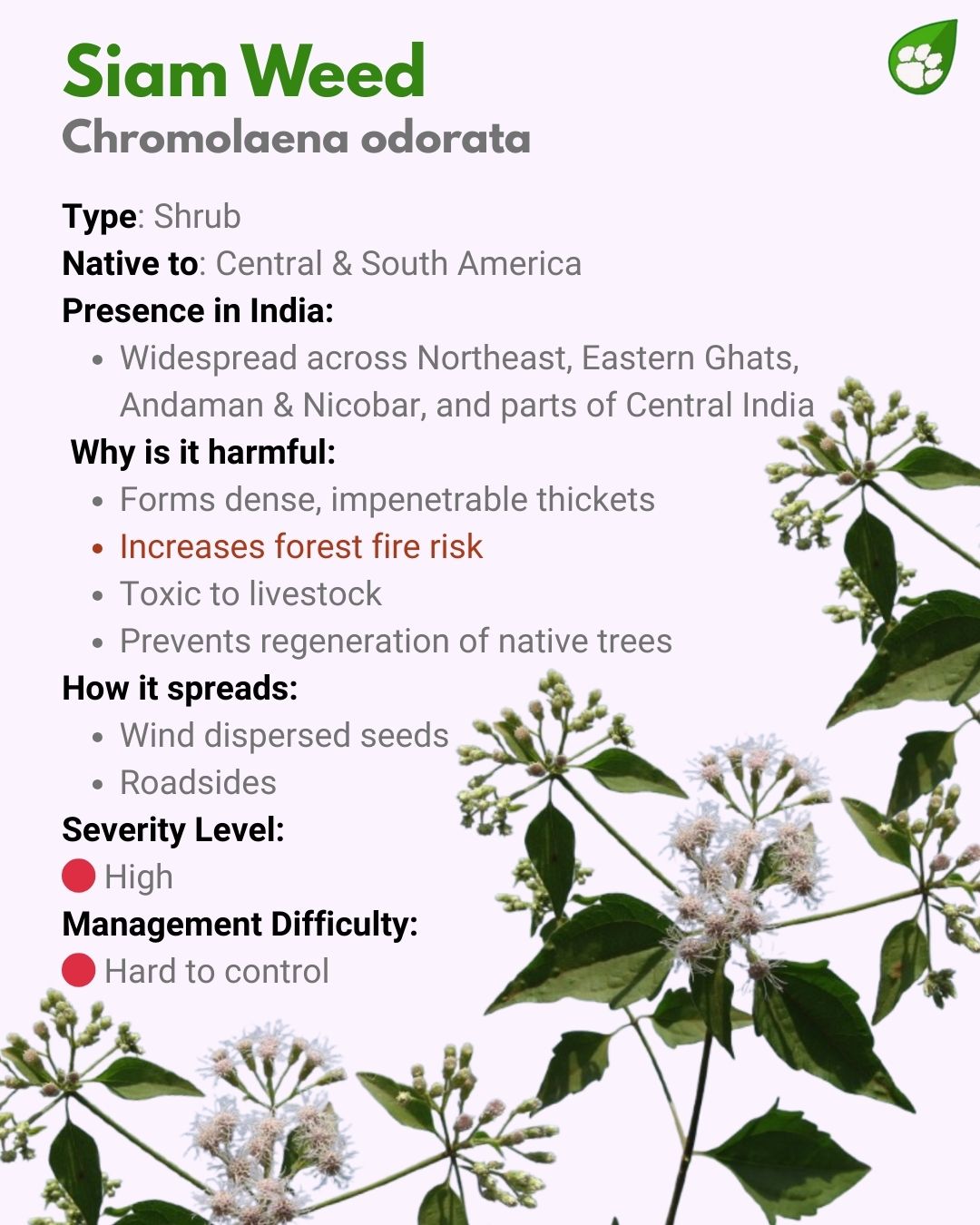
#3 Chromolaena odorata (Siam Weed)
One of India’s most aggressive shrubs, creating impenetrable thickets and hindering forest regeneration.
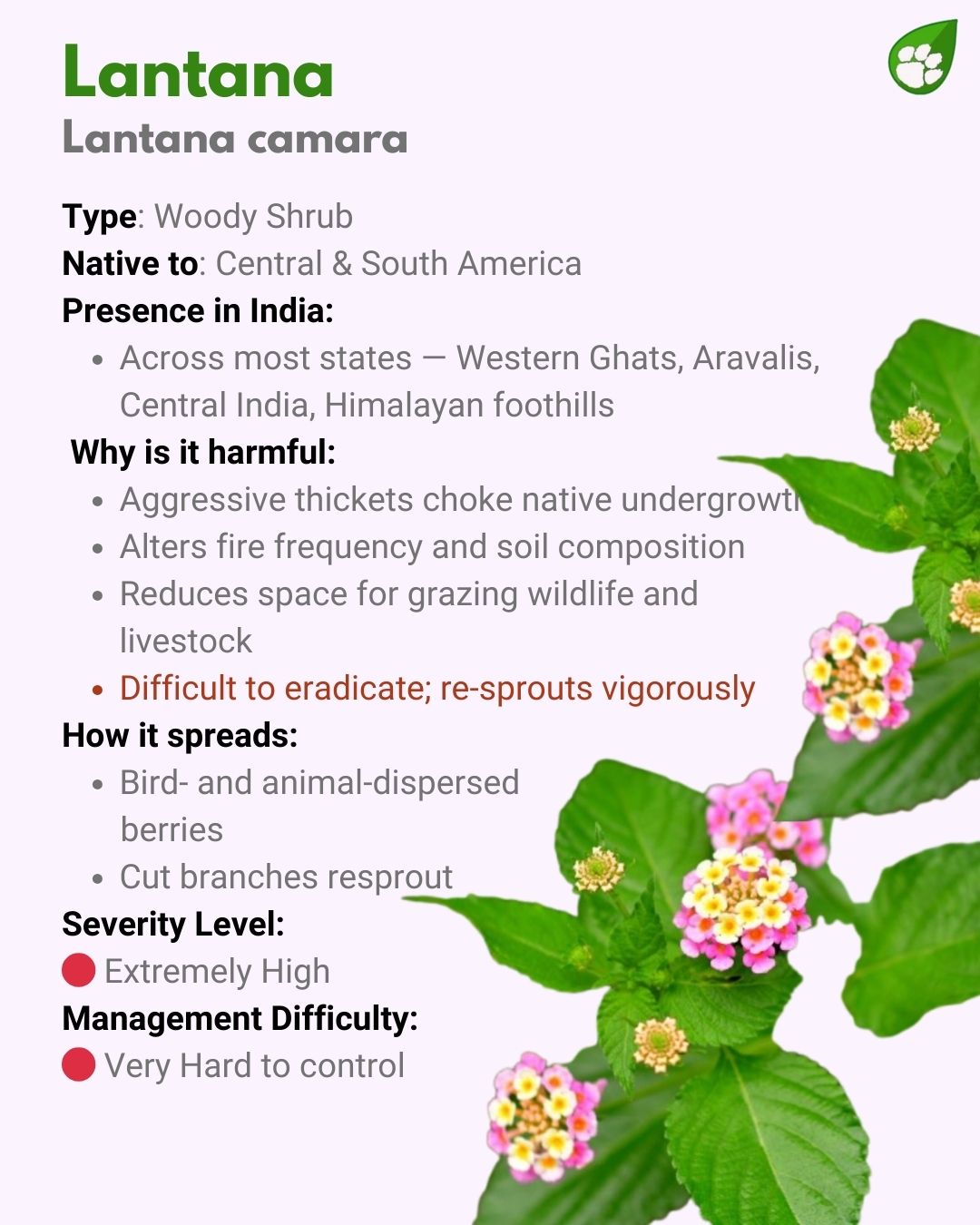
#4 Lantana camara (Lantana)
A woody invasive shrub transforming forests by replacing native undergrowth and intensifying fires.
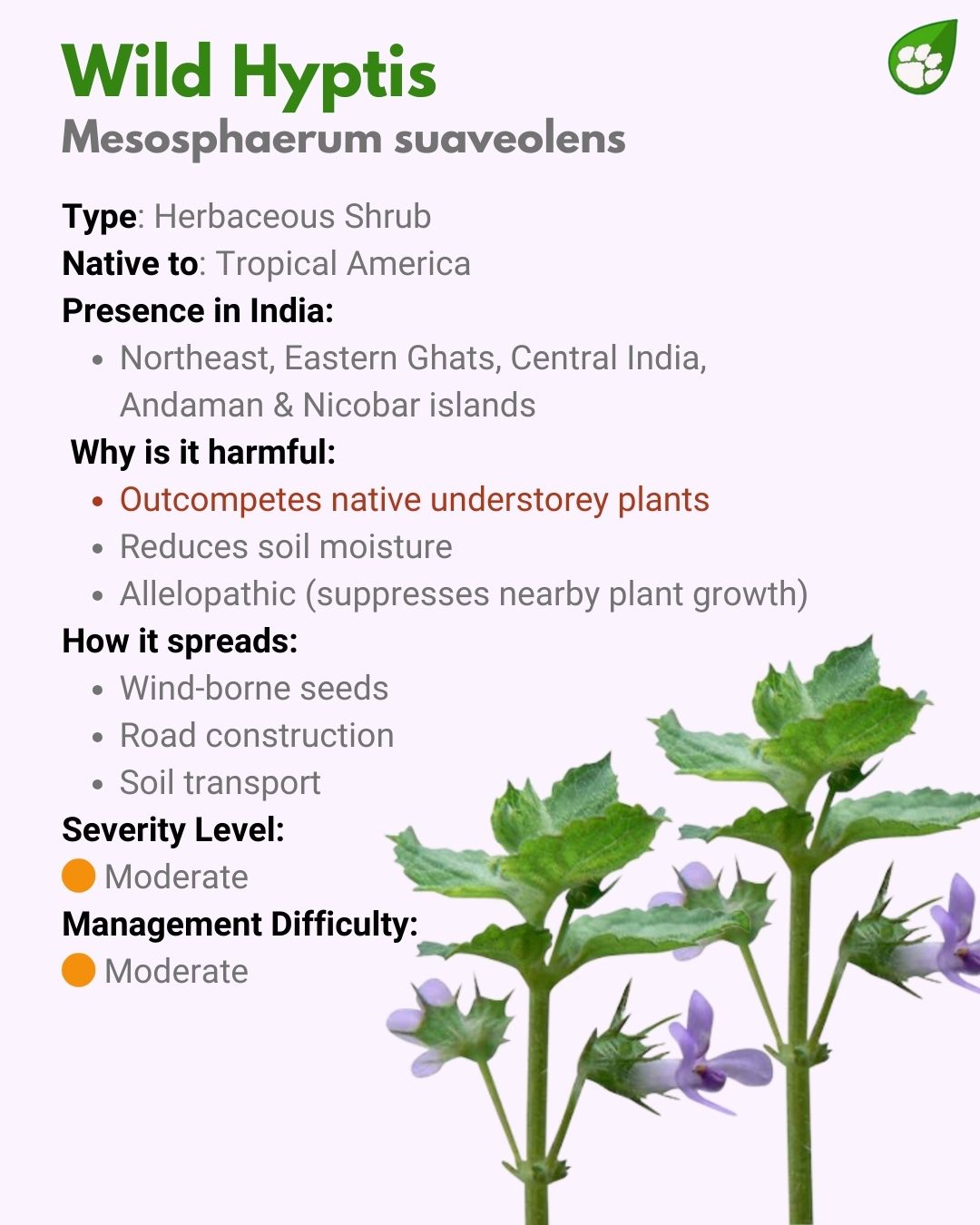
#5 Mesosphaerum suaveolens (Wild Hyptis / Bush Mint)
An aromatic shrub that quickly overtakes forest edges and grasslands, reducing native plant diversity.
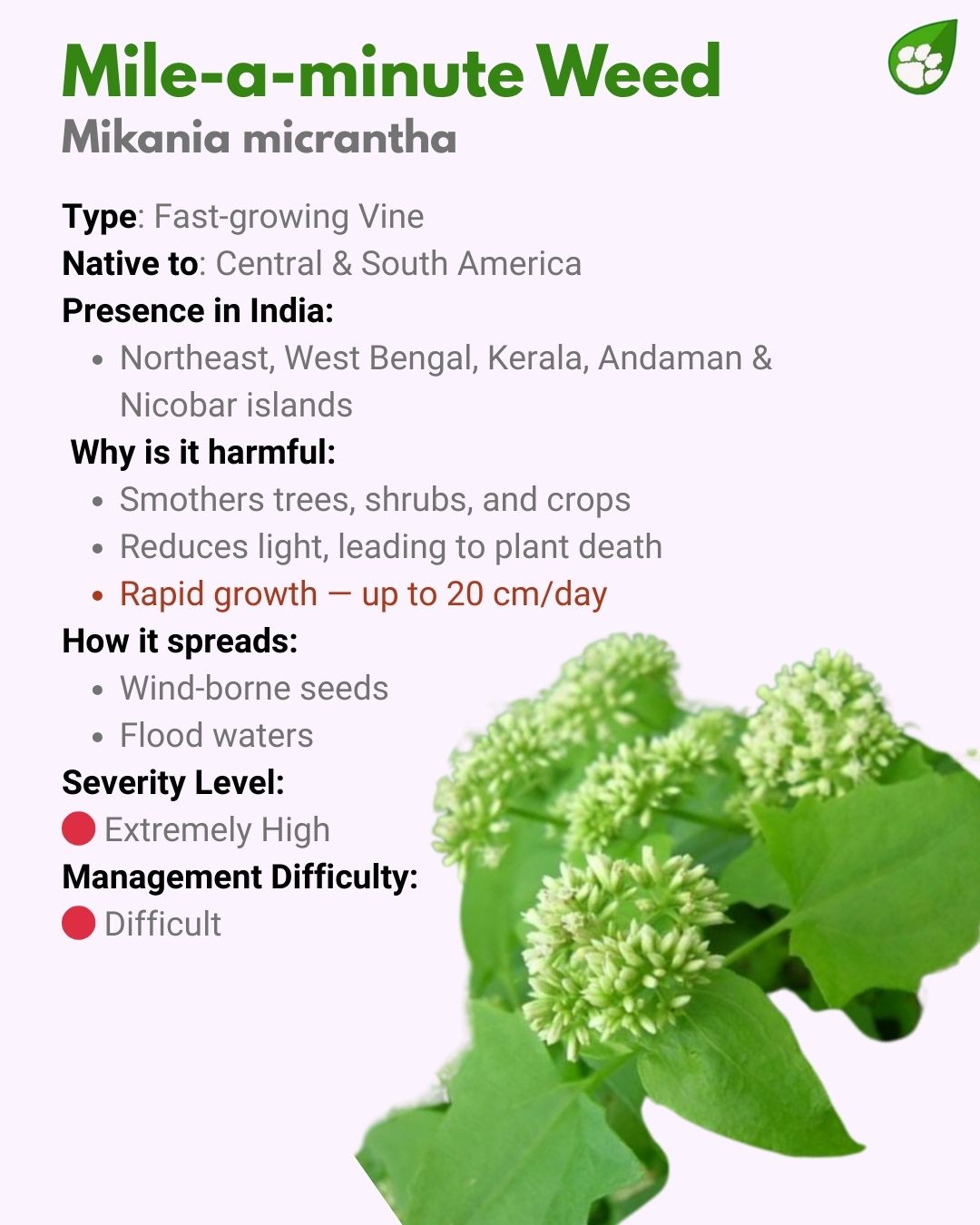
#6 Mikania micrantha (Mile-a-Minute Weed)
A fast-growing vine that smothers trees and crops, earning the name “mile-a-minute weed”.
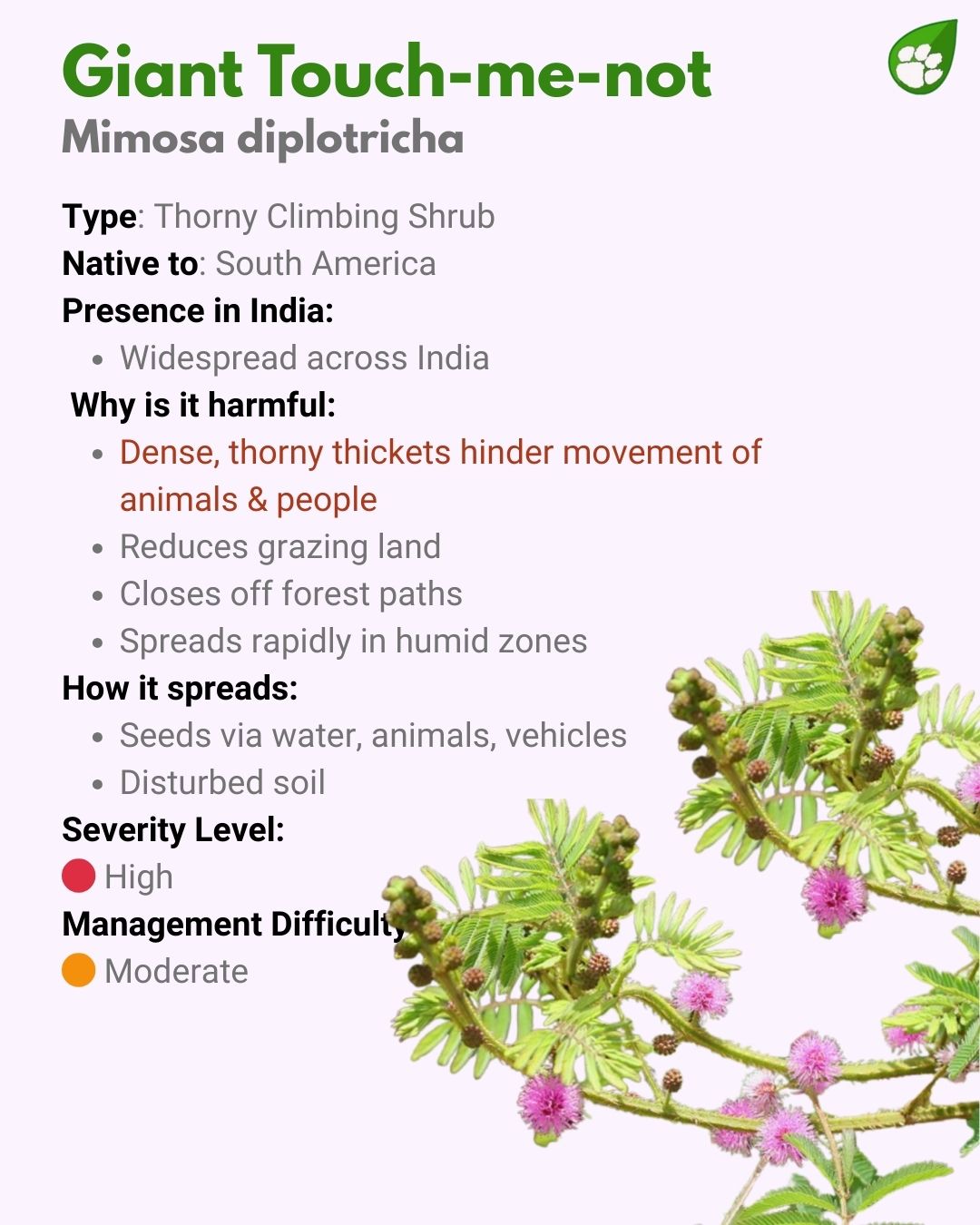
#7 Mimosa diplotricha (Giant Sensitive Plant / Touch-me-not)
A thorny, sprawling species forming dense walls that block movement of wildlife, livestock, and people.
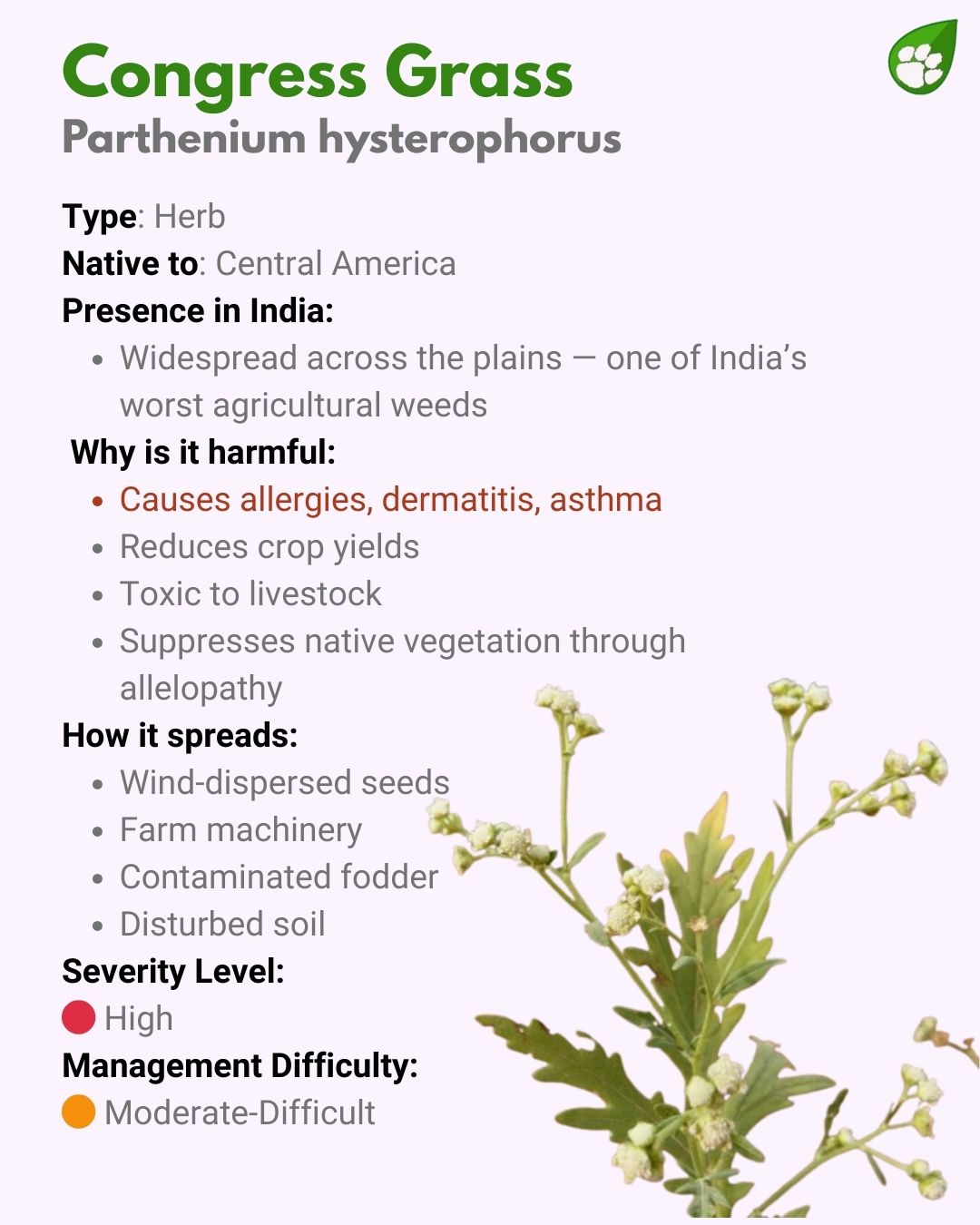
#8 Parthenium hysterophorus (Congress Grass)
A toxic and allergenic weed that spreads rapidly in fields and cities, reducing crop yields and human health.
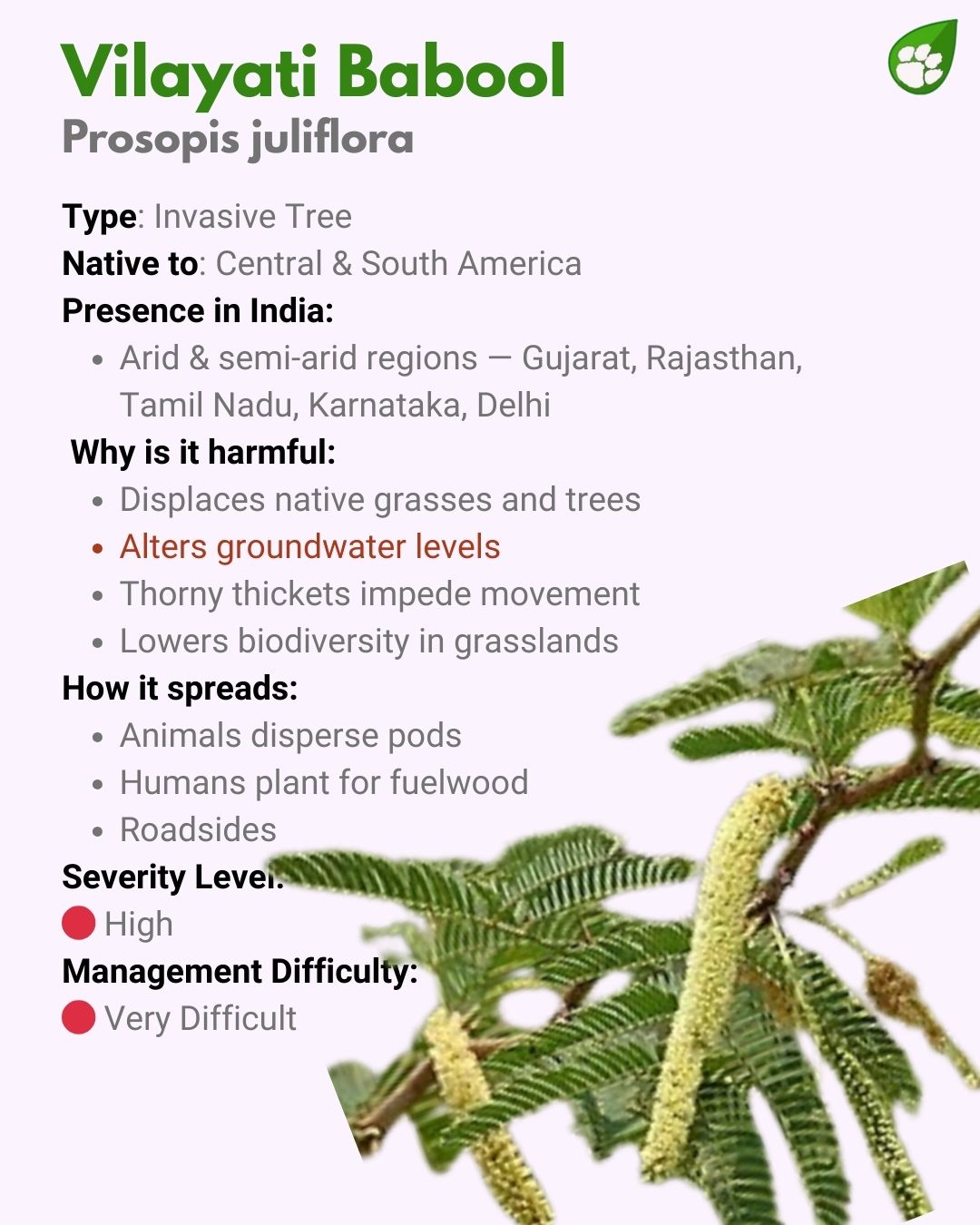
#9 Prosopis juliflora (Vilayati Babul / Mesquite)
A hardy invasive tree dominating arid landscapes and displacing native grasses crucial for wildlife and pastoralists.
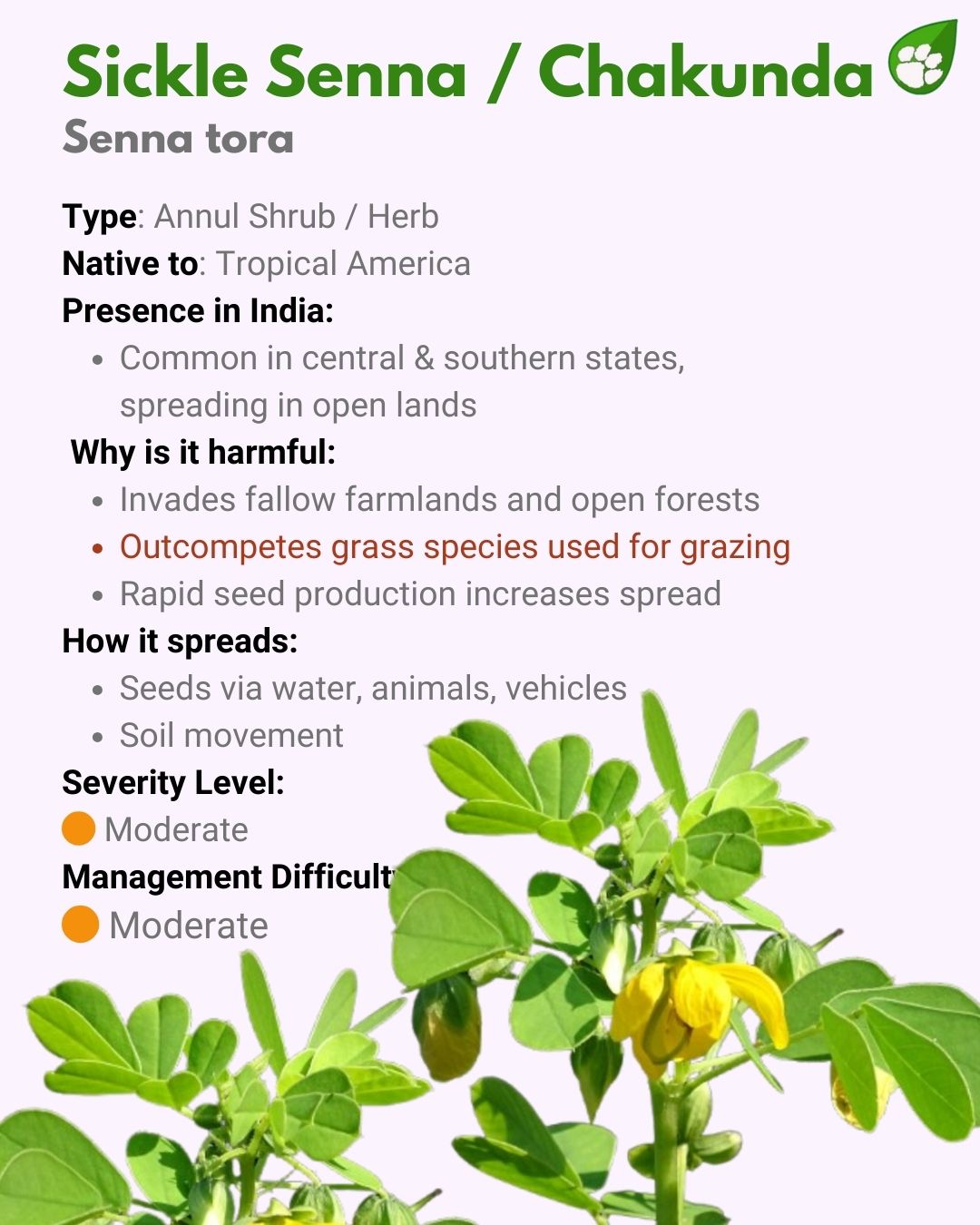
#10 Senna tora (Sickle Senna / Charota)
A rapidly spreading herb that invades open lands and competes with native grasses used for grazing.
#11 Xanthium strumarium (Common Cocklebur)
A burr-producing weed harmful to livestock and crops, spreading widely along riverbanks and farms.
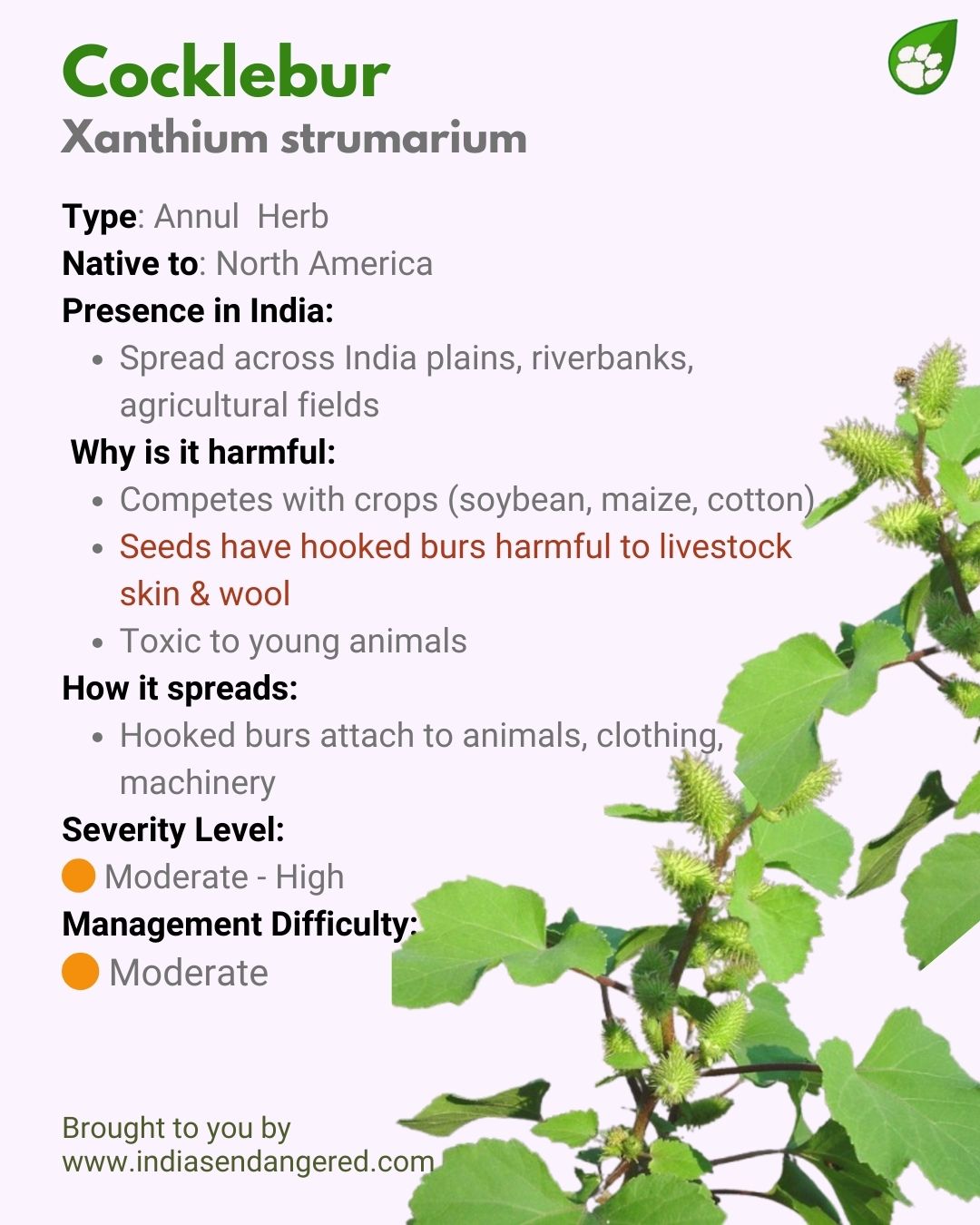
Download Printable PDF of 11 Invasive Plant Species Threatening India’s Forests and Farms
The authors hope there is a national level Invasive Species Mission created on an urgent basis that collates the learning from different regions and also has a national level mitigation strategy. They note that if evidence-based management, improved quarantine systems, inter-sectoral coordination and strategic financing is not done now, the impacted regions may lose land, livelihoods and many dependent native animals and plant species.




One thought on “Invasion of Invasive Plants: 11 Species Threatening India’s Forests and Farms”