Isn’t it a wonder to find that scientists and researchers are constantly able to make new discoveries all across India of not just tiny, microscopic creatures that probably remain unseen because of their size, but also creatures as big as snakes that are more visible! And yet, here we are again discovering that a wolf snake was found in the Great Nicobar Islands, at least 3 new flowering plants were found in the Western Ghats and the amazing northeastern states with one already marked as Critically Endangered. And a giant squid from the Indian Ocean!
Do take a look at some of the new species discovered in November in India. This is not an exhaustive list, just a few we heard about…
New Snake Species Named in Honour of Steve Irwin from Great Nicobar Islands
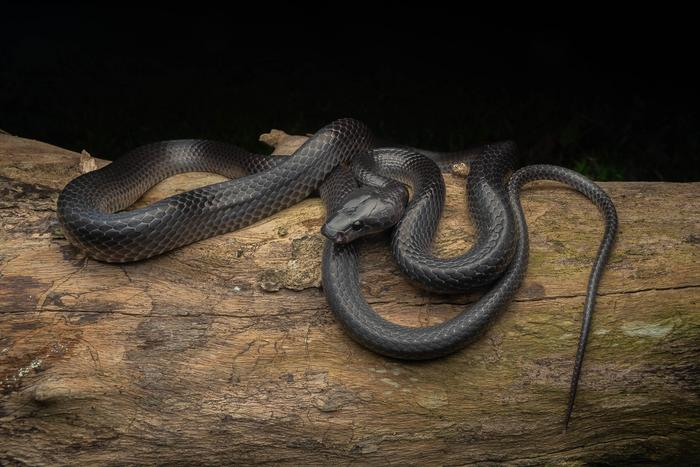
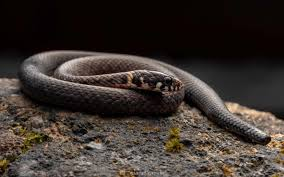
Researchers discovered a previously unknown species of wolf snake on Great Nicobar Island, India) and named it Lycodon irwini — “Irwin’s wolf snake” — in tribute to the late Australian wildlife educator Steve Irwin. Adults of Lycodon irwini are glossy black, slender, non-venomous, typically reach up to about a metre in length (in some cases ~1.2 m), have tapering tails, and lack the banding or patterns seen in many related species. The snake is non-venomous and is believed to prey on small reptiles, amphibians, and mammals. Currently, this species appears to be endemic to Great Nicobar Island, meaning it hasn’t been found anywhere else. Because the species seems to have a very limited distribution the researchers suggest that it should be considered endangered. The discovery was made by described by researchers R. S. Naveen and S. R. Chandramouli, Zeeshan A. Mirza and Girish Choure.
Bacteria Isolated From Rainbow Trout Farm in Uttarakhand
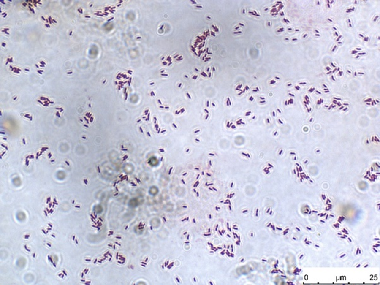
Researchers at ICAR-CICFR, Bhimtal isolated a novel bacterium from a rainbow trout farm in the temperate northern Himalayan region of Uttarakhand. The species has been named Pseudomonas trutticola (from Latin “trutta” meaning trout, and “-cola” meaning dweller), i.e. “dweller on trout.” The bacterium is Gram-negative, rod-shaped, and forms clear, sticky (mucoid) colonies when grown in the lab. It does not show the bright green fluorescence that many Pseudomonas bacteria do. A major finding is that the bacterium carries many genes linked to antibiotic resistance (110 genes) and virulence (595 genes). This means it might have the ability to cause disease or survive treatments, and its behaviour in fish farms needs to be studied further. The discovery was made by Dr Neetu Shahi, Dr Krishna Kala, Sumanta K. Mallik, Bhupendra Singh, Dr Amit Pande and Dr Suresh Chandra.
13 New Bush Frog Species From Northeast India
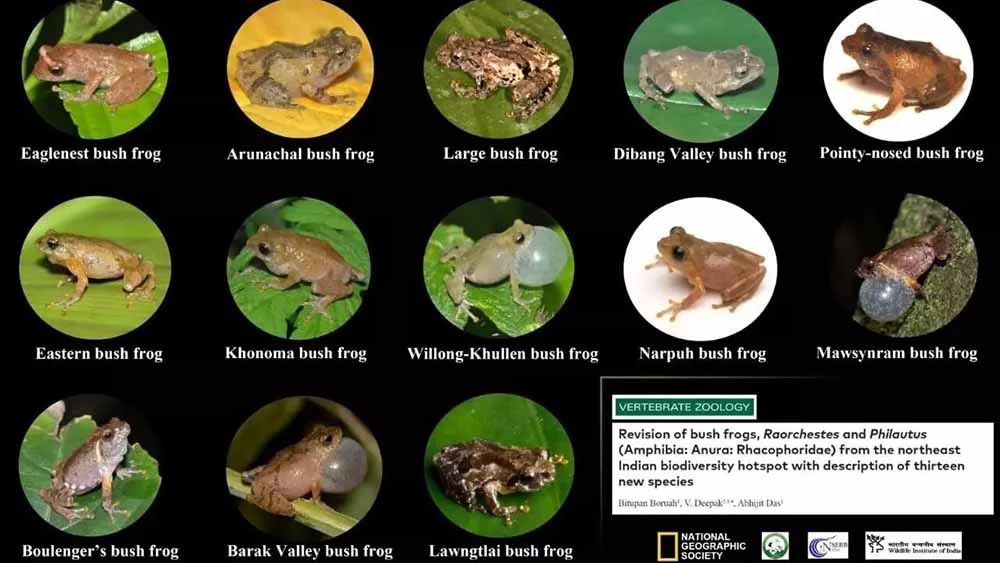
Researchers at WII including PhD scholar Bitupan Boruah, herpetologist Abhijit Das, and Deepak Veerappan have announced the discovery of 13 new species of bush frogs (genus Raorchestes) across Northeast India. The new species were found in several states: six in Arunachal Pradesh, three in Meghalaya, and one each in Assam, Mizoram, Nagaland and Manipur.
Some of the newly described frogs are: Raorchestes lawngtalaiensis (Mizoram), Raorchestes barakensis (Assam), Raorchestes narpuhensis and Raorchestes boulengeri (Meghalaya), Raorchestes khonoma (Nagaland), Raorchestes monolithus (Manipur), and several species from Arunachal such as Raorchestes eaglenestensis, Raorchestes magnus and Raorchestes nasuta. The discovery is part of a large taxonomic survey carried out between 2016 and 2024, covering 204 specimens from 81 locations across eight northeastern states. The researchers combined acoustics, genetics, and morphological analysis to confirm that these frogs are distinct species. With this addition, the total number of known bush frog species in India has risen from 82 to 95. The study also re-examined century-old museum specimens, clarified prior taxonomic confusion, and updated the distribution of known species.
Eight-Armed Indian Ocotopus Squid From The Arabian Sea
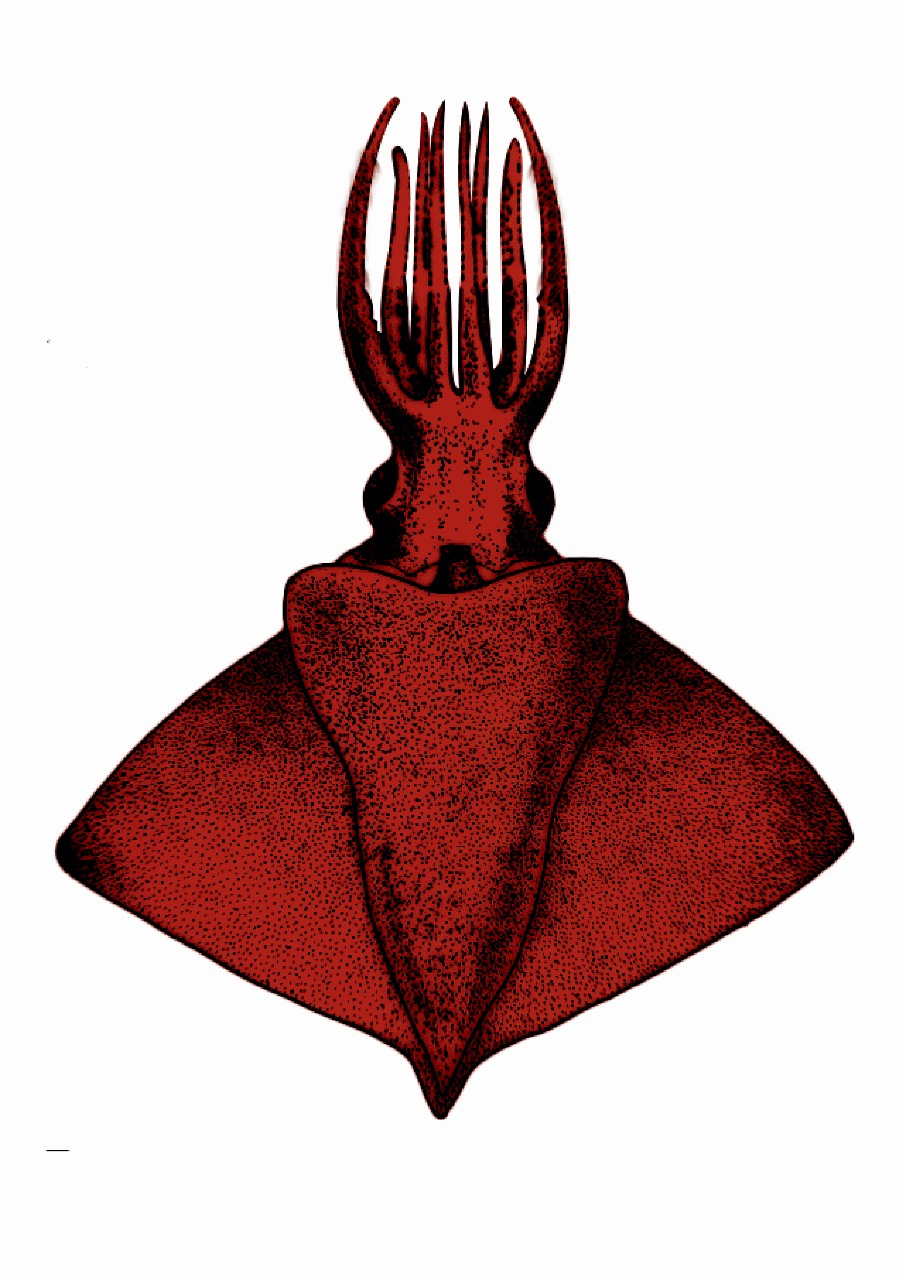
Central Marine Fisheries Research Institute (CMFRI) announced a new deep-sea squid species off the coast of Kollam, in the Arabian Sea. This squid belongs to the very rare genus Taningia, making it only the second confirmed species worldwide in that genus. The new species is named Taningia silasii, commonly referred to as the “Indian octopus squid” in honour of eminent marine biologist Dr E. G. Silas, a pioneer of cephalopod research in India. The specimen was collected at a depth of around 390 metres and the squid has a dorsal mantle length of about 45 cm. Unlike many squids, this species possesses only eight arms and lacks the two long tentacles typical of many squids of the order — a characteristic trait of its family (Octopoteuthidae). Molecular analysis (DNA barcoding) found a greater than 11% genetic difference from the only known other species in the genus — Taningia danae — confirming that the newly collected specimen is indeed a distinct species.
A New Tropical Flowering Plant From Arunachal Pradesh
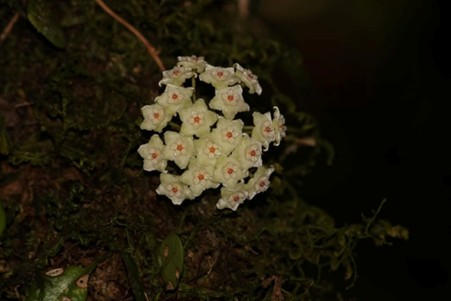
Scientists have discovered a new species of tropical flowering plant — Hoya dawodiensis — in the remote Vijoynagar region of Changlang district in Arunachal Pradesh. This region, accessible only via air or after several days of trekking, is among the least explored yet highly biodiverse parts of the state. Hoya species, commonly called wax plants, are known for their thick, succulent-like leaves and star-shaped fragrant flowers. The plant features the characteristic waxy leaves of the Hoya genus and clusters of small, attractive flowers, which likely play a role in attracting pollinators such as insects. The research was conducted by a joint team including the Botanical Survey of India, Society for Education & Environmental Development, and Botanic Research Singapore. Researchers also recorded Hoya yingjiangensis in India for the first time, and documented Hoya nummularia in Arunachal Pradesh for the first time, highlighting the region’s rich floral biodiversity.
A New Species of Damselfly From the Western Ghats
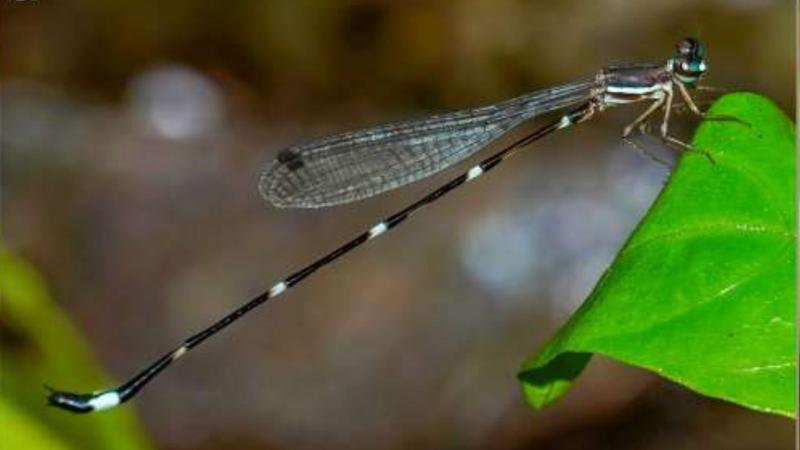
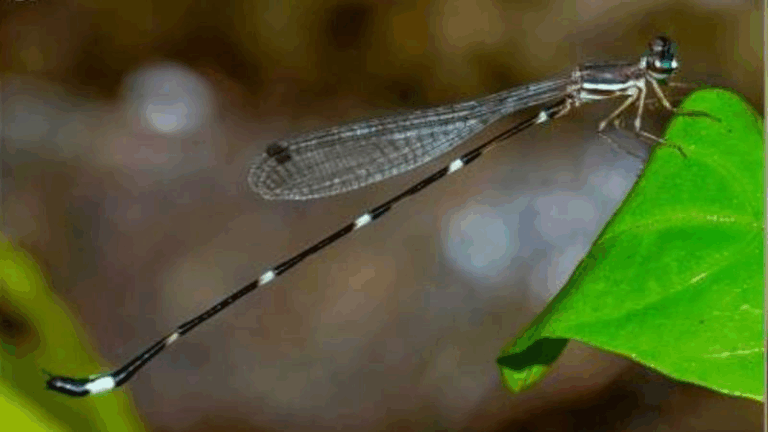
A new species of damselfly in the Western Ghats — the Kodagu Shadowdamsel (scientific name: Protosticta sooryaprakashi) was discovered during surveys along the banks of the Sampaje River in Kodagu district and in the high‑altitude forests of Agumbe. The male Kodagu Shadowdamsel is notable for its striking sky‑blue marking on the prothorax (the segment right behind its head), contrasting with a dark brown to black body — distinguishing it from its close relative Protosticta sanguinostigma, which has a crimson‑coloured thorax. Under microscopic examination, another unique feature surfaces: the tips of the male’s reproductive organ (genital ligula) are shaped like a duck’s head — a trait not seen in other species of this group. In the wild, these damselflies are observed perching on shaded vegetation near streams and have a more delicate, fluttering flight compared to many damselflies. The species was formally described in 2025 by a team of researchers: Koolikkunnu Abdul Razak Muhammed Haneef, Vivek Chandran, Dattaprasad Sawant, Yousuf Pachani Maimoonath Beevi, and Pankaj Koparde. This discovery highlights that even in relatively well‑studied biodiversity hotspots like the Western Ghats, “hidden” or cryptic species — especially shade-loving, small insects living in forest streams — still await formal documentation.
New Fruit Fly From Meghalaya
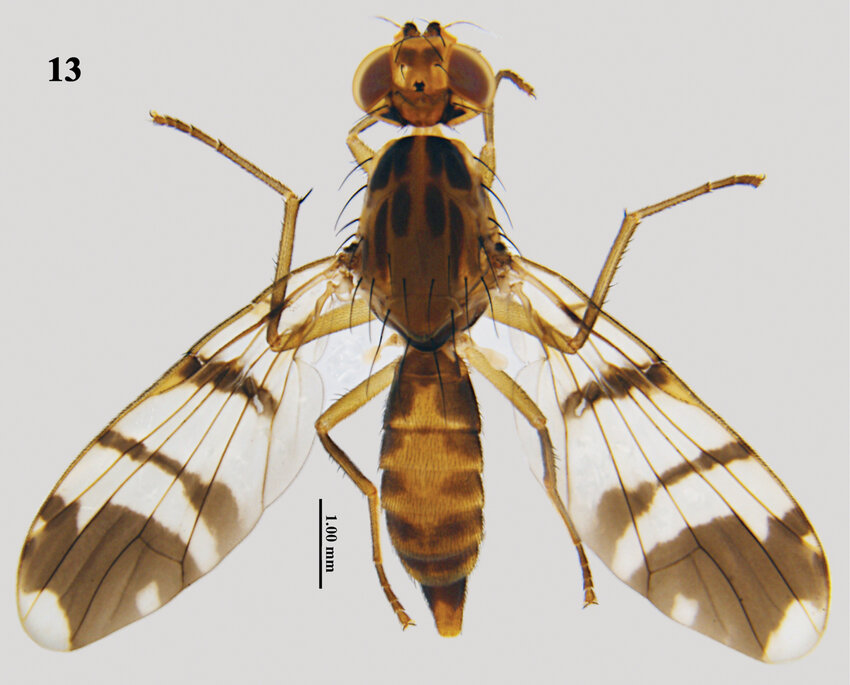
Researchers have described a new species of fruit fly, Euphranta undulata, from Ri‑Bhoi district in Meghalaya — specifically from the bamboo‑forest ecosystem around Umiam. The discovery is part of a larger faunistic study titled “Faunistic studies on bamboo‑shoot fruit flies (Diptera: Tephritidae) of Western Ghats and Northeast India,” supported by DST‑ANRF‑ARG. The lead researchers are K.J. David (Senior Scientist, ICAR‑NBAIR, Bengaluru) and N. Kennedy (Assistant Professor, Central Agricultural University, Imphal, Umiam). The newly discovered fruit fly Euphranta undulata inhabits the bamboo forests of Ri‑Bhoi district in Meghalaya, particularly around Umiam. Its larvae develop inside young bamboo shoots, feeding on internal plant tissues, while adults are commonly observed perching on leaves near bamboo clumps. The species appears highly specialized to bamboo, with its life cycle closely synchronized with the growth of the shoots, highlighting the ecological importance of these forests as hotspots for insect endemism.
Four Sea Butterflies New To India
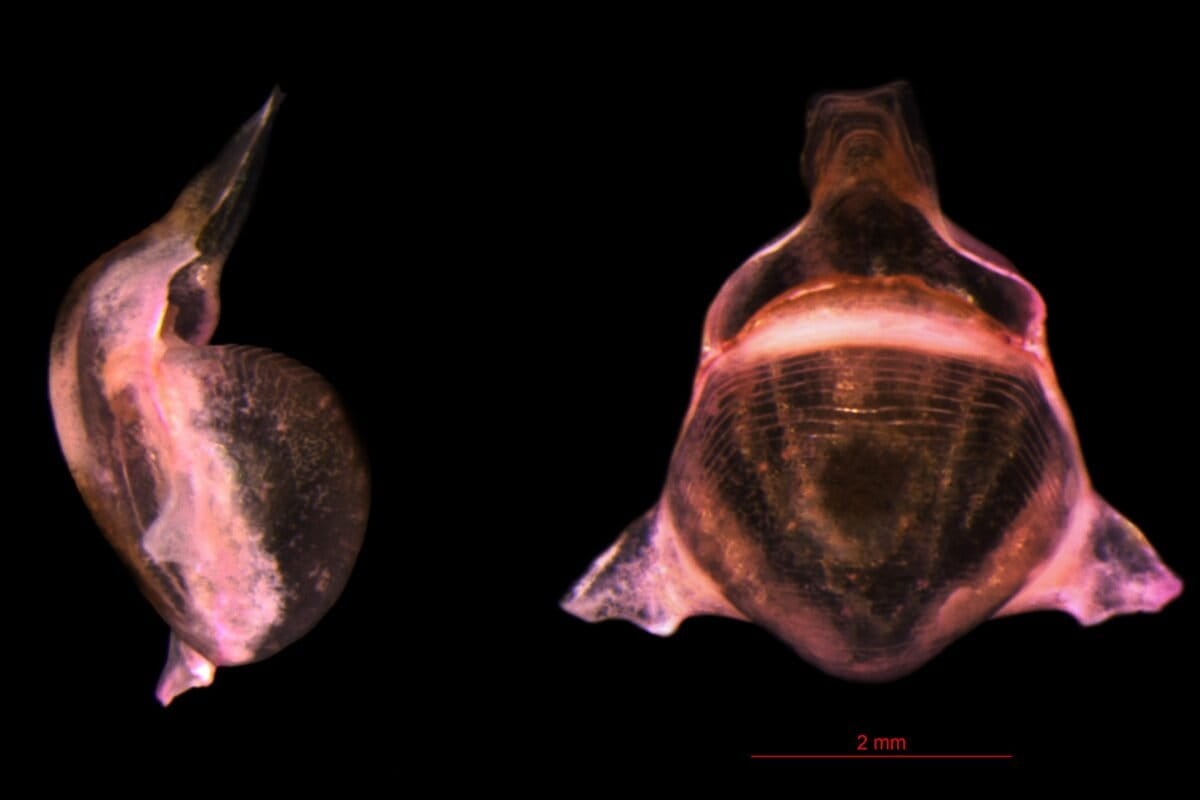
A study published in 2025 has added four species of sea butterflies (pteropods) — Diacavolinia deshayesi, Diacavolinia grayi, Diacavolinia mcgowani, and Diacavolinia strangulata — to India’s marine biodiversity records. These delicate molluscs, known as sea butterflies because they possess tiny, translucent shells and fluttering tentacles, belong to the pteropod group — important zooplankton that drift through the water column and play key roles in marine food webs and carbon cycling. The discovery emerged in 2019 when marine biologist Kiran Shah, while re-examining sediment samples collected around the waters of the Andaman and Nicobar Islands (from a 2011 research cruise), noticed tiny, glassy brown shells — long overlooked in dusty lab vials. These shells had fossilized over time, turning brown and fragile, but careful morphological comparison with known Diacavolinia from Atlantic and Pacific Ocean records confirmed them as first Indian records of these species. With this addition, India’s known pteropod count rises from 22 to 26.
A Beautiful Flowering Plant From The Sharavathi River Basin, Western Ghats
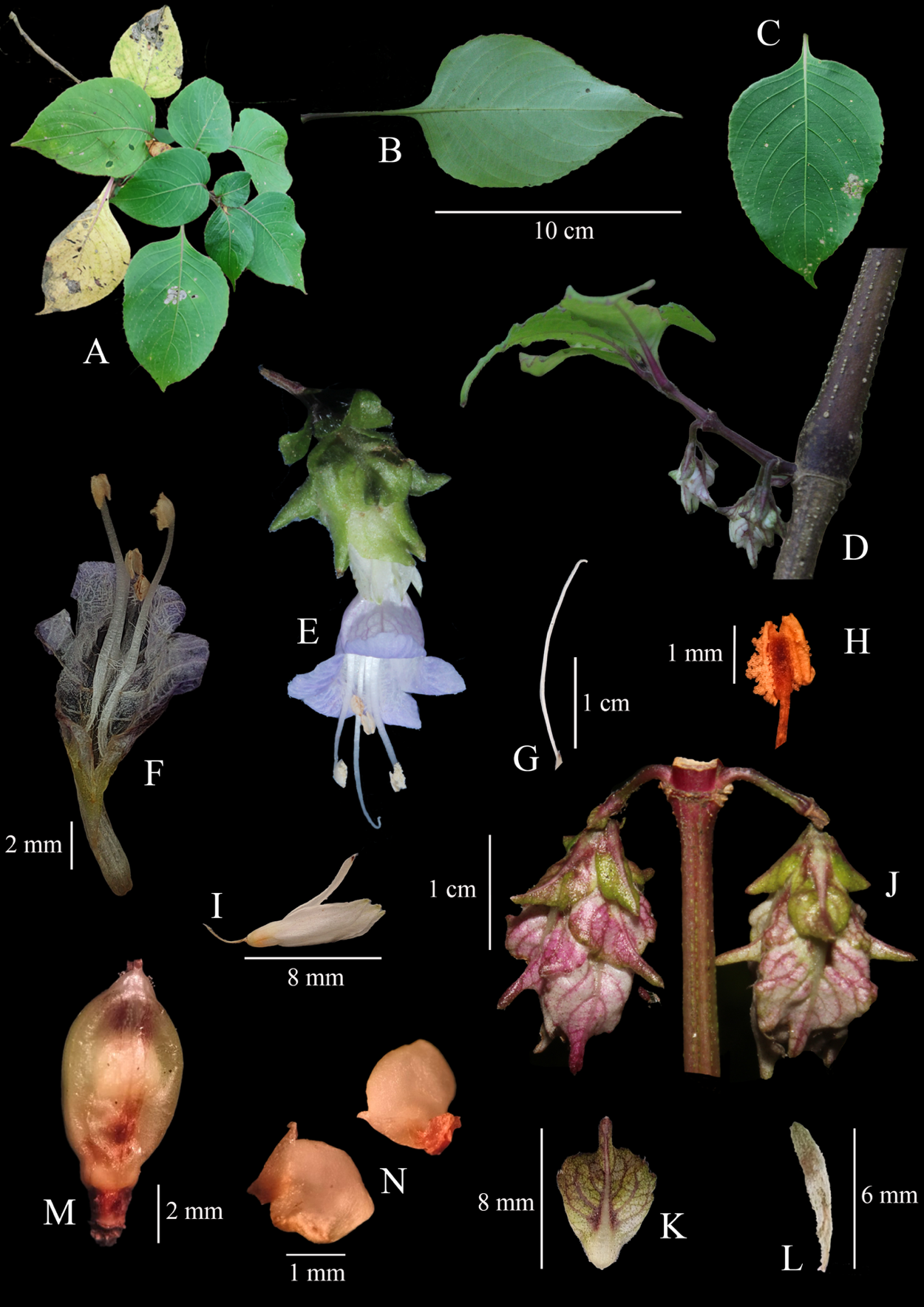
A previously unknown flowering plant Strobilanthes sharavathiensis was discovered during a floristic survey of the high-altitude shola grasslands in the Ambaragudda region of central Western Ghats. Although the shrub superficially resembled a known species (Strobilanthes jomyi), detailed morphological analysis — including microscopy of pollen under a Scanning Electron Microscope (SEM) — revealed that it is distinct. Key distinguishing features include a pendulous spike inflorescence (flower clusters hanging downward), stamens that extend beyond the petals, and uniquely shaped pollen grains: spheroidal with a spiky surface. The species is named after the Sharavathi River, reflecting its discovery in that river’s catchment, and specifically ties it to the Ambaragudda shola-grassland landscape. Currently, Strobilanthes sharavathiensis is known only from this single location — growing in sun-exposed but partly shaded grassland/forest-edge habitat — which leads researchers to propose a preliminary conservation status of “Data Deficient,” pending further studies to understand its population size and distribution.
A Plant From Coffee Family, Already Critically Endangered From Mizoram
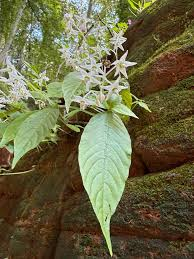
Botanists from Mizoram University and Manipur University discovered a previously unknown plant species Argostemma sawmlianae in a forest stretch near Lungleng village, about 20 km from Aizawl. The plant belongs to the coffee family (Rubiaceae) and grows as a delicate epilithic herb on damp rock walls along shaded streams. Morphologically, A. sawmlianae is distinguished by large, unequal leaves, a bell-shaped (campanulate) corolla with white petals that curl backward, and a notably high number of flowers per cyme — traits that set it apart from its closest relatives (such as A. courtallense and A. sarmentosum). The discovery is bittersweet: the species is already considered extremely vulnerable. Scientists recorded only 39 mature individuals, all confined to a single forest patch. Threats from road expansion, landslides, and habitat disturbance mean A. sawmlianae may be “one extreme event away from disappearing.” The species has therefore been provisionally classified as “Critically Endangered” under IUCN criteria.
If you are interested in new discoveries (as much as we are!) here are more new species of plants and animals discovered in India in previous months,
New Animals and Plant Species Discovered in India this October (2025 update)
New Animals and Plant Species Discovered in India this August (2025 update)
New Animals and Plant Species Discovered in India this July (2025 update)