Quick Glance
Climate change is pushing the Big Four snakes north and into the Northeast, creating new hotspots in states like Bihar, Assam, and Arunachal Pradesh.
These shifts raise snakebite risks in crowded regions that lack good antivenom access and emergency care.
Forest loss and expanding farms draw snakes closer to people, making monitoring and preparedness urgently needed.
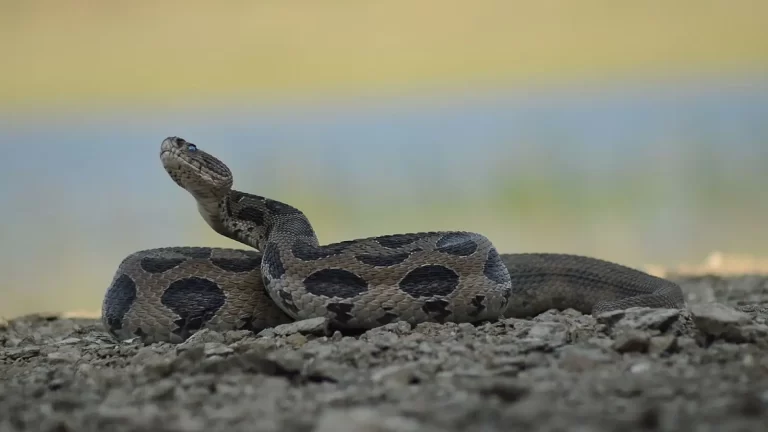
It was a still, humid night in a small village in Bihar when a farmer saw something glint near his feet — not the usual rustle of a rat, but the unmistakable coil of a Russell’s viper. A decade ago, his father swore such snakes were unheard of here. But that is changing fast.
A new scientific study has revealed that India’s most venomous snakes are shifting their homes because of climate change. These are the so-called “Big Four” – Spectacled cobra (Naja naja), Common Krait (Bungarus caeruleus) Russel’s viper (Daboia russelii) and Saw-scaled viper (Echis carinatus). As the climate warms and monsoon patterns change, the snakes’ habitats are moving northwards and into new frontiers. What was once a southern or central Indian phenomenon may soon become a northeastern and Himalayan reality.

The findings were published recently in PLOS Neglected Tropical Diseases, by authors Imon Abedin, Hey-Eun Kang, Hemanta Saikia, Won-Kyo Jung, Hyun-Woo Kim and Shantanu Kundu.
The researchers used advanced habitat suitability modelling to forecast how these species might move over the next 50 years. They warn, “By 2070, most of the Big Four species are likely to expand their range towards northern and northeastern parts of India.”
For India that already suffers the highest snakebite mortality in the world, this is more than a herpetological curiosity — it is a public health crisis in motion.
Read More: After a 100 Years A New Vine Snake Found From India
The Creeping Expansion
The study projects that warming temperatures, erratic rainfall, and loss of forests will create new “ideal zones” for snakes. The models suggest that regions such as Bihar, West Bengal, Assam, Manipur, Meghalaya, Nagaland, Arunachal Pradesh and parts of Himachal Pradesh may become more suitable for the Big Four. Meanwhile, arid and over-heated landscapes in the Deccan could turn less hospitable.
“The northward and eastward shifts are striking — these are regions with high human density and low preparedness for snakebite treatment,” the paper said.
That means more encounters in places least ready to handle them — where antivenom availability is poor, and health systems are not trained for quick responses.
Rising Risk in Human Landscapes
The new habitats that the snakes may be getting closer to are human-dominated landscapes. Farms, villages on the borders of forests. Snakes follow their prey and rodents thrive where humans farm and store grains. As forests shrink, agricultural lands expand, so do the chances of rodents in agricultural zones and snakes coming after them. It is not therefore difficult to assume that changing habitats of the Big Four snakes may lead to rise in snakebite cases in parts that were not this vulnerable earlier.
The scientists behind the study aren’t calling for panic — they’re calling for preparation. Monitoring programs, regional antivenom production, and awareness drives could mean the difference between life and death in newly vulnerable districts.
In many ways, snakes are our ecological barometers — sensitive to heat, humidity, and prey. Their movement signals what’s happening in the microclimate long before humans feel it. The shifting of these ancient reptiles is not just about danger; it is about adaptation, survival, and the silent ripple effects of a warming planet. And as the snakes move, so must our understanding of coexistence. Because what is creeping quietly through the night is not just a viper — it is the footprint of climate change itself.

One thought on “India’s Most Venomous Snakes Are Moving North Because of Climate Change”