In a landmark conservation initiative, the Uttarakhand Forest Department has launched India’s first Flora Rehabilitation Programme to revive rare, endangered, and threatened (RET) plant species native to the Himalayas.
A Himalayan Blue Blossom Fights for Survival
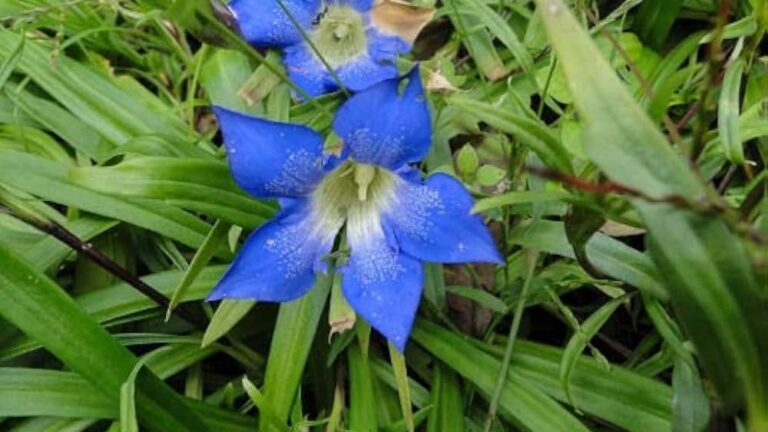
High up in the Garhwal Himalayas grows a delicate blue flower with a powerful medicinal legacy — Gentiana kurroo, also known as the Indian gentian or Himalayan gentian. This trumpet-shaped flower with white or yellow markings has been used in traditional medicine to treat liver disorders, digestive problems, fever, and skin ailments for centuries.
But due to relentless overharvesting, Gentiana kurroo is now listed as Critically Endangered by the IUCN (International Union for Conservation of Nature). It’s not alone — many Himalayan plants are facing similar threats from climate change, habitat degradation, low regeneration rates, and unsustainable harvesting.
Read More: Two Species of Jumping Spiders Discovered in Uttarakhand
India’s First Flora Rehabilitation Programme for Endangered Himalayan Plants
To address this alarming trend, the Uttarakhand Forest Department has launched the country’s first dedicated programme to reintroduce 14 RET plant species into their natural habitats. Most previous rewilding efforts in India have focused on animals. This is the first large-scale attempt to restore endangered flora using both traditional ecological knowledge and modern scientific research.
The programme is being led by Sanjiv Chaturvedi, Chief Conservator of Forests (Research Wing), who has spent the last decade identifying and protecting rare Himalayan plant species.
Watch the video below to know more about the endangered plants and how they are being saved in this interview of Chaturvedi by Kafal Tree Live,
Why Uttarakhand’s Geography Makes It a Biodiversity Hotspot
Uttarakhand is uniquely positioned across three climatic zones — tropical, temperate, and alpine — making it home to numerous endemic plants found nowhere else in the world.
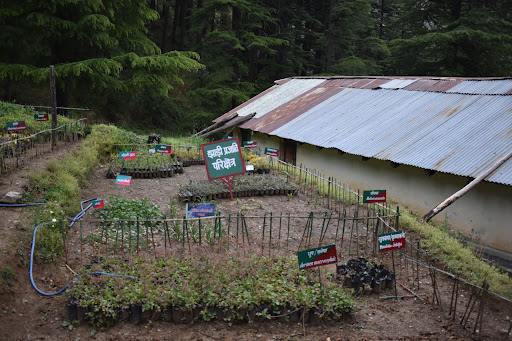
Recognising this, Chaturvedi and his team spent four years studying Himalayan flora between 5,000 and 10,000 feet, collecting seeds, bulbs, and rhizomes of rare species. These were nurtured and propagated in research labs in Auli, Munsyari, Gaja, and Mandal, where conditions were carefully simulated for each species.
After successful propagation, these 14 RET species are now ready to be reintroduced into their natural habitats. They include:
Critically Endangered Plant Species:
Gentiana kurroo (Traymana / Himalayan Gentian)
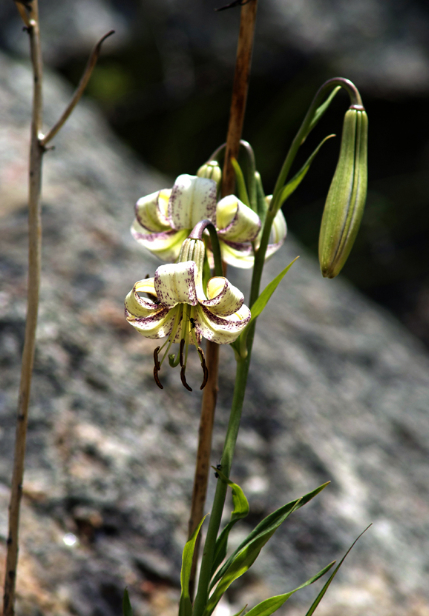
Lilium polyphyllum (White Himalayan Lily)
Meizotropis pellita (Patwa)
Nardostachys jatamansi (Indian Spikenard / Jatamansi)
Endangered Species:
Aconitum heterophyllum (Atis)
Podophyllum hexandrum (Van Kakri)
Pittosporum eriocarpum (Doon Cheesewood / Tumdi)
Threatened and Vulnerable Species in Uttarakhand:
Papilionanthe teres (Red Crane Orchid)
Spiraea canescens (Golden Himalayan Spike)
Trachycarpus takil (Kumaon Fan Palm)
Clerodendrum phlomidis (Patwa)
Arnebia euchroma (Himalayan Arnebia)
A Model for Plant Conservation in India
By setting up propagation labs in high-altitude regions, and combining scientific research with local wisdom, the Uttarakhand team hopes to restore critical Himalayan flora and inspire similar efforts across India.
As climate change and biodiversity loss accelerate, this initiative is not only about saving plants — it’s about preserving ecosystems, traditional medicine, and cultural heritage tied to these rare species.
Featured image via amazon