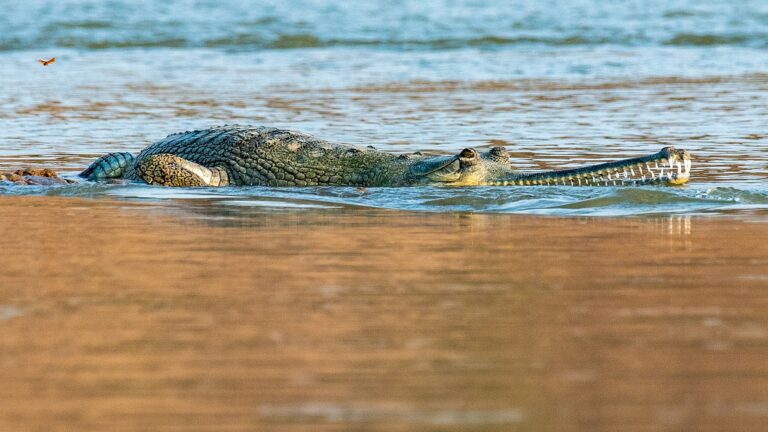
According to a recent survey conducted by the Wildlife Institute of India (WII), more than 3000 gharials have been recorded in the Ganga river system spanning roughly 7,680km of waterways. Conducted between November 2020 and March 2023, the study is now the most extensive survey ever undertaken for this critically endangered species. The Chambal river remains the strongest stronghold, with nearly 2097 gharials, followed by the Ghaghara (463) and Girwa (158) rivers.
Historical Range of Gharials in India and the Dramatic Decline in Population
Easily identified by their thin and elongated snouts (adult males also have a round protrusion at the tip), gharials (Gavialis gangeticus) were once among the most widespread large river reptiles across South Asia. Their range used to include:
- The Ganga-Brahmaputra basin (India, Bangladesh, Nepal)
- The Indus river system (Pakistan)
- The Mahanadi river system (Eastern India)
- Parts of Myanmar (Irrawaddy river system) and Bhutan
Once numbering approximately 5,000–10,000 individuals in the 1940s, the gharial population underwent catastrophic declines of over 90% between 1970 and 2000. This primarily happened due to:
- Habitat loss because of the construction of dams, irrigation and sand mining
- Egg collection and hunting for skins and traditional medicine
- River degradation and pollution
- Overfishing, leading to a lack of sufficient nutritional sources
At the turn of the millennium, fewer than 250 mature adults were estimated in the wild, surviving only in fragmented rivers in India and Nepal, while the species was considered to be extinct or nearly extinct in Pakistan, Bangladesh, Bhutan and Myanmar.
As a result of this stark decline, the gharial was declared a Critically Endangered species on the IUCN Red List and protected under Schedule I of India’s Wildlife Protection Act, 1972.
Read More: A Gharial travels 1100 km from Nepal to India
Findings of WII’s Survey
Between November 2020 and March 2023, WII researchers conducted extensive boat-based visual encounter surveys spanning lengths of about 7680km across 22 rivers in the Ganga Basin. The Minimum Population Size (MPS) method was used to estimate gharial numbers and encounter rates.
Listed below are some of their key findings.
- Chambal river has the highest population of gharials: The majority of the gharials were found in the Chambal, Ghaghra and Girwa rivers, with 2097, 463 and 158 individuals, respectively. On the other hand, encounter rates were extremely low in the Kosi and even the Ganga, with just 0.02 individuals per km surveyed.
- Among the states Uttar Pradesh is home to most gharials: The states with the most gharial sightings were Uttarakhand, Uttar Pradesh and Bihar. Ramganga river inside the Corbett National Park was the only place in Uttarakhand where 48 gharials were spotted, whereas Uttar Pradesh was home to over 2000 individuals across 8 different rivers. Furthermore, Bihar was found to have 82 gharials. However, none were sighted in Jharkhand and West Bengal.
- Most rivers are unsuitable habitats due to degradation: Over 92% of the surveyed river stretches were categorised as unsuitable due to habitat degradation caused by overfishing, sand mining and alteration of river flow. Only about 5.6% was found to be highly suitable for gharials to breed in, and these areas included parts of the Chambal, Yamuna, Sind, Gandak, Girwa and Ramganga.
Thus, the Chambal river acts as the primary stronghold for gharials in India, with the National Chambal Sanctuary, which was established in 1979, being the most secure and significant breeding habitat for the species because of long-term monitoring and protection efforts.
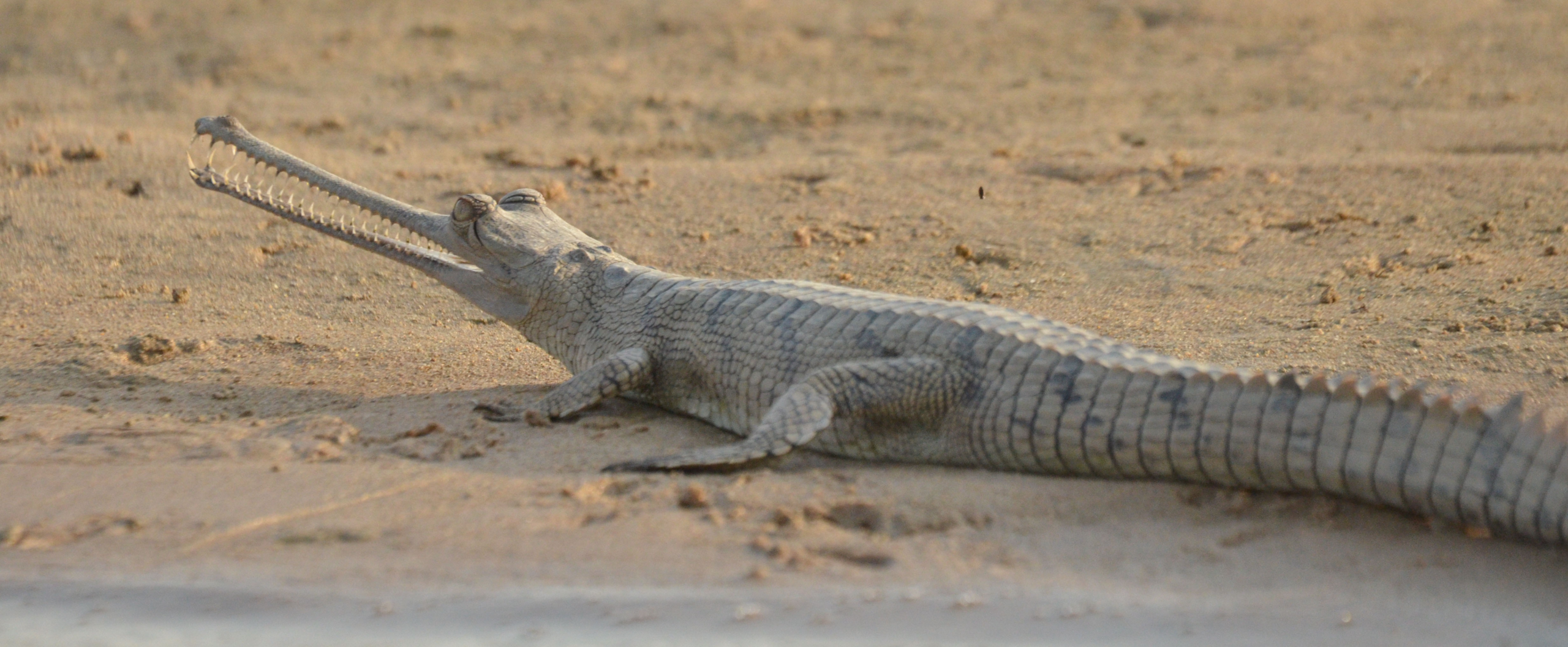
Ongoing Threats and Challenges
Despite the progress that has been witnessed towards recovering gharial populations, there are still some major risks that the survey highlights.
- Habitat Loss and Alteration: As previously mentioned, the building of dams and barrages, and the alteration of river flow, cause fragmentation of gharial habitats and destroy sandbanks that are essential for nesting. This is further exacerbated by sand mining.
- Low Juvenile Survival Rates: According to a WWF India report, merely 0.5% of all gharial hatchlings actually make it to adulthood, primarily due to the aforementioned threats.
- Dependency on Active Conservation: Even though extinction has been mostly averted for gharials in India, the underlying issue is that the species still has to depend on active human intervention to maintain and expand its population.
In order to have better population recovery and promote long-term stability, the WII report recommends gharials to be reintroduced to rivers with confirmed habitat suitability, such as the Chambal, Ghaghra and Yamuna, while ensuring habitat, population and genetic monitoring. Initiatives like the Gandak Gharial Recovery Project are actively working towards the conservation of the species in different regions by designating certain protected areas for nesting and breeding.
Read More: In Conversation with the Gharial
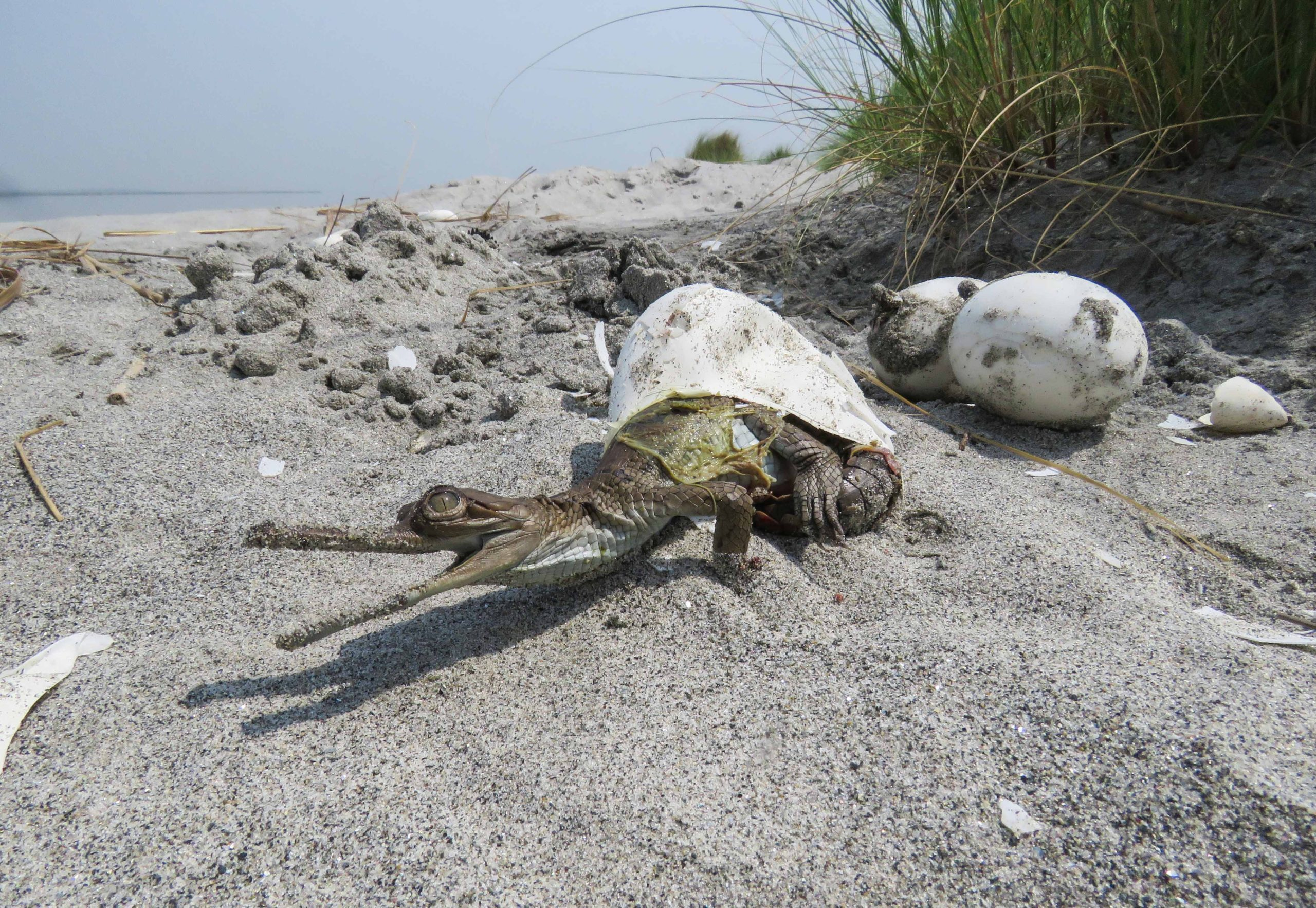
However, true change can only come through the involvement of multiple other stakeholders who also depend on river systems. Local communities like the fishermen and farmers who reside near gharial nesting spots, as well as the nearby government departments, should be encouraged to join conservation efforts and make them sustainable in the long run.
Study – Population Status and Conservation Action Plan for Critically Endangered Gharial in the Ganga River Basin, 2025
Reference: